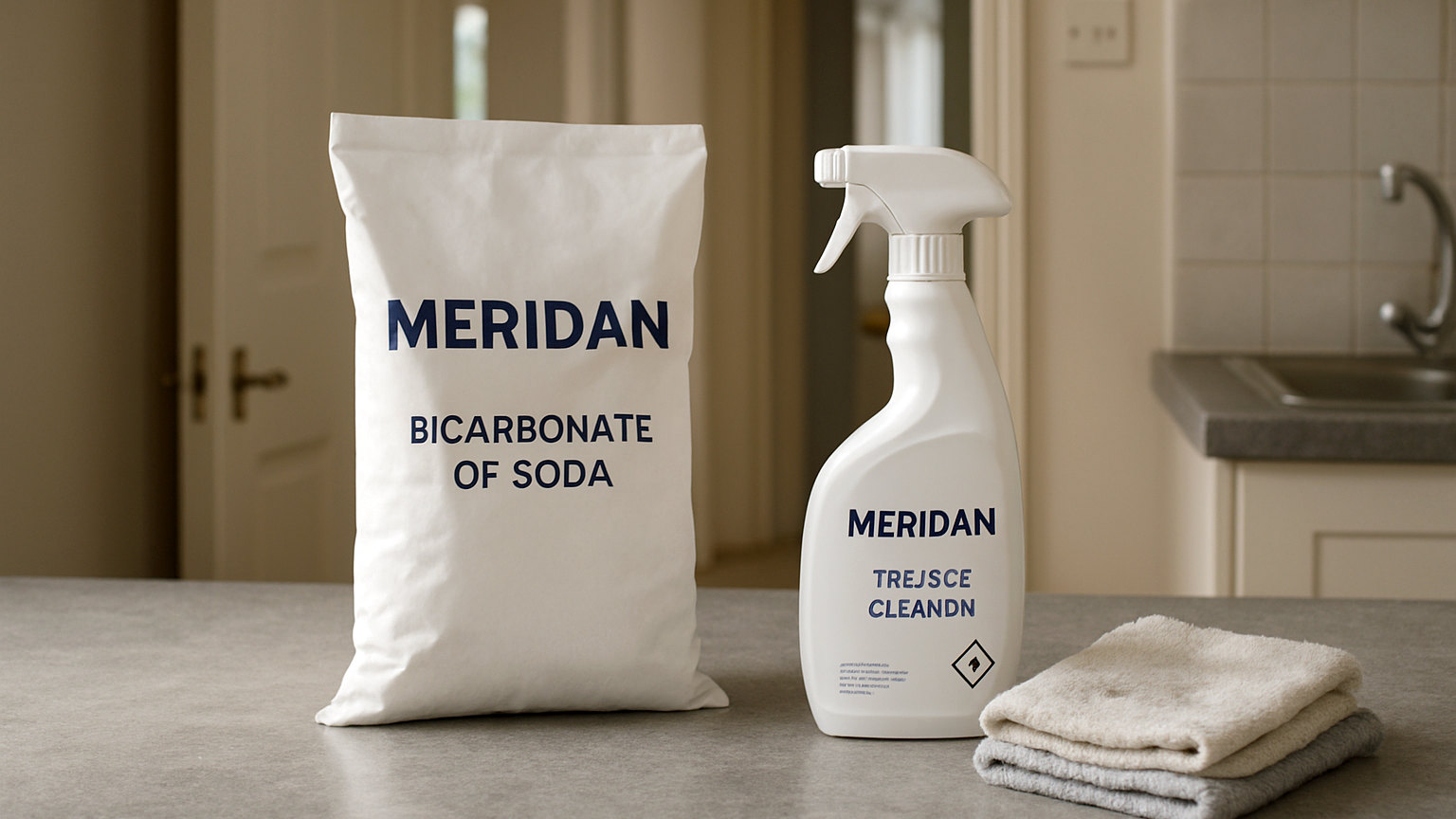
Bicarbonate of soda is cheap, safe and genuinely useful, and it is also the most over credited product in household cleaning. It does three things well. Almost everything else attributed to it is either exaggerated or belongs to something else.
What does it actually do?
- Mild abrasion. The crystals are hard enough to scour and soft enough not to scratch most surfaces, which makes it a safe scouring powder.
- Mild alkalinity. At around pH 8 it helps break down grease and acidic soil, gently.
- Odour absorption. It neutralises acidic odour compounds rather than masking them, which is why it works in a fridge.
That is the complete list, and those three cover a lot of ground.
Where is it the right choice?
- Oven interiors, as a paste left overnight.
- Sinks, baths and hobs, as a gentle scouring paste.
- Mugs and teapots, for tannin staining.
- Fridges, as a cleaner and as an open tub for odour.
- Carpets and mattresses, sprinkled dry and vacuumed off for smell.
- Chopping boards, as a scrub with lemon.
- Drains, as a deodoriser rather than an unblocker.
How do you use it?
As a paste with a little water for scouring and for soaking. As a dry powder for odour absorption, left for several hours and vacuumed or brushed off. Dissolved in warm water as a mild general cleaner.
For a stubborn deposit, make the paste thick, spread it on and leave it. Time is what makes it work, since it is mild by design.
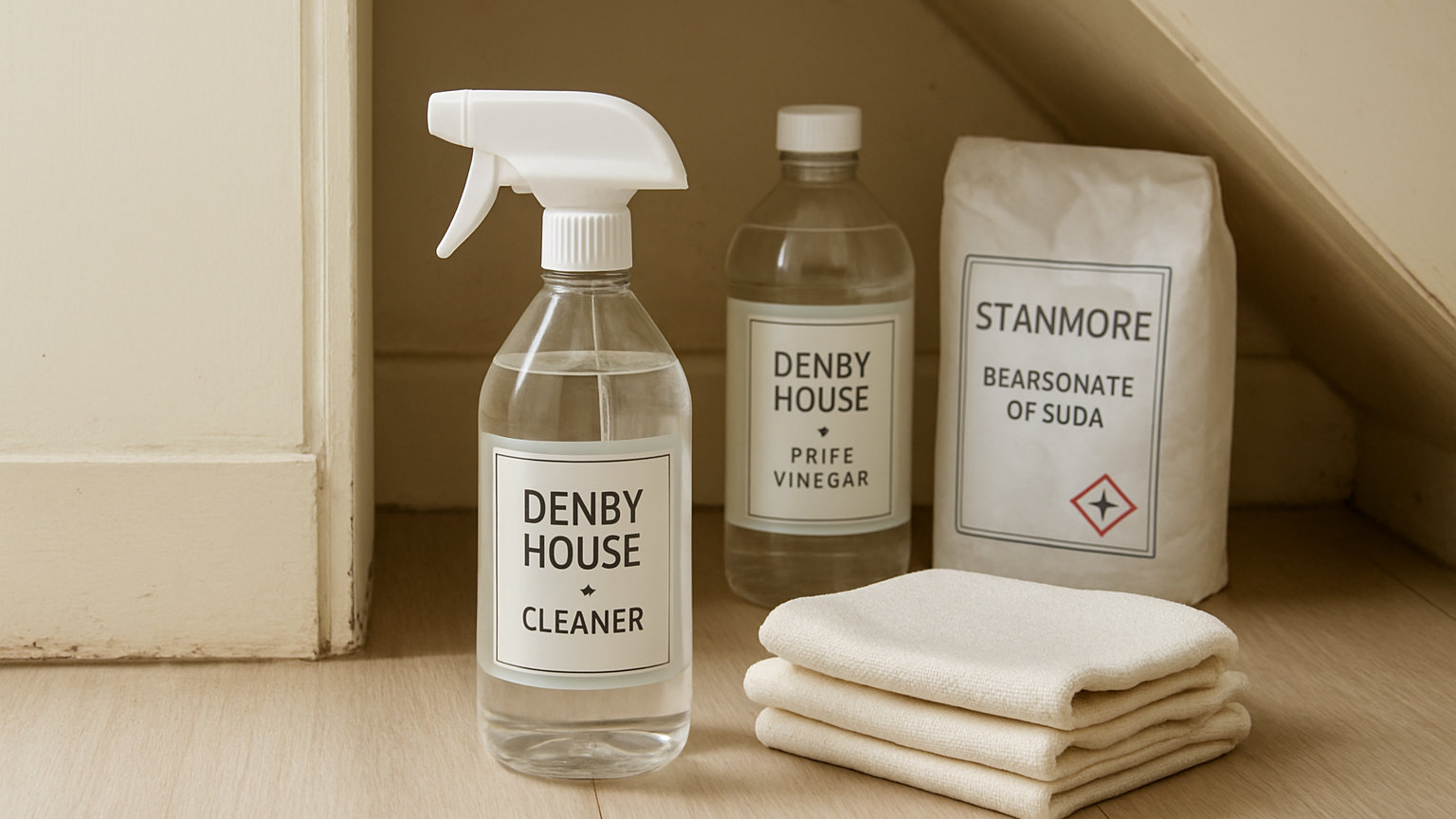
Why is mixing it with vinegar pointless?
Because they neutralise each other. Bicarbonate is alkaline, vinegar is acidic, and combining them produces carbon dioxide, water and sodium acetate. The fizzing is the reaction consuming both ingredients.
What is left is salty water with no meaningful cleaning power. Used separately, one after the other with a rinse in between, both are useful. Mixed in a bowl, neither is.
The one place the fizzing helps is mechanically, lifting loose debris in a drain, and even there it is doing far less than hot water and detergent.
What is the difference from soda crystals?
Soda crystals are sodium carbonate, considerably more alkaline at around pH 11, and much more effective on grease and in drains. Bicarbonate is sodium bicarbonate, milder and safer on more surfaces.
Use bicarbonate where gentleness matters and soda crystals where strength does. They are not interchangeable.
Where should it not be used?
- Aluminium, which it discolours.
- Polished and gloss surfaces, where the abrasion dulls the finish.
- Glass hobs and screens, for the same reason.
- Marble and soft natural stone, which scratch.
- Anything lacquered or with a printed finish.
Test on a hidden area on any polished or delicate surface.
What does it not do?
It does not disinfect. It does not remove limescale, which needs acid. It does not bleach or oxidise stains, which needs oxygen bleach. And it does not unblock a drain, which needs hot water and an alkali such as soda crystals.
Is it worth having?
Yes, and it should be bought in a large bag rather than a small kitchen tub, which costs many times more per kilogram for the same thing.
Does baking soda mean the same thing?
In American usage, yes: baking soda is bicarbonate of soda. Baking powder is different, being bicarbonate mixed with an acid and a starch, and it is not a substitute for cleaning purposes. Recipes and advice found online frequently use the American term, which causes some confusion in British kitchens.
How long does it keep?
Indefinitely for cleaning purposes, provided it is kept dry and sealed. It absorbs moisture from the air and will clump into a solid mass in a damp cupboard, which still works perfectly well and simply needs breaking up with a spoon. An open tub used for absorbing odours in a fridge is a different matter and should be replaced every couple of months, since it becomes saturated and stops doing anything at all.