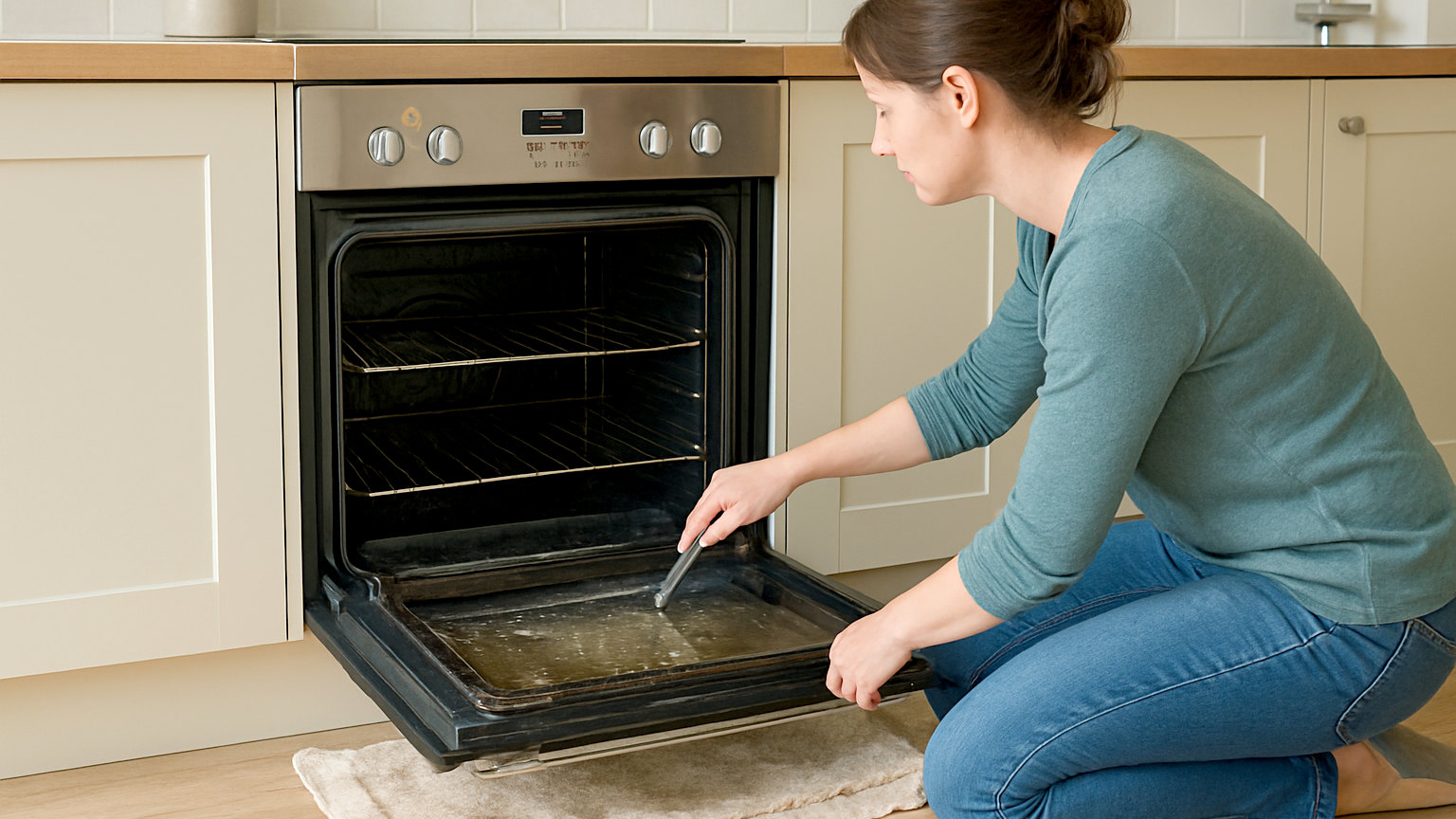
An oven that is wiped out after spills and given a proper clean three or four times a year never becomes difficult. An oven left for two years develops a hard carbonised layer that needs caustic chemicals and several hours. The job has a reputation for being unpleasant largely because of how long people leave it.
What should be done after each use?
Almost nothing, and the one thing that matters is dealing with spills while they are fresh. If something has boiled over or spat, let the oven cool to warm rather than hot, then wipe the spill away with a damp cloth. At that stage it comes off in seconds.
Left in place, the same spill is baked again at every subsequent use until it carbonises into a hard black deposit that no longer responds to detergent.
What is the monthly job?
A quick wipe out of the interior with hot soapy water, the door glass done properly, and the shelves washed in the sink. Twenty minutes, and it prevents the build up that makes the annual clean a project.
Check the door seal at the same time, since it collects grease and is easily overlooked.
How often is a full clean needed?
- Every three to four months for an oven used most days.
- Twice a year for an oven used a few times a week.
- Annually for one used rarely.
- Immediately after anything major, such as a spilled roasting tin or a burst dish.
A pyrolytic oven can run its cleaning cycle less often than a conventional oven needs manual cleaning, though the shelves and the door glass still need doing by hand.
Why does a dirty oven matter beyond appearance?
Accumulated grease and carbon smoke at temperature, which taints food and fills the kitchen. A heavily soiled oven also heats less efficiently, since deposits on the interior and the element affect heat transfer and airflow.
There is a fire risk too. Grease deposits on the element or the grill can ignite, and it is one of the more common kitchen fires.
What about the hob?
Different schedule entirely. Wipe it after every use while it is warm rather than hot, which takes fifteen seconds and prevents everything else. A weekly clean covers the burners, the control knobs and the surround.
Gas hobs need the burner caps and crowns lifting out and soaking monthly, and the gas ports checking for blockage.
What is the realistic minimum?
Wipe spills when they happen, do the glass and the shelves monthly, and book a proper clean into the calendar twice a year. That is about two hours of work spread across a year and it keeps an oven in good condition indefinitely.
The alternative pattern, which is doing nothing until it is unbearable, means one four hour job with caustic chemicals and a worse result.
Does a liner help?
A reusable oven liner on the base catches spills and can be lifted out and washed, and it genuinely reduces the work. It must be a proper oven liner sized to sit flat, not foil, and it must never cover the base vents or sit directly on the element.
Check the manual, since some manufacturers advise against liners because they affect heat distribution.
What about professional oven cleaning?
For an oven that has been neglected for years, a professional clean using a dip tank for the shelves and a caustic gel for the interior produces a result that is difficult to match at home, in about two hours. It is worth considering as a reset, after which a regular routine keeps it there.
Does the type of cooking change it?
Considerably. Roasting meat, anything cooked uncovered at high heat and anything prone to boiling over all soil an oven far faster than baking does. A household that roasts twice a week needs the three month interval; one that mostly bakes cakes and reheats can go twice as long between cleans without any difference in condition.