How Do You Build an Eco Cleaning Routine?
The changes that matter most are habits rather than purchases, and they can be adopted one at a time without replacing anything.
By Cleaning Guides Team
21 Jun 2026

Refills, concentrates and plastic-free options, and which claims are worth paying for.
The changes that matter most are habits rather than purchases, and they can be adopted one at a time without replacing anything.
The branded eco products usually cost more and the approach as a whole costs considerably less, which is a distinction worth drawing.
Most household cleaners can be poured away with plenty of water, and a specific list should go to a recycling centre instead.
Durability matters more than material, and a tool with replaceable parts outlasts several bought whole and thrown away.
They are expensive, single use and a genuine sewer problem, and there is a narrow set of situations where they remain the right choice.
Heating the water is most of what a washing machine uses, which makes temperature the single biggest lever in household laundry.
Cleaning generates a surprising amount of plastic, and most of it comes from bottles of water and from things designed to be thrown away.
They do, as all synthetic textiles do when washed, which sets a genuine environmental cost against a genuine performance advantage.
Almost everything poured down a drain reaches a treatment works, and what happens there depends on what the product was made of.
On everyday soil the difference is negligible, and on three specific jobs the conventional products still have a clear advantage.
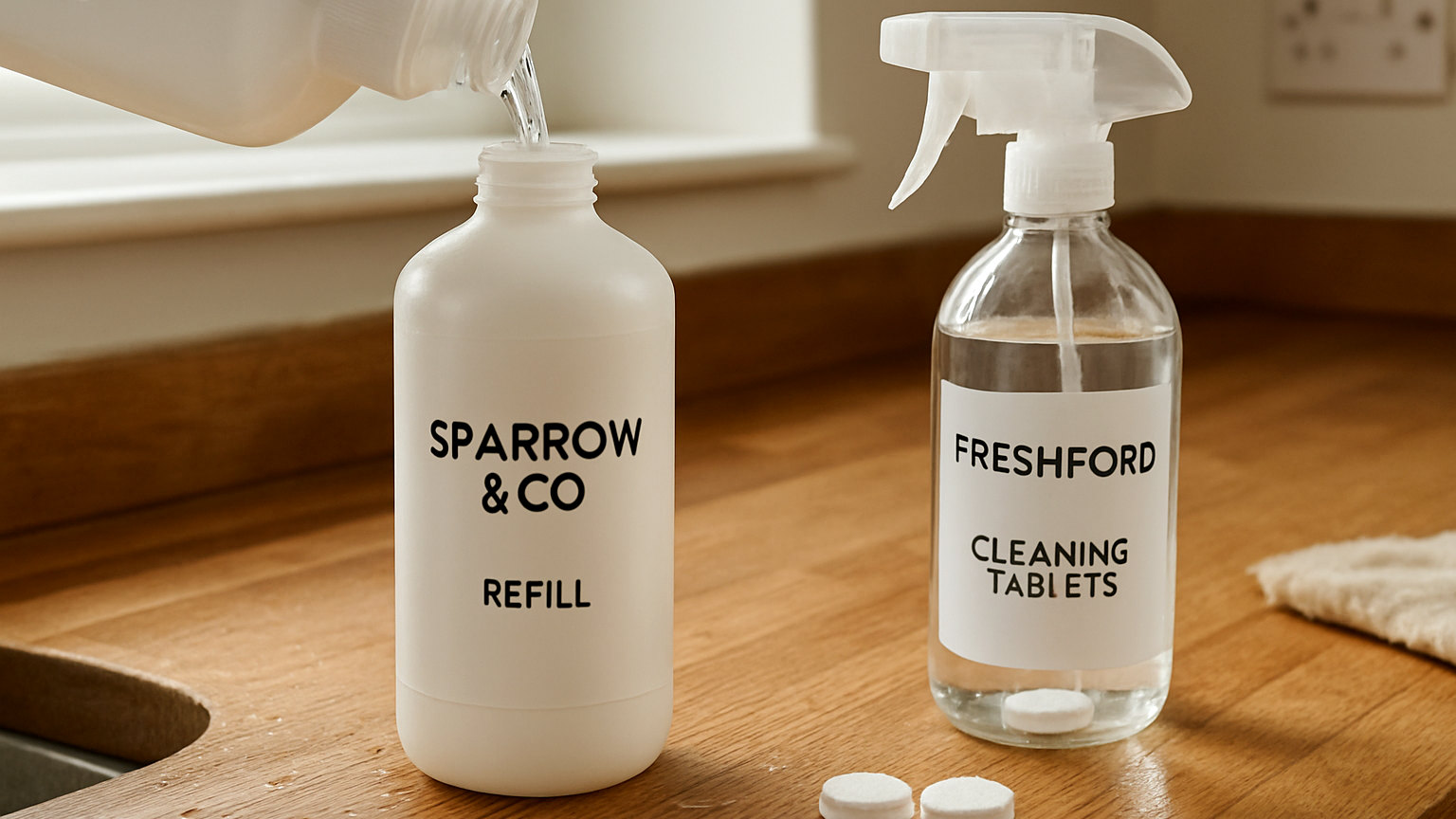
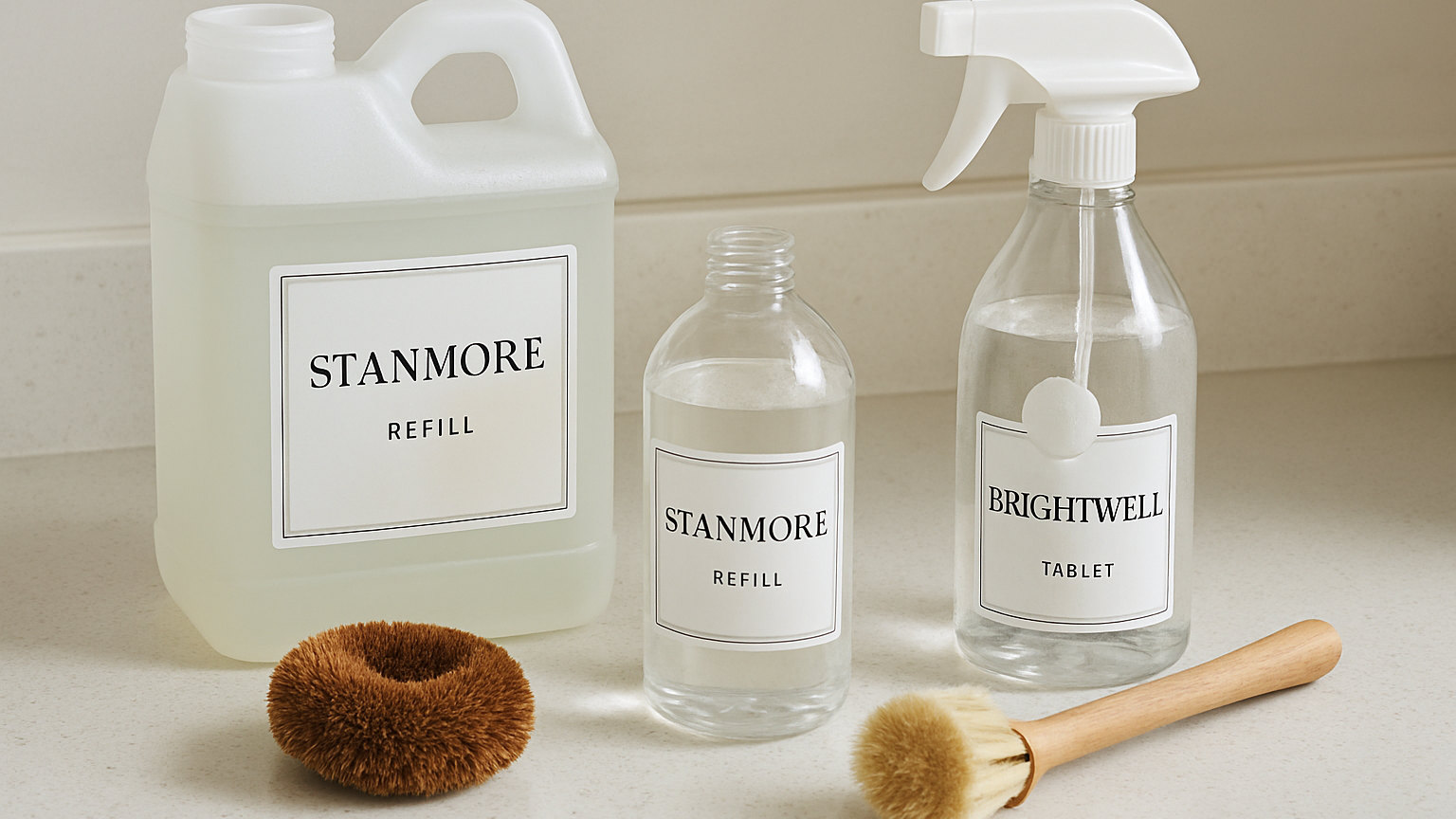
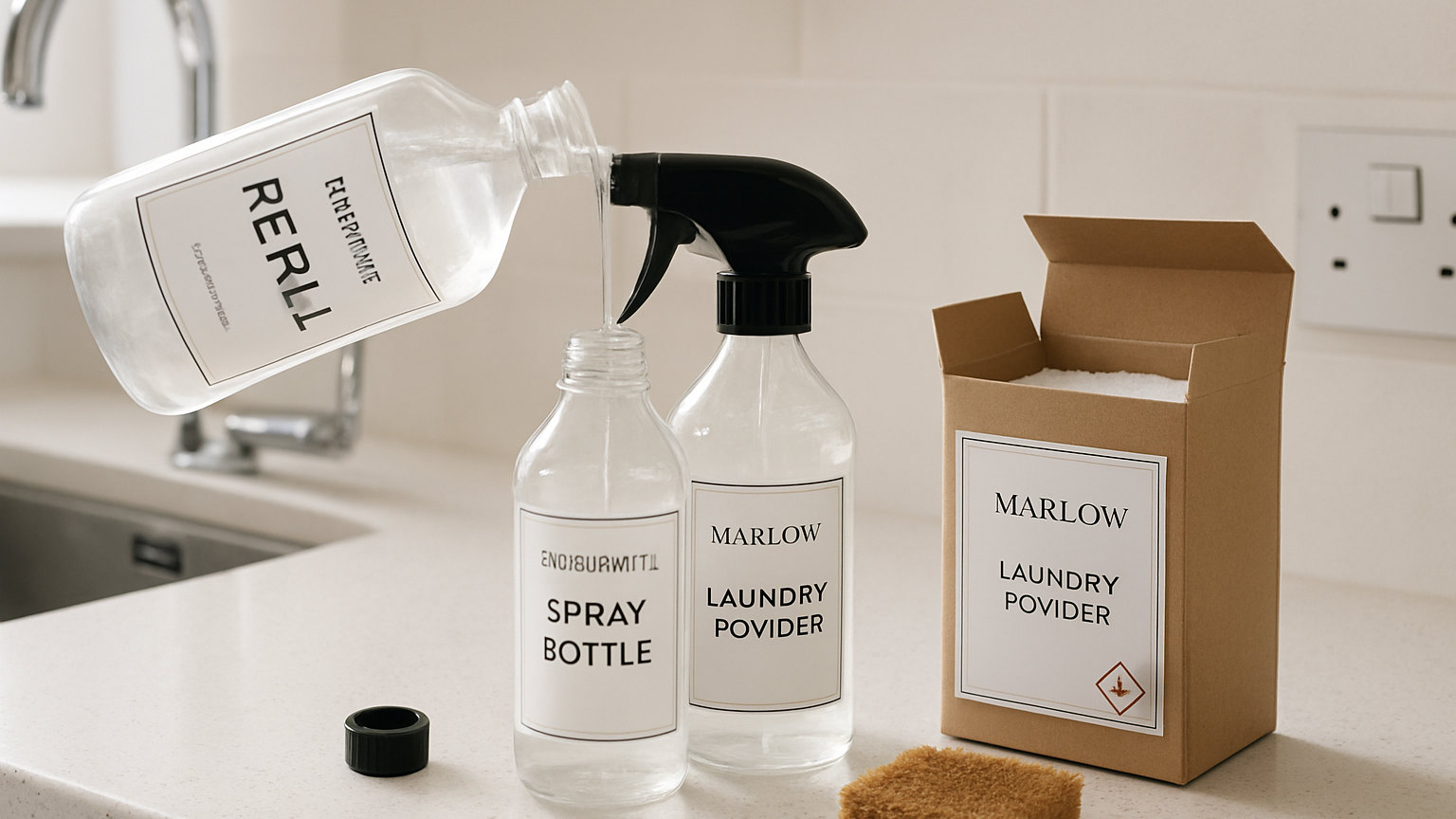
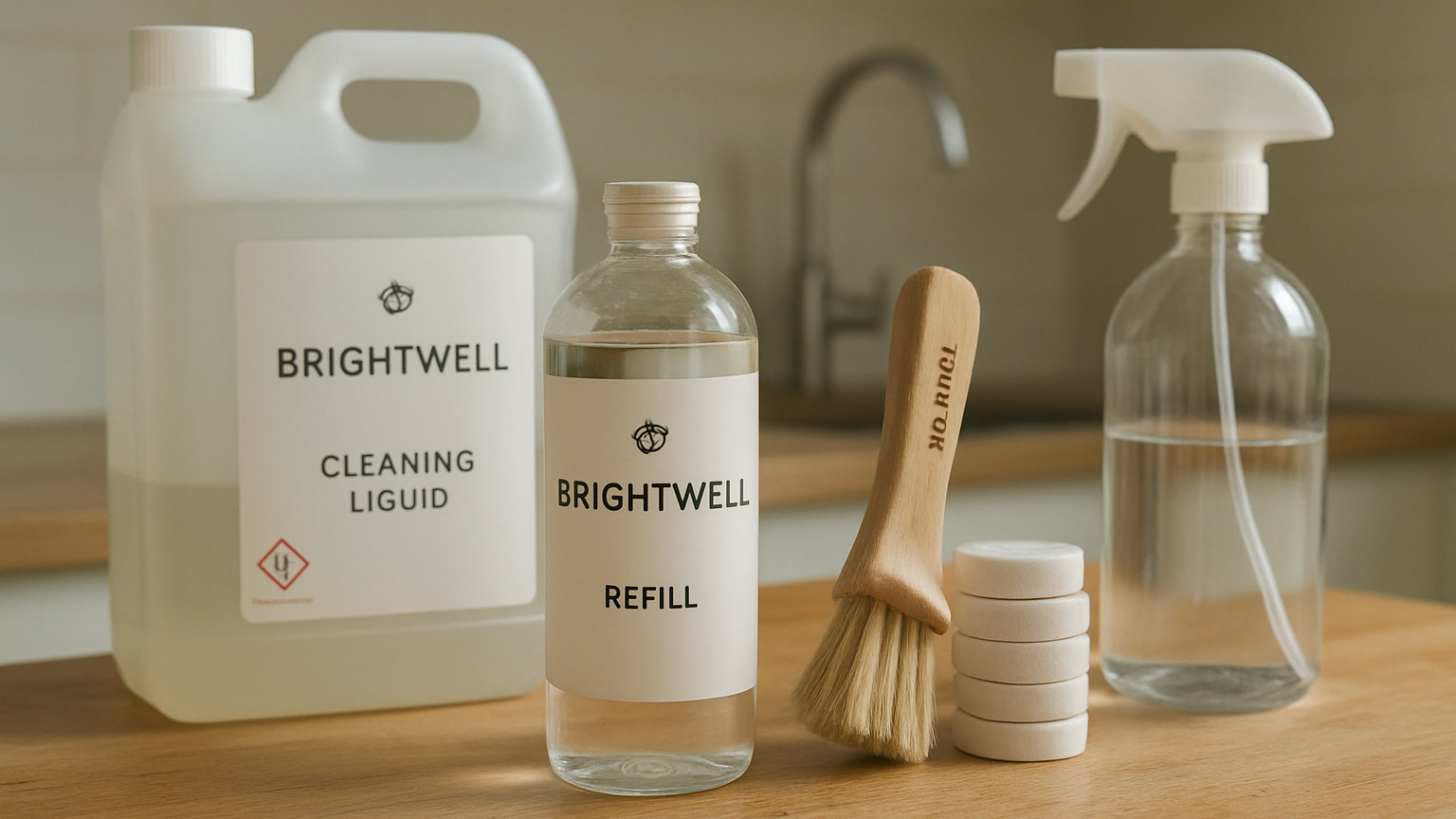
A ready mixed spray is mostly water in a plastic bottle, and removing that water is the single largest improvement available in cleaning products.
A handful of schemes have published criteria and independent verification, and a great many logos on packaging have neither.