Building a cleaning kit works best in stages. Start with the products that cover the most ground, add specific items only when a job actually requires one, and the cupboard stays small and useful rather than filling with half used bottles.
What should you buy first?
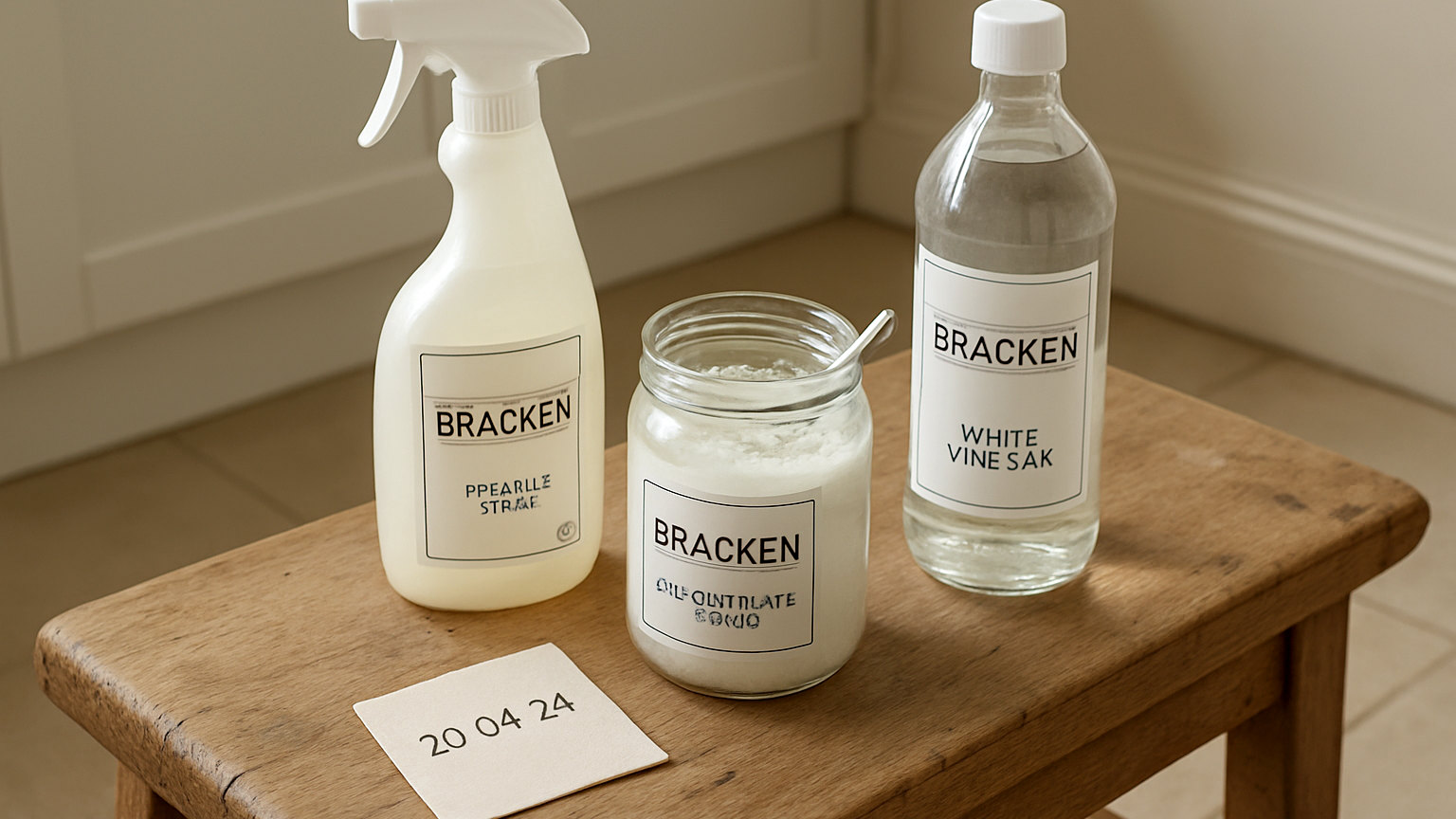
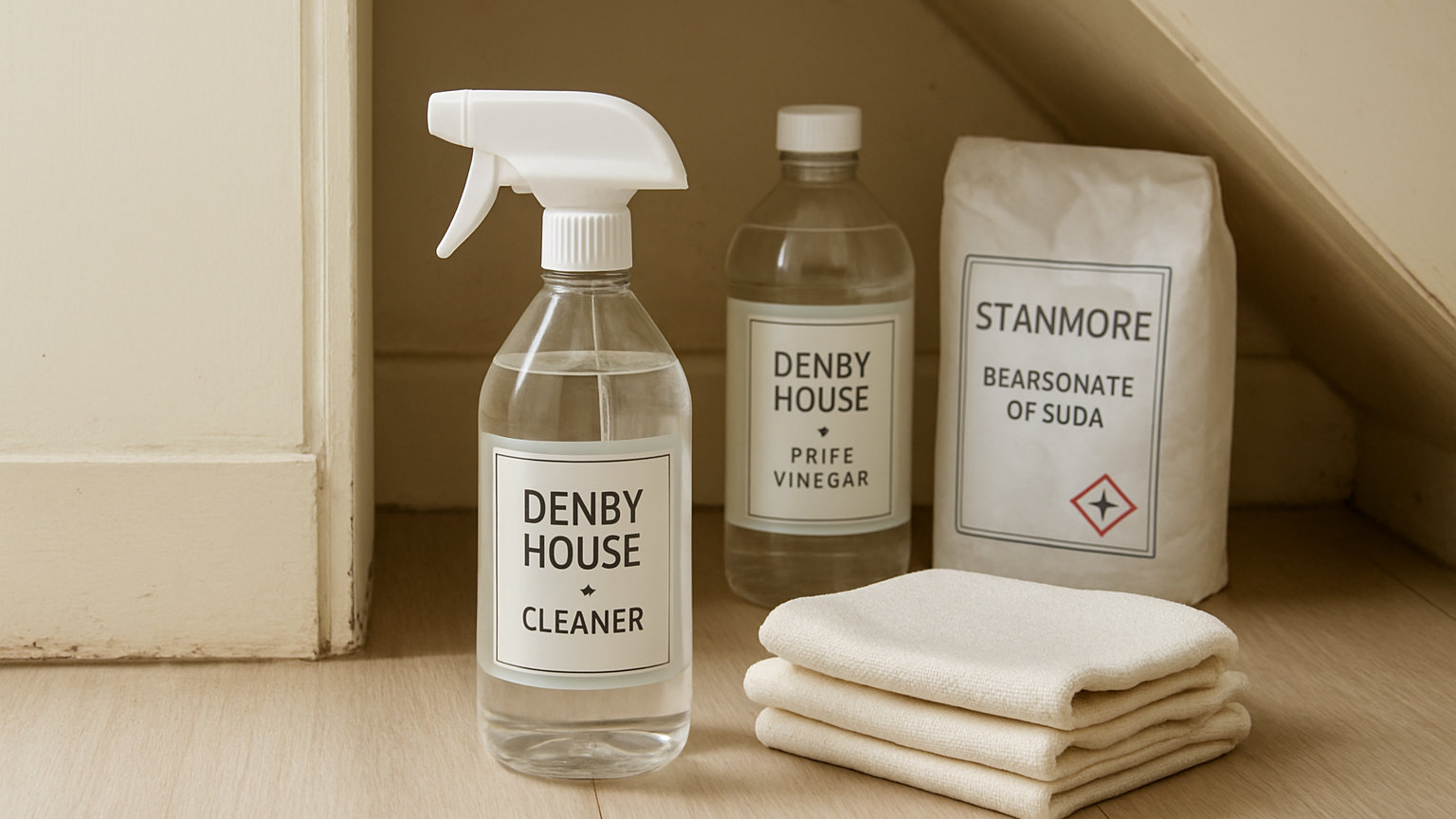
- Washing up liquid – degreasing, general cleaning, stain pre-treatment.
- Bicarbonate of soda, in a large bag – scouring, odour, gentle paste.
- White vinegar, in a large bottle – limescale, soap scum, glass.
- Oxygen bleach, as plain powder – stains, laundry, grout.
- A pack of microfibre cloths.
Those five handle a substantial proportion of household cleaning and cost very little.
What comes next?
- Soda crystals – heavy grease and drains.
- A cream cleaner – sinks, hobs, baths.
- A biological laundry detergent – protein stains and general washing.
- A general purpose spray – everyday wiping.
- Citric acid – descaling appliances.
- A disinfectant – for the situations that need one.
What tools matter?
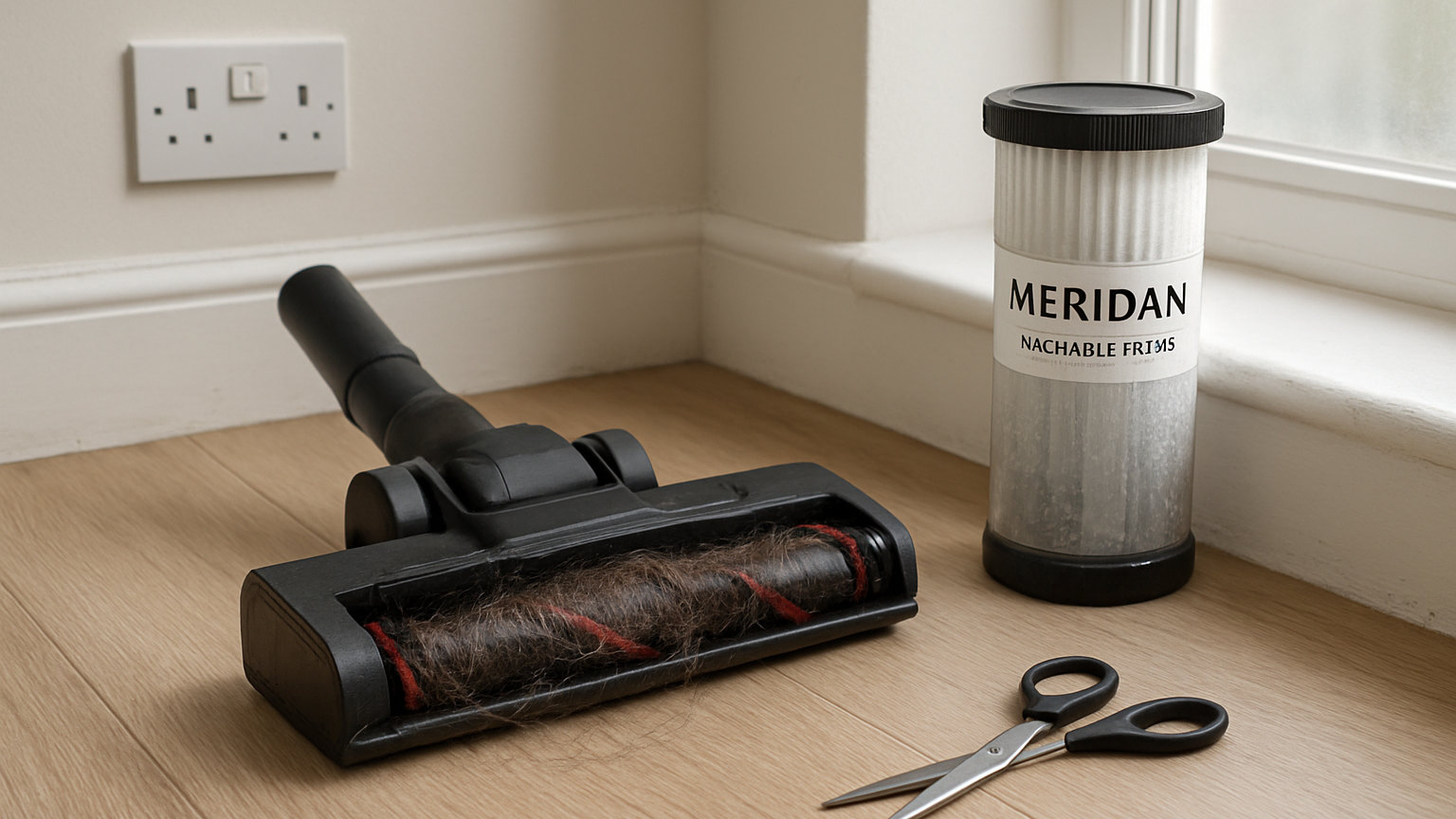
Microfibre cloths in several colours, a non-scratch pad, a grout brush, an old toothbrush for detail, a squeegee for the shower, a flat microfibre mop, a decent vacuum and a plastic caddy to carry it all.
Tools are worth spending on more than products are. A good microfibre cloth outperforms a cheap one substantially, and a squeegee prevents more bathroom cleaning than any spray.
What should you add only when needed?
An enzyme cleaner if you have pets. Surgical spirit if ink is a recurring problem. A stone safe cleaner if you have natural stone. A leather cleaner if you have leather furniture. A fungicidal wash if you have a damp problem.
Buying these in advance means a cupboard of products for situations that may never arise.
How should it be stored?
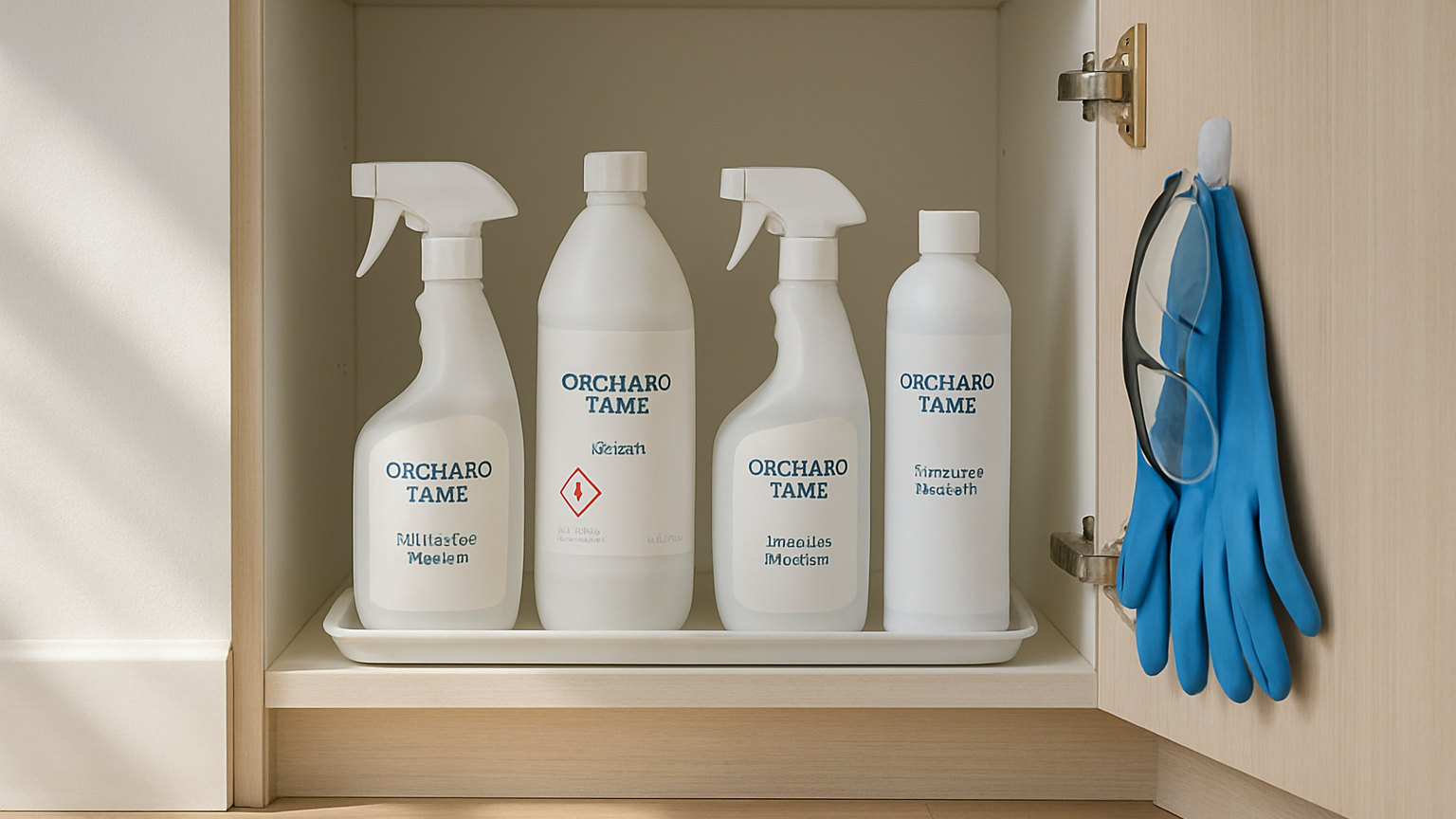
Together, upright, sealed and out of reach of children and pets. Keep bleach separate from any acidic product, since the two must never come into contact.
Never decant anything into an unlabelled bottle, and particularly never into a drinks bottle. Keep everything in its original container with the label intact.
What does it cost?
The starter list is a few pounds for each item, and most last months. Buying ingredients in bulk rather than branded formulations is where the saving is, and a complete kit costs less than a handful of branded sprays.
How do you avoid accumulating duplicates?
Before buying anything, ask which of the four chemistries it is: surfactant, alkali, acid or oxidiser. If you already own something in that category, you probably do not need it.
That single question prevents most of the accumulation that fills cleaning cupboards.
What should you do with what you already have?
Use it up rather than throwing it out. Group similar products together and you will usually find three or four versions of the same thing, which tells you what not to buy again.
Dispose of anything unwanted responsibly rather than pouring it down a drain, and check with your local authority for anything hazardous.
What is the honest minimum?
Washing up liquid, bicarbonate of soda, white vinegar, oxygen bleach and a bag of cloths. Everything beyond that is convenience or a specific requirement, and a household with only those five can clean almost anything properly.
Where should you buy it?
Bicarbonate, soda crystals, citric acid and oxygen bleach are all sold far more cheaply in large bags, whether from hardware shops, online or in the laundry aisle, than in small tubs in the baking or cleaning section of a supermarket. The same product in a kitchen sized tub frequently costs many times more per kilogram for exactly the same chemistry.
How do you know when to add something?
When you meet a job twice that your existing kit handles badly. One awkward stain is not a reason to buy a specialist product; the same problem recurring three times is. That approach builds a kit matching the house you actually live in, rather than a cupboard of products bought in advance for situations that never arose.