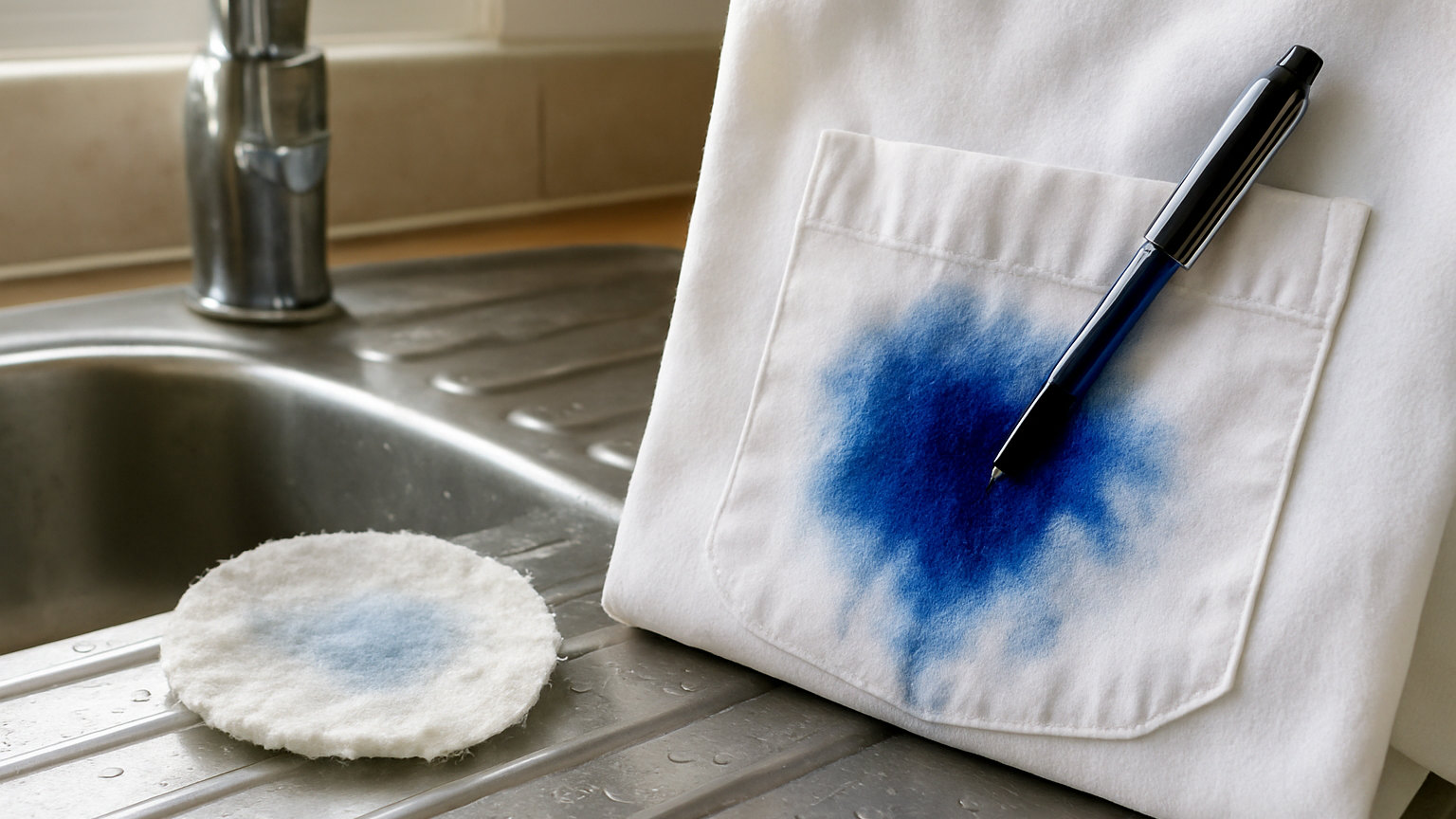
A biro left in a pocket and put through a wash cycle is a genuinely bad outcome, because the ink is distributed across every item in the drum and into the machine itself. The good news is that a great deal of it is recoverable, provided nothing goes anywhere near heat before it has been dealt with.
What is the first rule?
Nothing goes in the tumble dryer. Nothing gets ironed. Heat sets ink pigment into fibre permanently, and a load that could largely have been rescued becomes a load of ruined clothing after one hot cycle.
Take everything out of the drum and keep it damp while you work.
What should you do with the load?
- Remove the pen and check for any remaining pieces, including the spring and the tip.
- Separate the worst affected items from those with only light marking.
- Treat heavy marks individually with surgical spirit over a pad of white kitchen paper, working from the reverse.
- Rewash the whole load immediately on the warmest cycle the fabrics allow, with a full dose of detergent.
- Add a cup of white vinegar to the drum, which helps lift residual pigment.
- Check every item while damp before anything is dried.
- Repeat for anything still marked, and air dry rather than tumble drying.
How do you clean the drum?
This matters as much as the clothes, because ink left in the machine transfers into the next load. Wipe the drum thoroughly with a cloth and surgical spirit, paying attention to the area under the lifters where residue collects.
Pull back the door seal and clean underneath it, which is where most of the ink will have settled. Then run an empty cycle at 60 degrees with detergent, and wipe the drum again afterwards.
Check the detergent drawer and the filter as well, since pen components and ink residue end up in both.
What about white items?
These have the best prospects, because oxygen bleach is available. After the solvent treatment and the rewash, soak white cottons overnight in warm water with a generous dose of oxygen bleach, then wash at 60 and dry in sunlight.
Ink on white cotton frequently comes out completely with this sequence, even when the initial result looked hopeless.
What about coloured and delicate items?
Harder, since strong treatments risk the fabric dye. Treat marks individually with surgical spirit, tested on a seam first, and rely on repeated washing for the rest. Accept that some shadow may remain.
Wool and silk in the load should be treated very gently and may be better taken to a professional cleaner.
What if it was a permanent marker rather than a biro?
Worse, and the same approach applies with lower expectations. Marker contains a resin designed to bond, and distributed across a warm wash it will have set into many of the fibres. Treat individually, rewash, and expect partial results.
What about a leaking fountain pen?
Considerably better news. Most fountain pen ink is water based dye and comes out with a cold rinse and a normal wash, sometimes with an oxygen soak for what remains. Rinse in cold water rather than warm, since some fountain pen inks contain iron compounds that behave like rust if heated.
How do you avoid it?
Check pockets, every garment, every time. It is the single most useful laundry habit there is, and it also catches tissues, lip balm, coins and hair grips. Establishing it as a fixed step when loading the machine takes a few seconds and prevents a problem that costs an evening and sometimes a wardrobe.
What else commonly goes through a wash?
Tissues, which cover a load in white fragments and need shaking out and a second wash. Lip balm and crayon, which melt and spread as grease. Coins and keys, which damage the drum and the glass. And hair grips, which end up in the filter. All of them are caught by the same thirty second pocket check, which is why it is worth making automatic.