Vacuum cleaners rarely wear out. They are usually replaced because performance has declined through neglect, or because one inexpensive part has failed and replacing it seemed harder than buying a new machine. Four habits keep one working properly for a decade or more.
What are the four habits?
- Empty before it is full. Performance drops well before the container looks full.
- Wash the filters monthly and dry them completely before refitting.
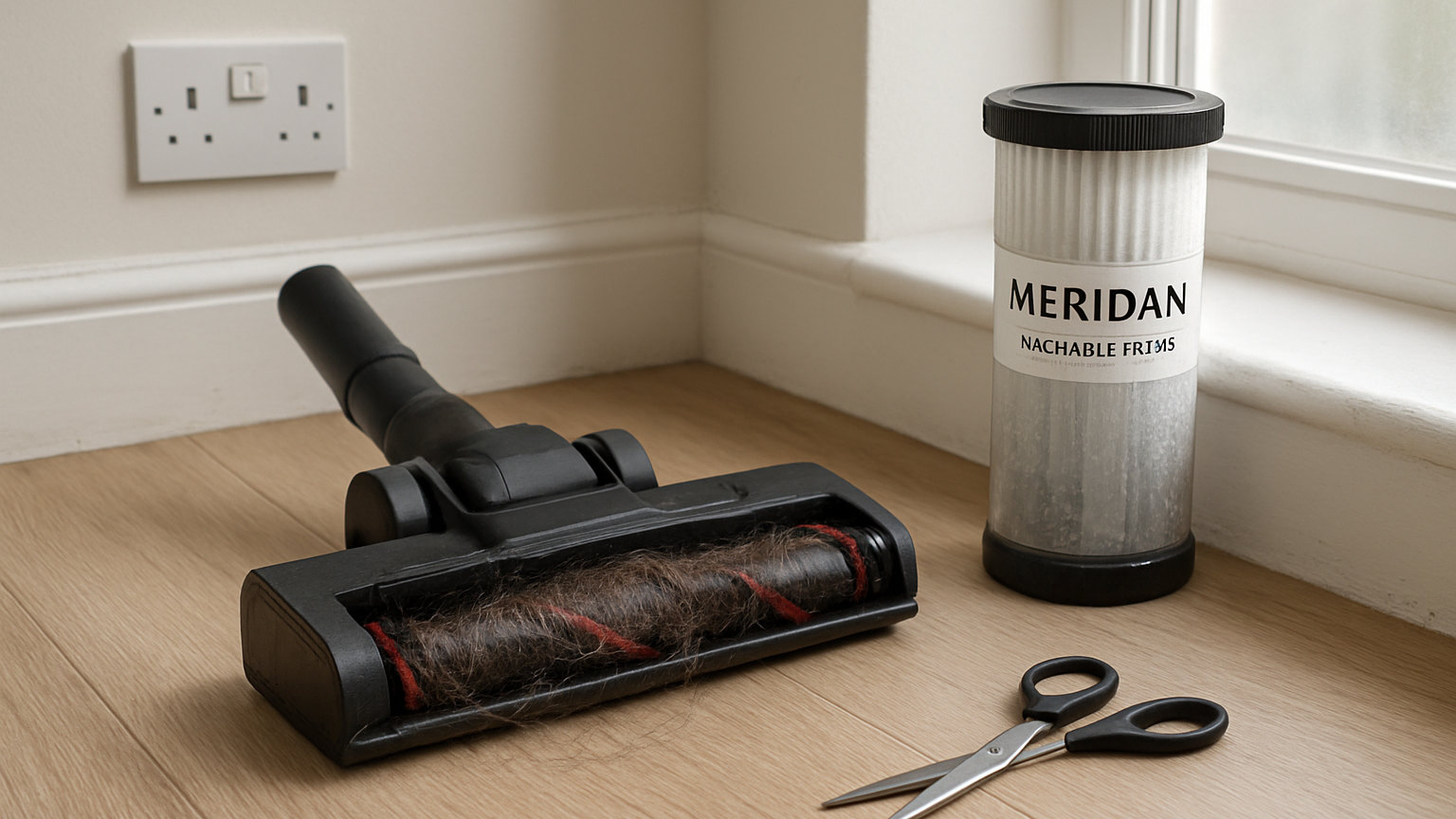
- Clear the brush bar of hair and thread regularly.
- Check the hose and head for partial blockages occasionally.
Together these take about twenty minutes a month and prevent almost every performance complaint.
Why does a restricted airflow damage the machine?
Because the air passing through the motor is what cools it. A clogged filter or a blocked hose means less air, the motor runs hotter, and heat is what kills motors.
Most machines have a thermal cut-out that stops the motor before damage occurs. A vacuum that cuts out and restarts after half an hour is not faulty; it is telling you something is restricted, and continuing to run it that way shortens its life.
What are the consumable parts?
- Filters – washed monthly, replaced every six to twelve months if not washable.
- Belts on upright machines – every year or two.
- Brush bars – when bristles wear short or bearings grind.
- Hoses – when they split or crack.
- Batteries on cordless machines – every three to five years.
- Seals – when they perish and let air in.
All of these are inexpensive relative to a new machine and most are straightforward to fit.
How should the cord be treated?
Unplug by the plug rather than yanking the cord, which is the most common way the connection at the plug fails. Do not run the machine over the cord, which damages the insulation.
On a retractable cord, feed it back with a hand rather than letting it whip in, which frays the outer sheath at the entry point. Check the cord periodically for nicks and for any hardening near the machine end.
How should it be stored?
Somewhere dry, with the hose not tightly kinked and the cord loosely wound. Standing a machine on its brush bar flattens the bristles over time.
Store a cordless on its dock or charged rather than flat, and at room temperature rather than in a cold garage, since batteries dislike both extremes.
What should never go in it?
Water or anything damp, unless it is a wet and dry machine. Fireplace ash, which is extremely fine, passes through filters and destroys motors, and which is a fire risk if warm. Plaster dust and building debris. Broken glass. And anything sticky.
A single vacuum of a hearth or a building site does more damage than years of normal use.
When is a repair worth it?
Almost always for a filter, belt, brush bar, hose, seal or battery on a machine that is otherwise sound. These are the common failures and they cost a fraction of a replacement.
A failed motor on an older budget machine is usually the point to replace. On a good quality machine a motor replacement can still make sense.
How do you judge a machine before buying?
Check whether spare parts are published and sold. A manufacturer that sells filters, belts, brush bars and batteries directly is one whose machines can be kept running. One that sells nothing has made a machine with a fixed life.
What is the realistic lifespan?
Eight to fifteen years for a well maintained corded machine, and less for a cordless where the battery is the limiting factor. Cheap machines are frequently retired at three or four years, and almost always because of the filters.
What about servicing?
Domestic vacuums are not usually serviced in the way an appliance is, and independent repair shops exist and will replace motors, bearings and cords economically on better machines. For anything that has cost a meaningful amount, a repair quote is worth getting before replacing it.