Most household stains are handled by a small number of cheap, general purpose items. A kit built around six of them will deal with the great majority of what happens in a kitchen, at a table or on a carpet, and it costs less than two or three of the specialist products it replaces.
What are the six essentials?
- Washing up liquid – the first response to anything greasy or oily, and safe on almost every surface.
- Oxygen bleach or a laundry booster – for soaking out tannins, fruit, tea, coffee, wine and general dinginess. Colour safe.
- A biological or enzyme detergent – for protein stains: blood, milk, egg, gravy, sweat and grass.
- White vinegar – for limescale, odour, and neutralising alkaline residues.
- Bicarbonate of soda – for odour absorption, mild abrasion and as a paste for spot treatment.
- Clean white cloths and kitchen paper – white specifically, so no dye transfers onto damp fabric.
Between them these cover grease, protein, tannin, pigment and odour, which is most of what stains anything.
What is worth adding?
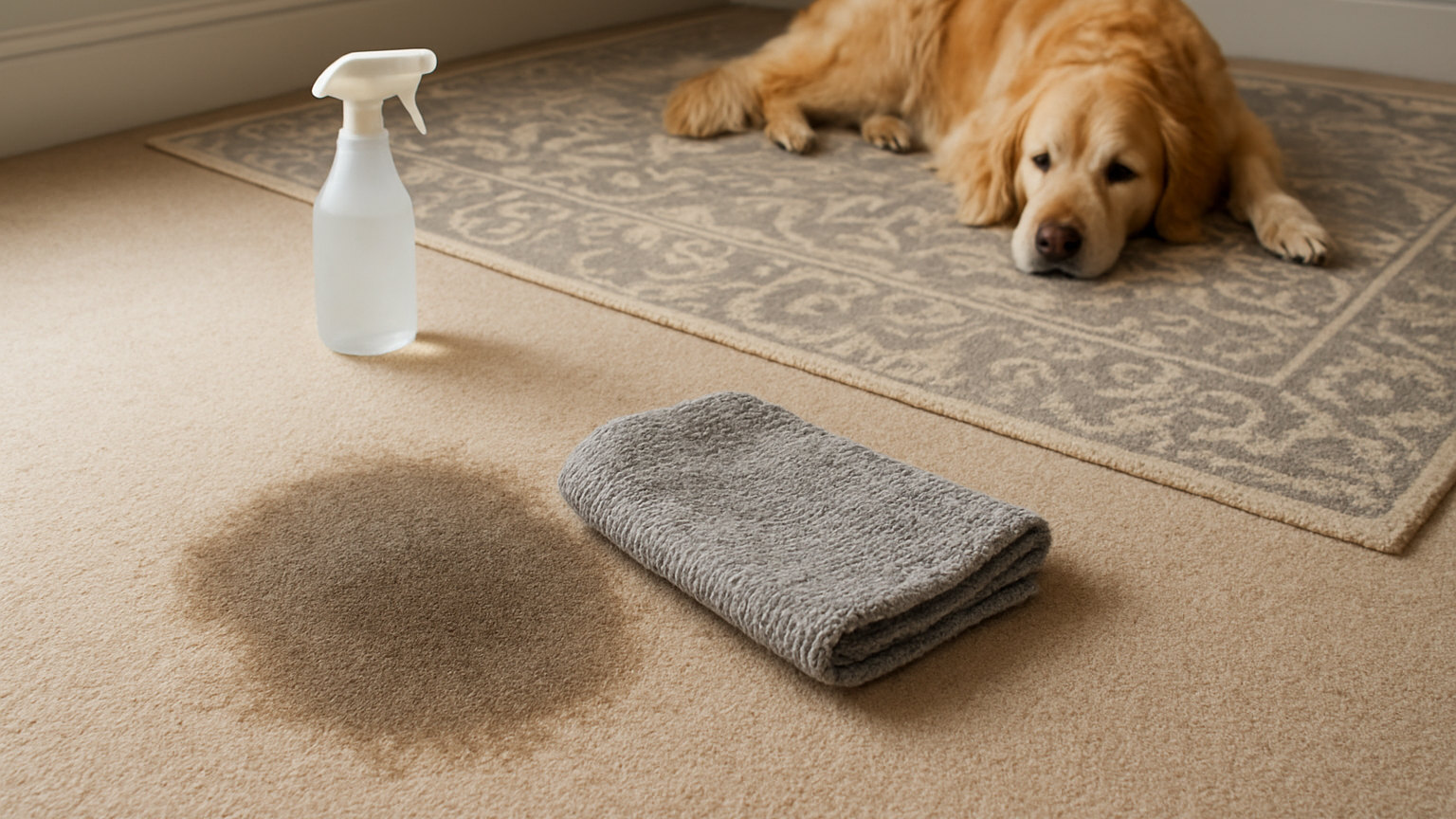
An enzyme cleaner formulated for pet accidents, which is genuinely different from laundry detergent and the only thing that reliably removes urine odour. A solvent based stain remover for ink, adhesive and anything that will not dissolve in water. And surgical spirit, which handles a surprising range of marks including some inks and adhesive residue.
A plastic scraper or an old bank card is worth keeping with the kit, since lifting solids off cleanly is the first step in most treatments.
What does each one actually do?
Washing up liquid contains surfactants that surround fat and lift it into water, which is why it is the right first move on oil, butter, chocolate and curry.
Oxygen bleach releases hydrogen peroxide in warm water and oxidises coloured compounds into colourless ones. It needs warmth and time, which is why it works as a soak and does very little sprinkled on dry.
Enzymes break specific molecules apart: protease for protein, lipase for fats, amylase for starch. They work best in cool to warm water and are destroyed by high temperatures.
Vinegar is acidic and neutralises alkaline residues. Bicarbonate is alkaline and neutralises acidic ones. They address opposite problems, which is why using them together achieves nothing.
What is not worth buying?
Most single purpose stain products, which duplicate what the six essentials do at a considerably higher price. Anything promising to remove every stain, since the chemistry required for grease and for protein is different and no single product does both well.
Salt, as a stain remedy, which is a persistent piece of folklore with very little behind it.
How should the kit be stored?
Together, in one box or basket, somewhere accessible rather than at the back of a cupboard under the sink. The value of a stain kit is in the first two minutes after a spill, and a kit that takes five minutes to find has already lost most of its usefulness.
Keep a second small set upstairs if the house has bedrooms and a bathroom on another floor.
What are the safety points?
Never mix products, and particularly never mix anything containing bleach with anything acidic, which releases chlorine gas. Keep oxygen bleach sealed and dry, since it loses potency once damp. Store solvents away from heat, and keep everything out of reach of children.
What is the most useful habit?
Testing. Every product should be tried on a hidden area first, whether that is an inside seam, an offcut of carpet or a corner behind a sofa. Thirty seconds of testing prevents the kind of damage that is worse than the stain, which is the most common way a rescue attempt goes wrong.
How long do the contents last?
Most of it indefinitely, with one exception. Oxygen bleach slowly loses its potency, particularly if it gets damp, so a tub that has been open in a humid utility room for two years will be noticeably weaker than a fresh one. Buy it in quantities you will use within a year and keep the lid on properly.