Almost every food stain is easy in the first two minutes and difficult afterwards. The two instinctive responses are both wrong: rubbing the mark, which forces it deeper into the fibres and damages the surface, and reaching for hot water, which sets a whole class of stains permanently.
What is the correct first response?
- Lift off any solid material with a blunt edge such as a spoon or a card, scraping rather than pressing.
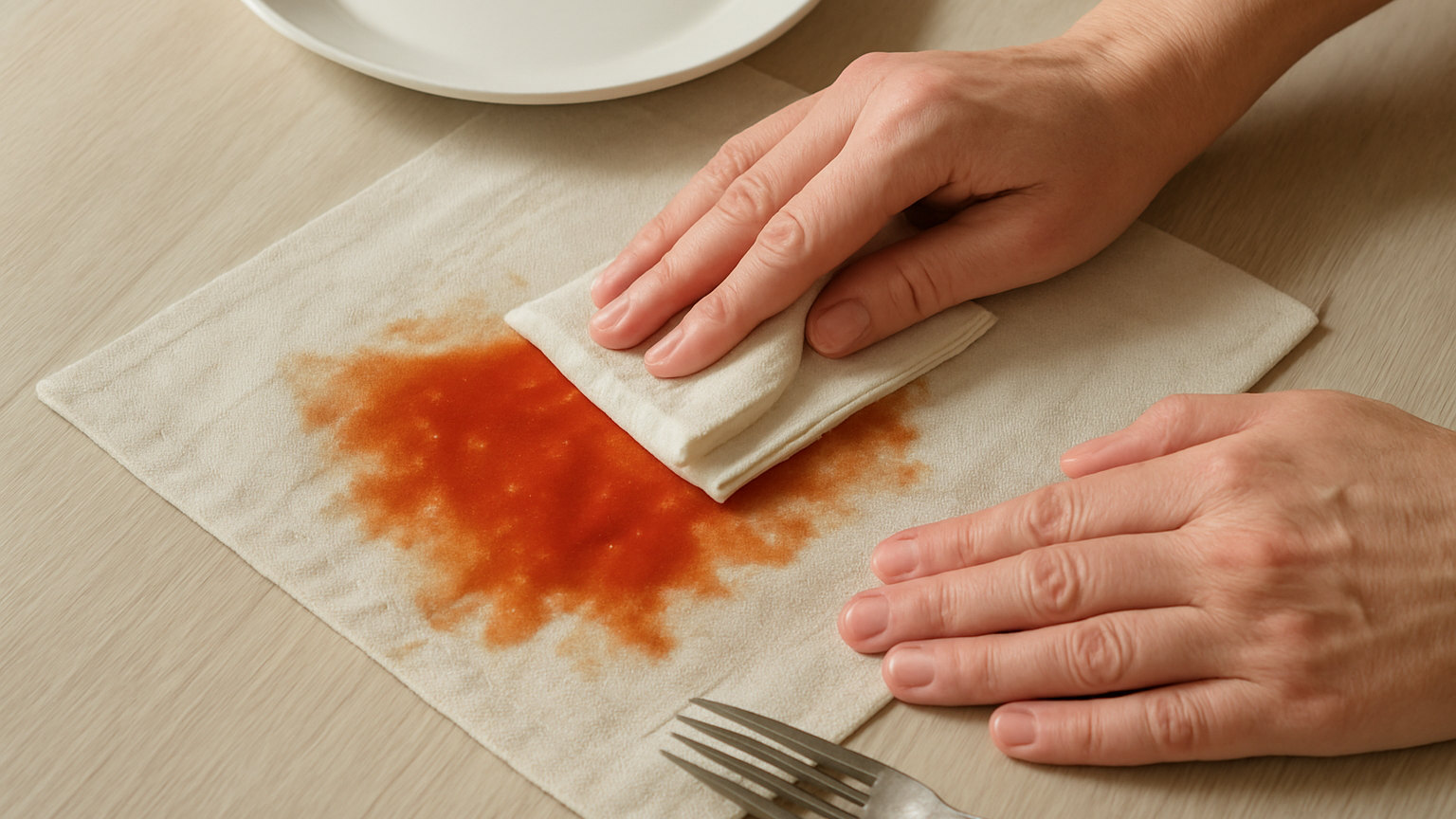
- Blot the liquid with a clean dry cloth or kitchen paper, pressing straight down and lifting.
- Keep moving to a clean part of the cloth so you are absorbing rather than redistributing.
- Flush with cold water from the reverse side of the fabric where possible, pushing the stain back out the way it came.
- Work from the outside of the mark inwards, which stops it spreading into a larger ring.
- Do not dry it with heat until you are satisfied the stain has gone.
Why does rubbing make it worse?
Because it drives the staining material between the fibres and into the core of the yarn, where no amount of surface treatment will reach it. It also abrades the fabric surface, leaving a dull or fluffy patch that remains visible even after the colour has gone.
On carpet and upholstery, rubbing damages the pile permanently and spreads the stain outward into a much larger area than the original spill.
Why cold water rather than warm?
Because heat sets protein based stains by coagulating the protein into the fibre, exactly as heat sets an egg. Milk, egg, gravy containing meat juices, and anything with cream or cheese in it all fall into this group, and one rinse under a hot tap can make them permanent.
Cold water cannot set anything. It is always the safe choice when you are not sure what caused the mark, and a cold rinse can always be followed by a warm wash afterwards.
Which stains are the exception?
Greasy and oily stains need warmth, since fats will not dissolve in cold water. For those, blot as much as possible, apply washing up liquid directly to the mark, work it in gently with a finger, and then use the warmest water the fabric allows.
If a stain has both a greasy and a protein element, such as a creamy sauce, start cold to deal with the protein and then go warm for the grease.
What should you flush from the back?
Almost everything, on a washable garment. Holding the fabric face down under a cold tap and running water through from the reverse pushes the staining material back out through the entry point rather than driving it further through the weave.
It is the single most effective technique for a fresh spill and takes about thirty seconds.
What if you are away from home?
Blot with a napkin, then use plain cold water from a glass. Avoid soap from a public washroom, which is often heavily perfumed and can leave its own mark on delicate fabric. Do not use a hand dryer on the damp patch, since heat is the thing to avoid.
The aim is damage limitation until you can treat it properly, and keeping the stain wet is better than letting it dry.
What about a stain that has already dried?
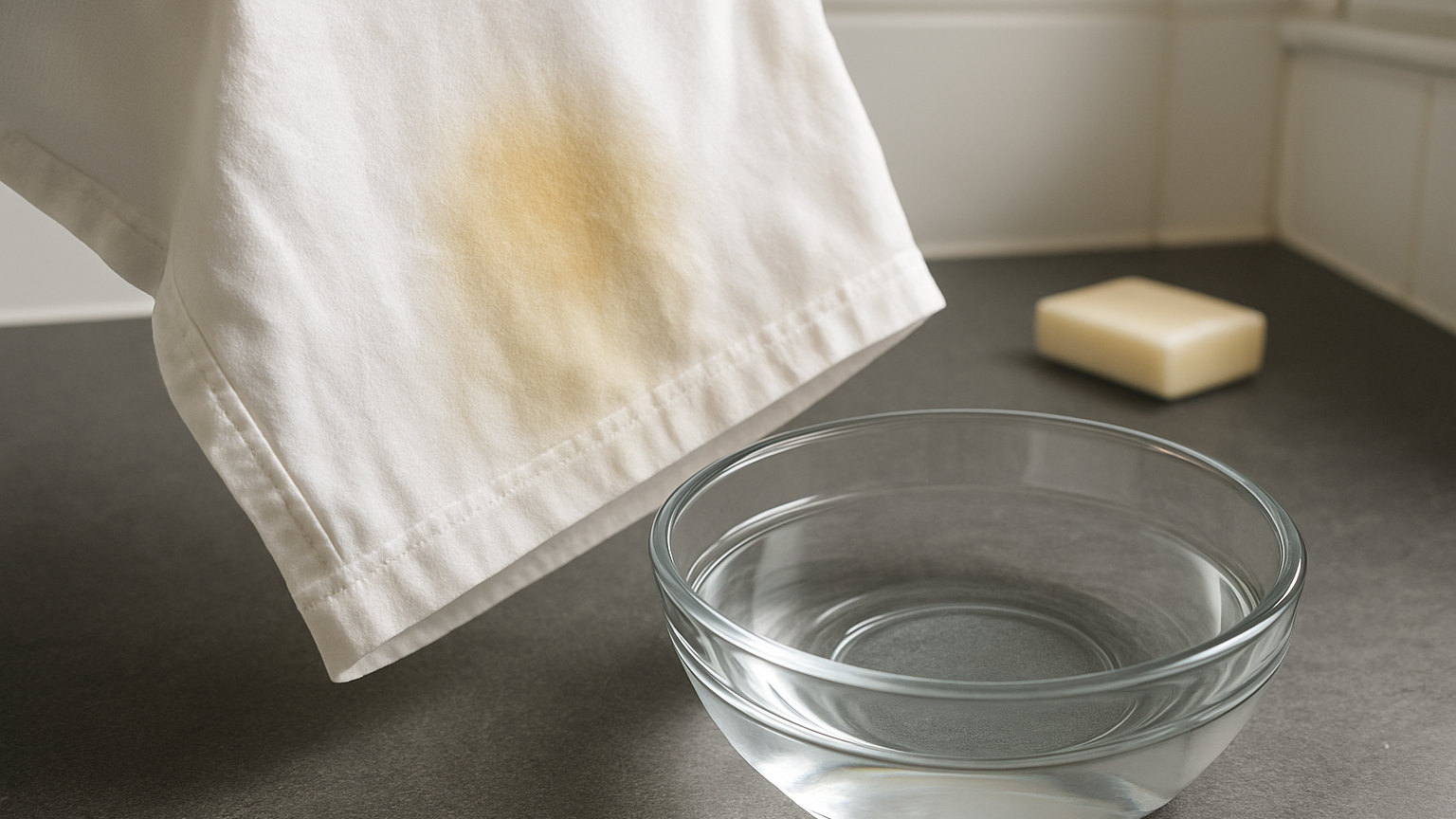
Soak it. Cold water for an unknown or protein stain, warm with a little detergent for anything greasy, and give it thirty minutes to several hours. Soaking rehydrates the material and lets it release, which no amount of scrubbing will achieve on a dry mark.
An enzyme based detergent helps considerably on food stains, since the enzymes break down proteins, starches and fats specifically.
What is the last check before drying?
Look at the area in good light while it is still wet, and again while damp. A stain that is faintly visible when wet will be clearly visible once dry, and a tumble dryer will set whatever remains. Treat it again rather than putting it through the heat.