A car is the worst environment for pet mess. It is a sealed box, almost every surface is fabric over foam, it gets hot, and it is rarely ventilated for long. A damp dog carried once can leave a smell that persists for weeks, and hair works into car carpet more tenaciously than into anything in a house.
What is the order of work?
- Remove everything: boot liner, mats, blankets, toys.
- Shake and wash those separately.
- Remove the hair before introducing any moisture.
- Vacuum thoroughly, including the seat backs, the sides and under the seats.
- Treat any specific marks with an appropriate cleaner.
- Clean the hard surfaces and the glass, which carry nose prints and drool.
- Deal with any smell at source with an enzyme cleaner.
- Ventilate properly, with the doors open for as long as possible.
What actually removes dog hair from car carpet?
Friction rather than suction. Hair is woven into the pile and a vacuum passes straight over it.
- A rubber brush or a rubber pet hair tool, dragged in one direction, which gathers hair into rows.
- A damp rubber glove, wiped firmly over the surface.
- A pumice stone made for fabric, which lifts embedded hair very effectively.
- A stiff brush to agitate the pile before vacuuming.
- A vacuum with a motorised brush head, if one will fit the space.
Loosen first, vacuum second. Vacuuming without agitating the pile removes a fraction of what is there.
Why does the smell linger?
Because car carpet sits on sound deadening material that holds moisture, and because the interior gets hot. A damp dog puts moisture into the carpet and the seat foam, and warmth accelerates the bacterial growth that produces the smell.
The fix is drying and enzymes rather than fragrance. Leave the doors open on a dry day, run the fan on cold directed at the affected area, and use an enzyme cleaner on anything that soaked in.
What about accidents in the car?
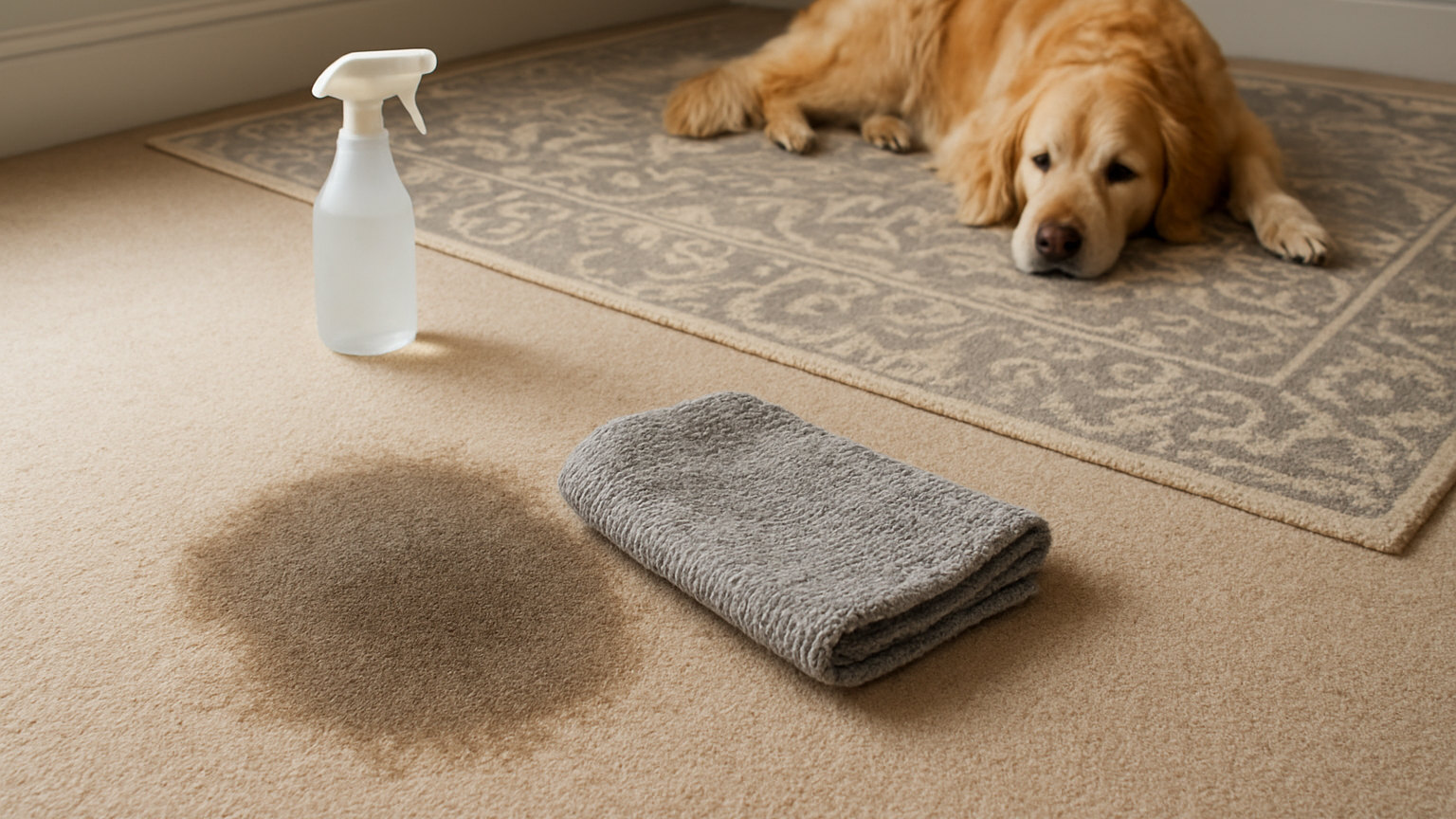
Treat exactly as you would on carpet at home, with the extra difficulty that everything is harder to reach and harder to dry. Blot hard with towels, apply an enzyme cleaner generously, leave it for the contact time, blot again and press dry towels down under weight.
Then dry aggressively with the doors open and a fan, because a damp car interior in summer grows mould within days.
What about leather and hard trim?
Leather seats are easier than fabric and need a leather cleaner followed by a conditioner, since car interiors dry leather out. Plastic trim takes a damp cloth with a little detergent. Glass needs the detergent and buff method rather than a glass spray alone, since nose prints are protein and oil.
Check perforated seats, where liquid runs through into the foam.
What about claw marks?
On leather they are usually permanent, and a boot liner or a seat cover is the only real prevention. On fabric, raised fibres can sometimes be trimmed carefully with scissors rather than pulled. On plastic door cards, light scratching can be improved with a heat gun used very carefully, though that is a job worth leaving to a trimmer.
What is worth buying?
A fitted boot liner with sides, which contains hair, mud and water and lifts out to be hosed down. A hammock style rear seat cover if the dog travels on the back seat. A rubber pet hair brush kept in the car.
Together they cost far less than a professional valet and remove most of the problem permanently.
What about the dog itself?
Dry the dog before it gets in rather than after it comes out. A towel kept in the boot and two minutes at the car door prevents nearly all of the damp related smell, which is the part of this that takes weeks to fix afterwards.
What about travel sickness?
Clean it as vomit rather than as a general mess, which means cold water, blotting and an enzyme cleaner for the residue. A car interior gets hot, so untreated residue smells faster and more strongly than it would in a house. Dogs that are regularly sick in the car are worth discussing with a vet, since it is often treatable and is not something the animal grows out of reliably.