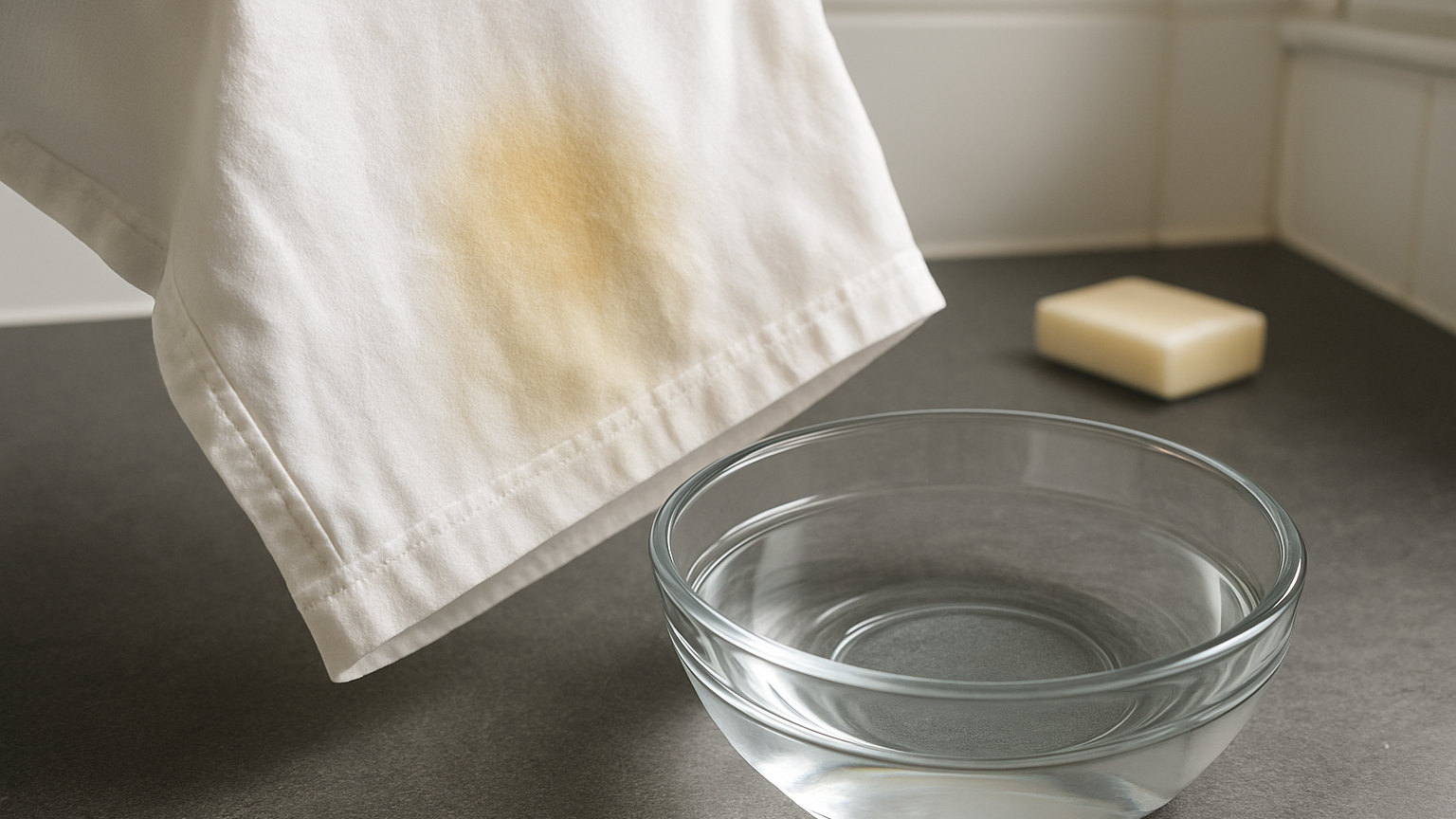
Underarm yellowing is cumulative. It builds from residue left behind after each wear, oxidises slowly, and by the time it is visible it has been developing for months. Everything about prevention is therefore about interrupting that accumulation rather than about treating a mark.
What makes the biggest difference?
- Let antiperspirant dry fully before dressing. Dressing over a damp underarm transfers most of the product straight onto the fabric.
- Use less of it. A thin layer works as well as a thick one and leaves far less residue.
- Rinse the underarm under cold water as soon as the shirt comes off.
- Wash after every wear rather than getting two days out of a shirt.
- Wash at 40 degrees rather than 30 for white cotton, so the skin oils dissolve.
- Never store a shirt that has not been washed since it was worn.
The cold rinse is the one most people skip and the one that prevents the most damage, and it takes thirty seconds at the end of the day.
Does switching product help?
Substantially. Antiperspirants contain aluminium salts, which react with sweat proteins to form the yellow deposit. Deodorants without aluminium control odour by targeting bacteria instead and leave a residue that washes out.
Anyone whose shirts yellow badly is worth trying an aluminium free product for a few months. It will not reduce perspiration in the same way, which is the trade to weigh.
What about vests and shields?
A cotton vest under a shirt takes the perspiration and the residue instead, and a vest can be washed at 60 degrees without concern. It is the traditional solution and it works very well.
Underarm shields, which fix into the garment with adhesive or clips, do the same job for a single shirt and are widely used by people with good shirts. Both are far cheaper than replacing shirts annually.
Which fabrics show it least?
Darker colours, obviously, though the residue is still building and still weakening the fabric. Polyester and blends show yellowing less than pure cotton and hold odour more, which is the trade.
Patterned and textured fabrics disguise marks better than plain smooth ones. Linen and cotton show sweat damp more visibly during wear but yellow less aggressively than a tight synthetic.
What about sweat marks that show during the day?
A different problem from the permanent staining. Loose fitting garments, natural fibres and layering all reduce visible damp. A merino wool base layer manages moisture far better than cotton and is worth knowing about for anyone who finds this an issue.
Mid tones and patterns show damp less than pale plain colours, and pure white and pale grey are the worst.
What about bedding and pillowcases?
The same residue builds there, and pillowcases yellow faster than anything else in a house because of eight hours of contact. Wash them weekly at 60 degrees with a powder detergent, use a pillow protector, and let hair products dry before bed.
Does washing more often wear clothes out?
It does, and it is still the right trade for anything worn against skin under the arms. The damage from residue left in the fabric exceeds the damage from an extra wash, and a shirt washed after every wear lasts longer than one washed after two.
What is the minimum worth doing?
If you adopt only one habit, rinse the underarm of a shirt in cold water as soon as it comes off and put it straight in the wash. That alone prevents most of the yellowing that otherwise takes three oxygen soaks to remove and frequently never comes out at all.
What about hats and caps?
They take concentrated perspiration along the inner band and yellow quickly, and they are rarely washed because of the structure. Wipe the band with a cloth and a little cold water after wearing, and wash the cap by hand in cool water with a biological detergent every few weeks, drying it over a bowl so it keeps its shape.