Scouring pads are graded by abrasiveness, and in the commercial world that grading is indicated by colour. Most household surface damage comes from reaching for the most aggressive pad in the cupboard when a gentler one would have worked.
What do the colours mean?
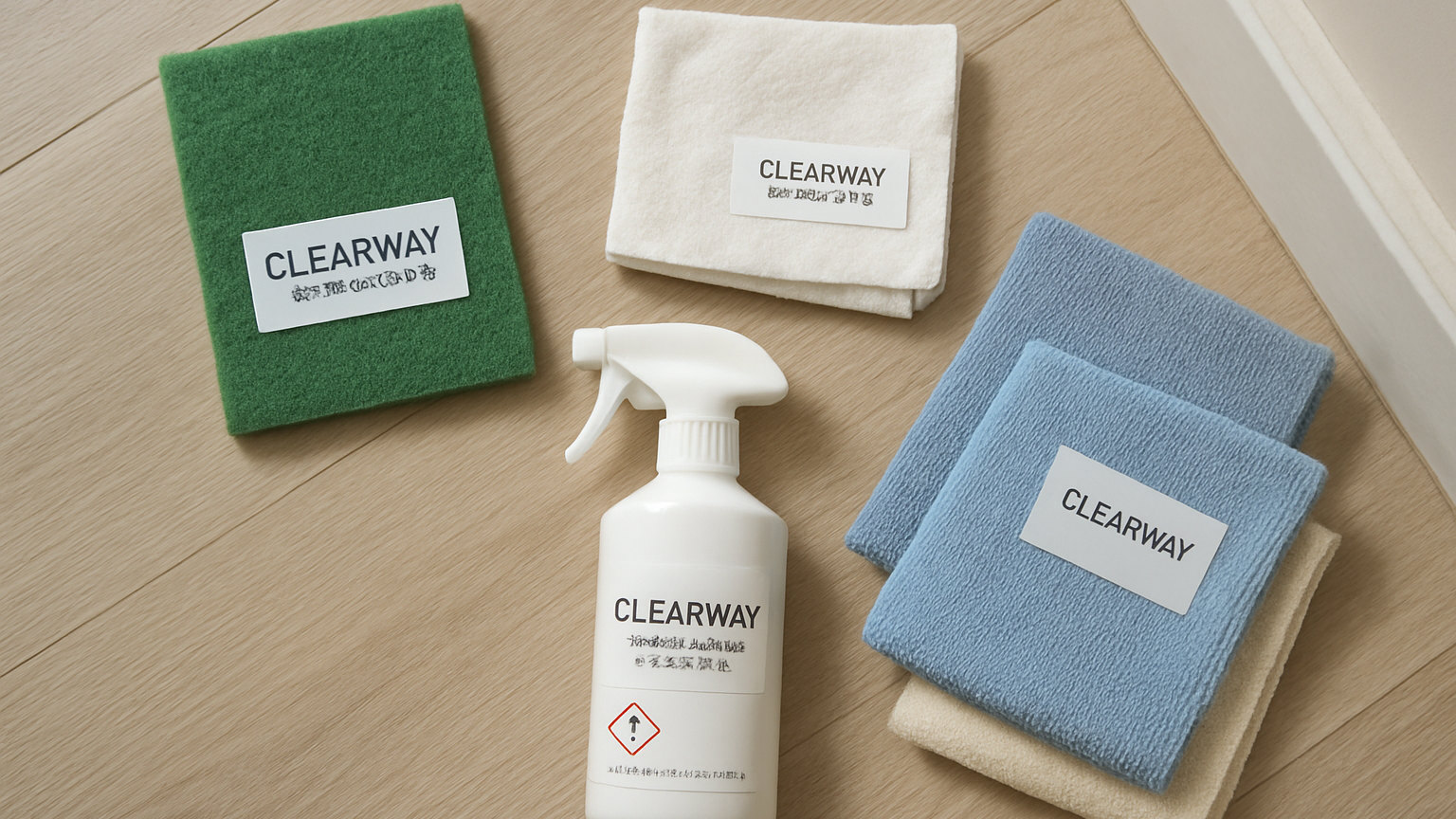
- Green – general purpose, moderately aggressive. Scratches stainless steel, non-stick, glass and most polished finishes.
- Blue – less abrasive, safer on most surfaces.
- White – the gentlest, safe on almost everything including non-stick and polished surfaces.
- Black and brown – heavy duty, for floors and stripping. Not for kitchen surfaces.
- Nylon and mesh scourers – vary widely; check the packaging.
Household packs do not always follow the commercial convention, so read the label rather than assuming.
What does a green pad damage?
More than most people realise. Non-stick coatings, which it destroys. Glass ceramic hobs, which it scratches permanently. Stainless steel, where it leaves visible marks across the grain. Polished stone and quartz, which it dulls. Acrylic baths and shower trays. Enamel, over time. And any printed or lacquered surface.
It is suitable for stainless steel pans, oven shelves, cast iron and other genuinely tough items.
What should never be used on kitchen surfaces?
Wire wool and metal scourers. They scratch almost everything, and on stainless steel they leave iron particles behind that rust and produce orange spotting that people then mistake for a fault in the sink.
They have a place on cast iron and on outdoor jobs, and nowhere near a sink, a hob or a pan with a coating.
What should you use instead?
A white non-scratch pad for almost everything, combined with a cream cleaner and some dwell time. The combination of a mild abrasive in the product and a gentle pad removes most deposits without damage.
For baked on residue, soaking first is the answer rather than a harsher pad. Twenty minutes under a hot damp cloth does more than any amount of scrubbing.
What about copper and brass scourers?
Softer than steel, so they are gentler on pans while still cutting through burnt residue. Useful on stainless steel cookware and still too abrasive for coated or polished surfaces.
They tarnish and break down over time, which is normal.
What about melamine sponges?
They are a very fine abrasive rather than a chemical cleaner, effectively a micro sandpaper. They work extremely well on scuffs and marks and they remove a thin layer of the surface with them.
Keep them off gloss paint, polished surfaces, car paintwork, matt emulsion and anything with a printed finish. Test first, always.
How do you choose for a specific job?
- Start with the gentlest option that could work.
- Give the product time rather than increasing the pressure.
- Soak baked deposits before scrubbing them.
- Escalate only if the gentle approach fails.
- Test anything abrasive in a hidden area first.
Does pressure matter more than the pad?
Both matter, and pressure is the variable people increase instinctively. Working harder with a green pad causes far more damage than the same pad used lightly, and a second pass with a white pad usually achieves the same result.
How should pads be looked after?
Rinse them thoroughly after use, squeeze them out and let them dry, since they harbour bacteria exactly as sponges do. Most can go through a dishwasher.
Replace them when they become clogged, discoloured or misshapen, and keep separate pads for the kitchen and the bathroom.
What about the scouring side of a sponge?
Usually a green grade pad bonded to the foam, which means it should be treated as the most abrasive option in the cupboard rather than as a general purpose one. It is fine on a stainless steel pan and will scratch a non-stick one, a glass hob or a sink. Keeping a separate white pad for delicate work avoids the temptation.
Do abrasives wear out?
They do, and a worn pad is gentler than a new one, which sounds convenient and makes the result unpredictable. A pad that has gone smooth and clogged with grease cleans poorly rather than safely. Replace them when they stop cutting rather than continuing with one that no longer works.