Bathroom soil is mostly limescale and soap scum, and both are alkaline mineral deposits that dissolve in acid. That makes bathrooms one of the clearest cases where a homemade cleaner matches a branded one, since almost all bathroom sprays are acidic.
What is the basic recipe?
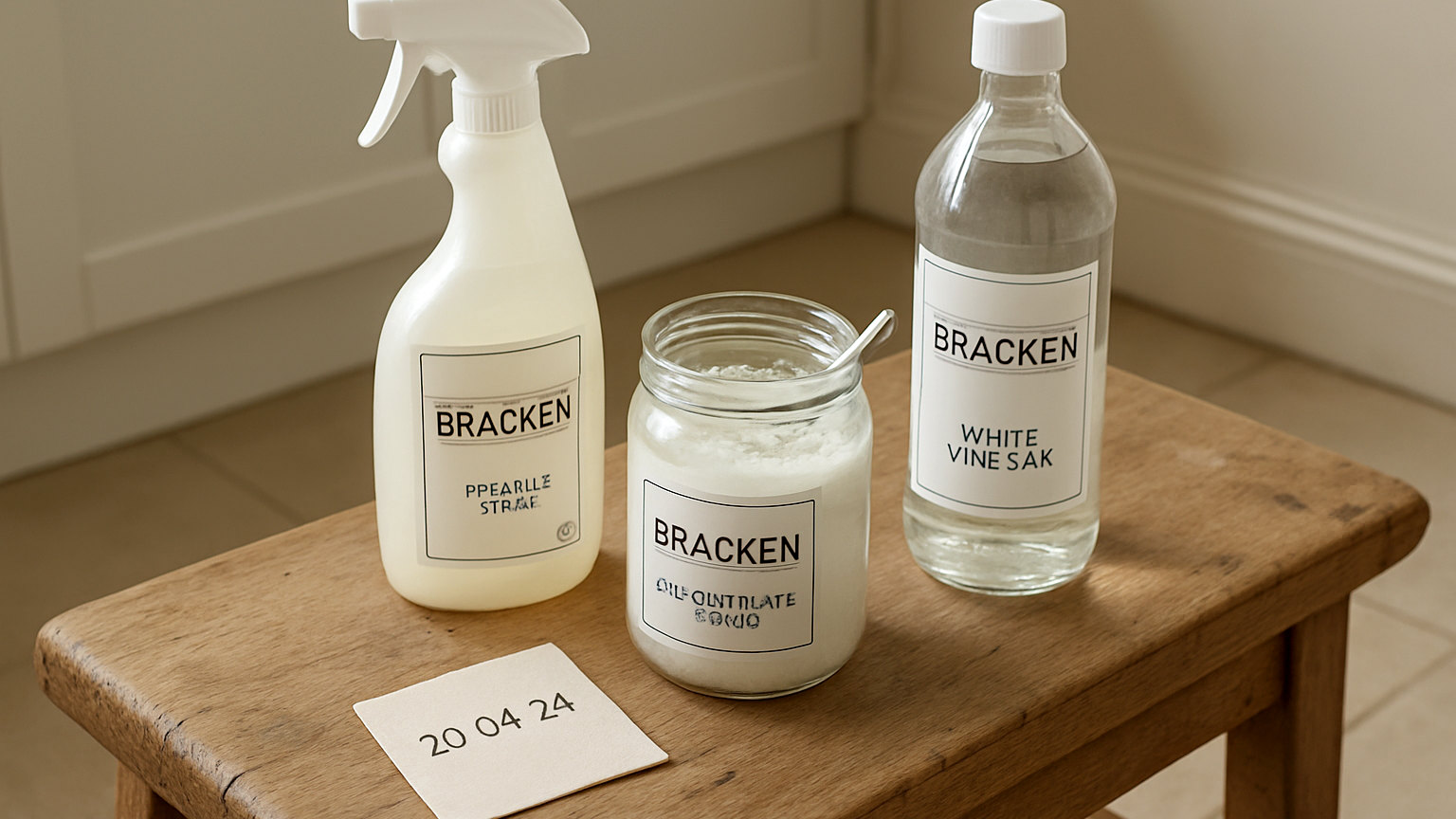
- Take a clean 500ml spray bottle.
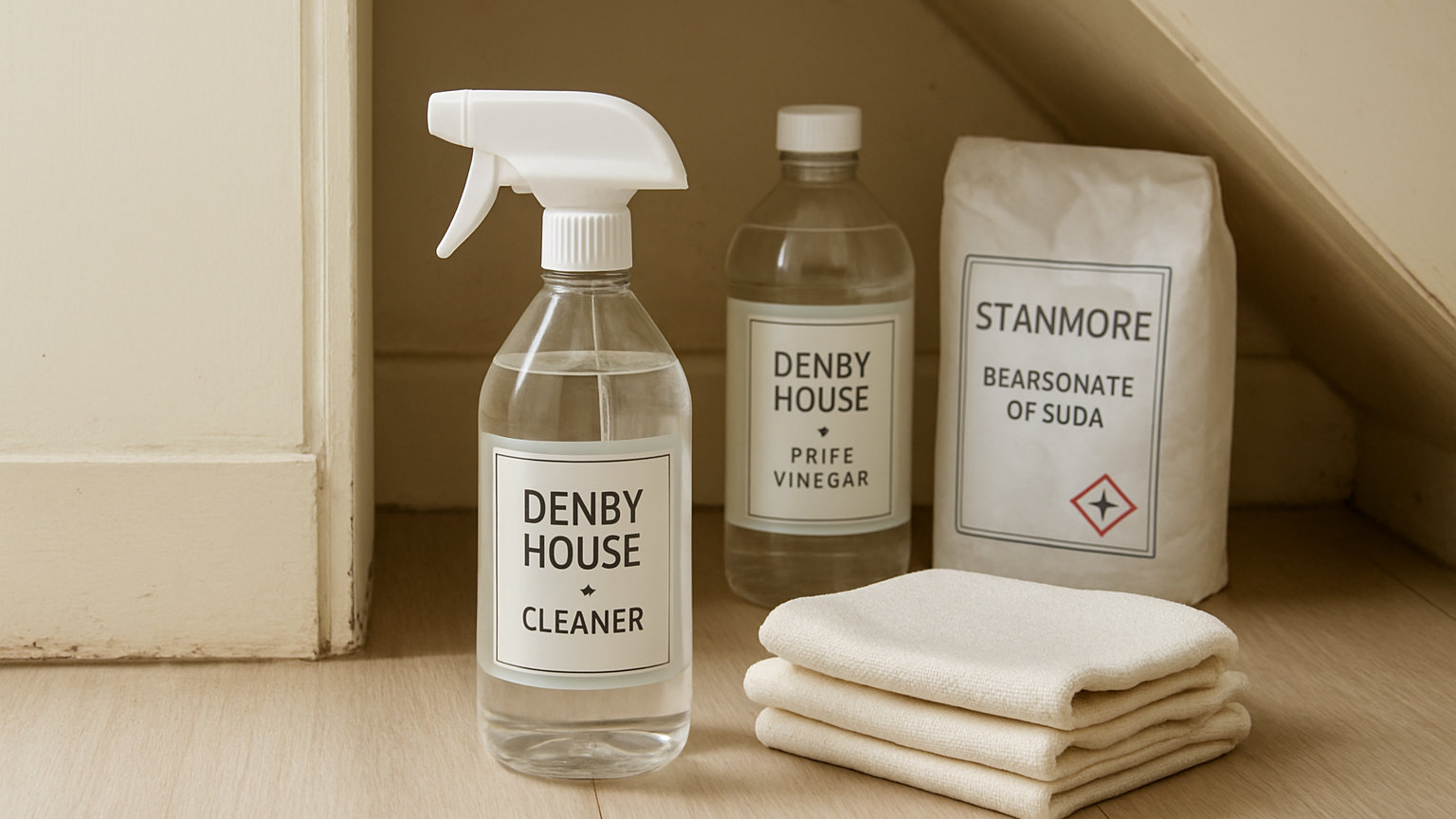
- Add 250ml of white vinegar and 250ml of water.
- Add a few drops of washing up liquid, which helps it cling and cuts body oils.
- Invert to mix, label it and date it.
For a stronger version, use vinegar neat on heavy limescale, applied on a cloth rather than sprayed across the room.
What is the citric acid version?
Dissolve two tablespoons of citric acid powder in 500ml of warm water, add a few drops of washing up liquid to help it cling, and use it in exactly the same way as the vinegar version.
It is as effective as vinegar, has almost no smell and stores better. Citric acid bought as a plain powder is very cheap and is what most branded descalers contain.
What about the clinging problem?
A thin liquid runs straight off a vertical surface, which is why branded bathroom cleaners are often thickened. The homemade equivalent is to apply it on kitchen paper laid against the surface.
Soak strips of kitchen paper in the solution, press them onto the scaled area, leave for thirty minutes to an hour, then remove and wipe. That gives the contact time that makes the difference.
Which surfaces must be protected?
- Natural stone – marble, limestone and travertine etch permanently. No acid at all.
- Cement grout, which acid erodes with repeated use.
- Some tap and shower finishes, particularly brushed, matt black and coated brass.
- Stone or composite basins, unless confirmed safe.
- Waxed or unsealed wood anywhere in the room.
Apply to the tile faces and the screen rather than flooding the whole wall, and rinse thoroughly afterwards.
What handles the bath and the sink?
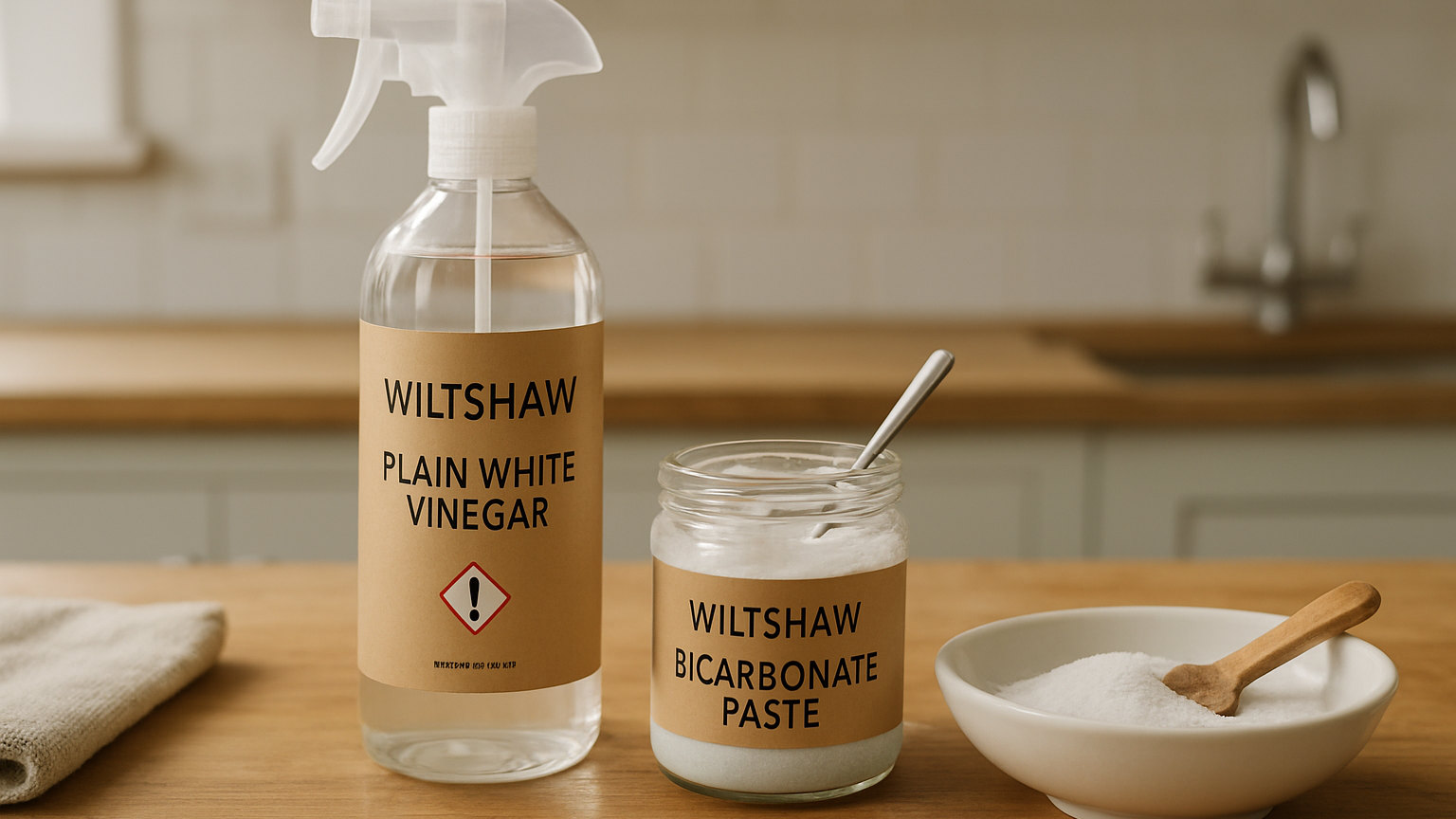
A paste of bicarbonate of soda with a little washing up liquid, worked with a non-scratch pad. It is mildly abrasive and lifts the tide mark and general dullness without the risks of an acid.
Use the acid for limescale and the bicarbonate paste for scum and marks, rather than trying to make one thing do both.
What about the toilet?
Citric acid or vinegar poured into the bowl, left for an hour or overnight, then brushed. For heavy scale under the rim and at the waterline, lower the water level first by pouring a bucket of water in quickly, so the acid sits directly on the deposit.
Never combine with any bleach product, which releases chlorine gas.
What must never be mixed?
Any acidic cleaner with bleach or any bleach containing product. That includes using one after the other in a small bathroom without thorough rinsing, which is an easy mistake.
Use one product at a time, rinse between them, and ventilate throughout.
What about mould?
Vinegar has a genuine antifungal effect and is a reasonable treatment for surface growth on tile and sealant, applied on soaked kitchen paper and left in contact for an hour.
For established black growth in silicone, nothing applied to the surface will remove growth that has penetrated the material, and the sealant needs replacing.
What reduces the need for any of it?
A squeegee after every shower, which prevents limescale and soap scum forming at all, and a liquid body wash instead of bar soap, which removes the scum at source. Between them they do more than any cleaner.
How often should it be used?
Weekly for a shower in daily use, which keeps limescale from ever establishing properly. Left for a month, the deposit needs the soaked kitchen paper treatment and a full hour of contact time rather than a quick spray and a wipe. Little and often is considerably less total work than occasional and thorough, which is true of most bathroom cleaning.