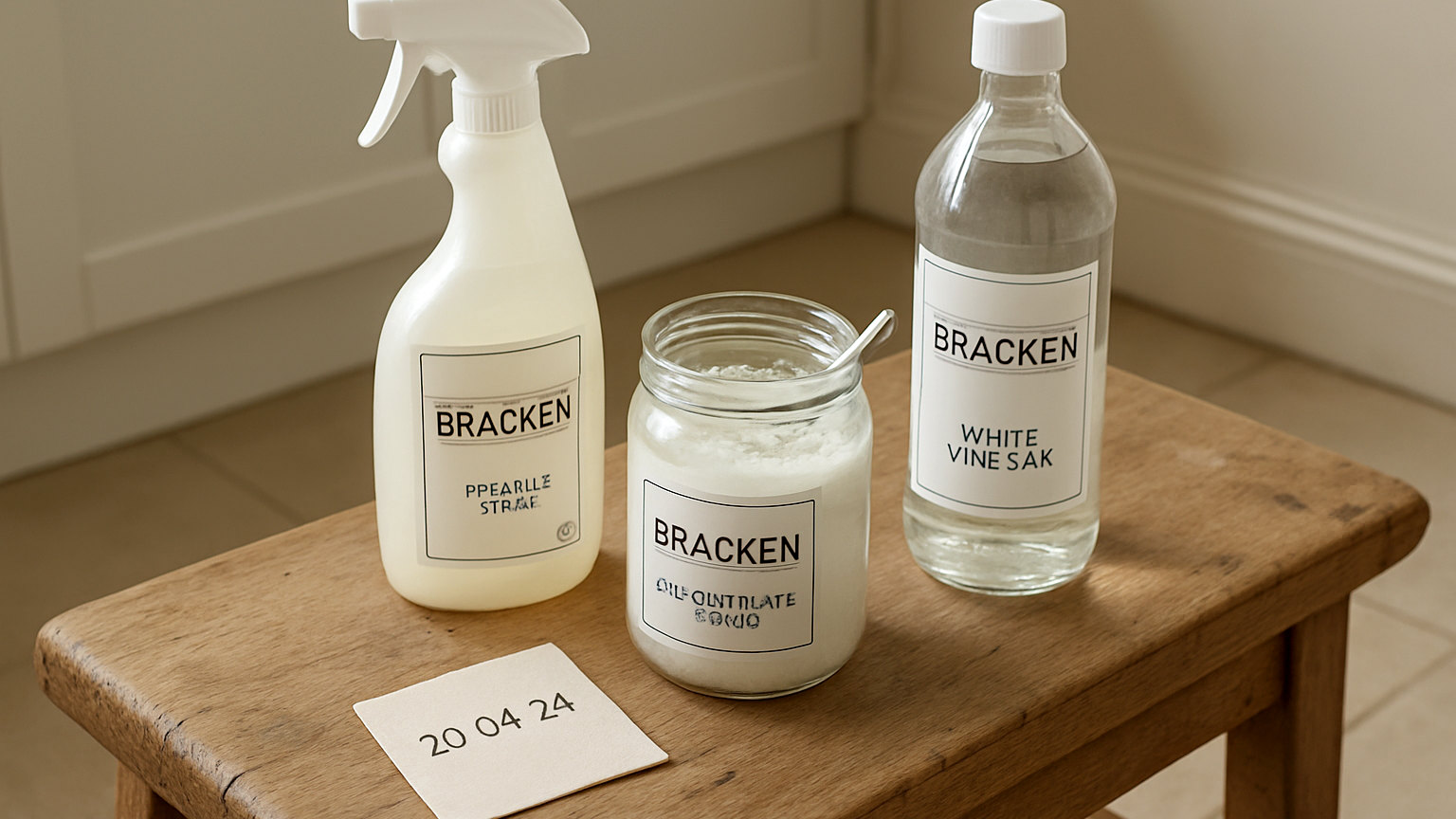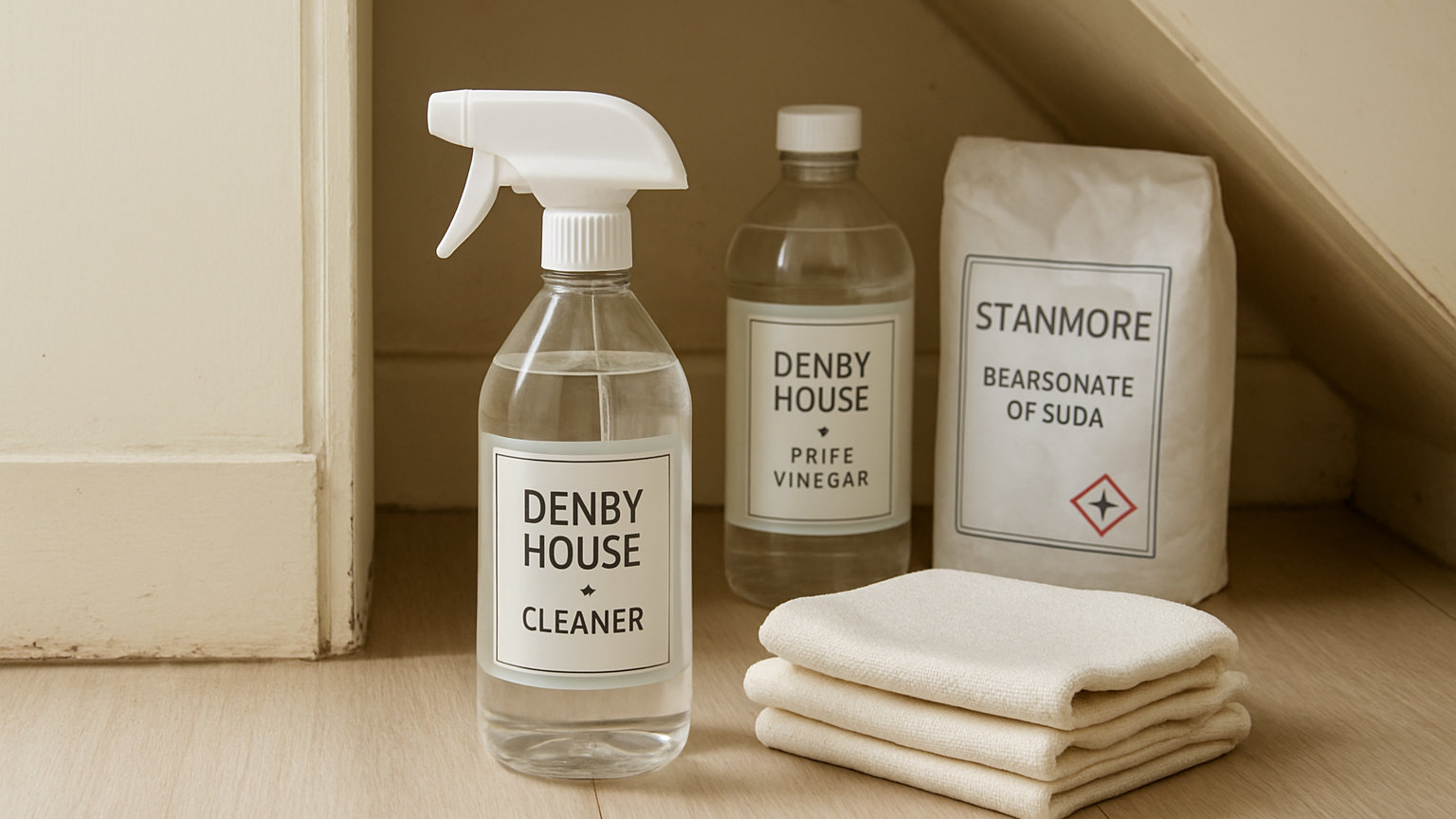
A small number of combinations of common household products produce harmful gases. They matter because they are made accidentally far more often than deliberately, usually when one product follows another in a small room without rinsing in between.
What are the dangerous combinations?
- Bleach and any acid – vinegar, lemon juice, citric acid, limescale remover, most toilet cleaners. Produces chlorine gas.
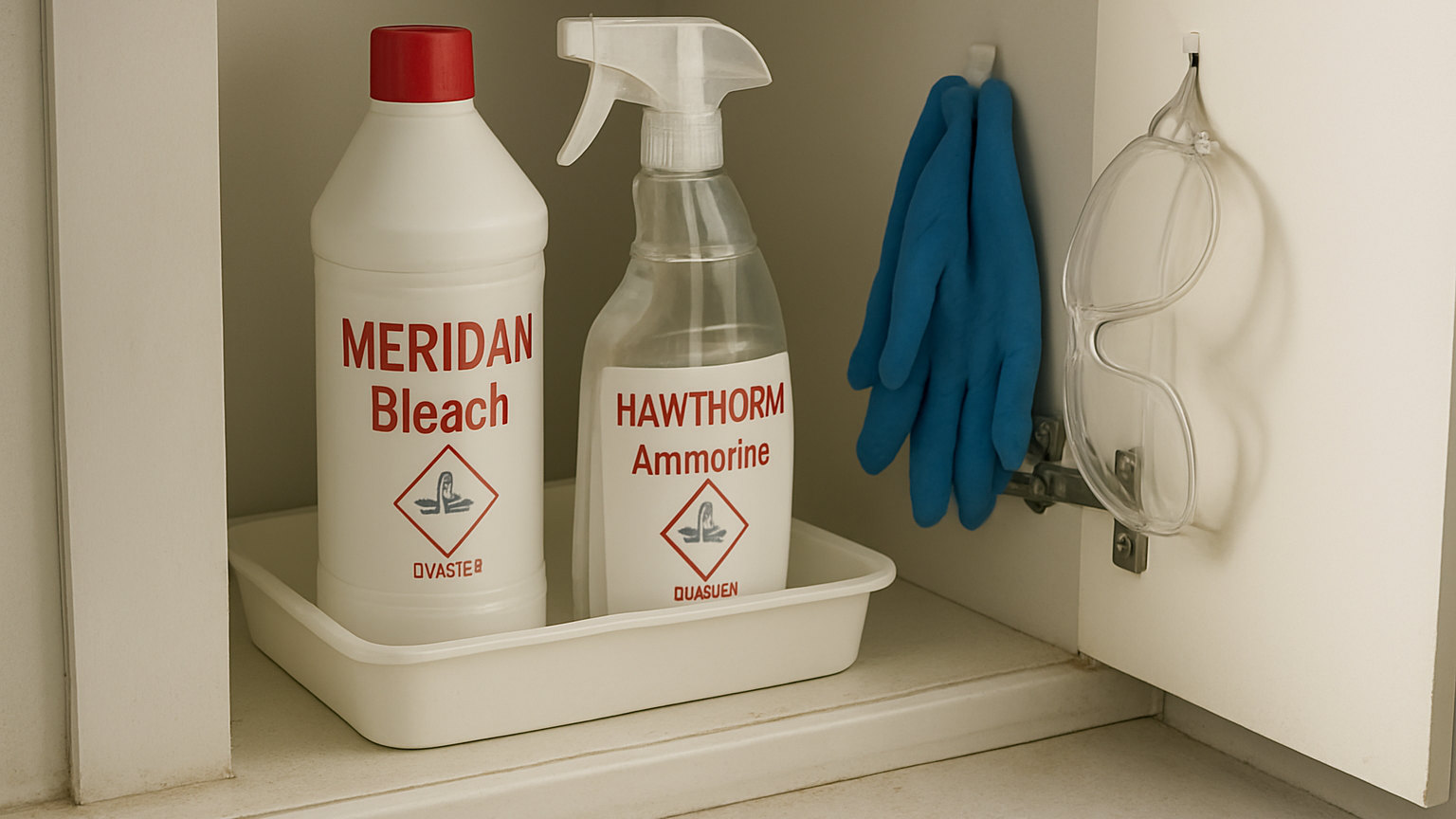
- Bleach and ammonia – found in some glass and multi surface cleaners. Produces chloramine vapour.
- Bleach and alcohol – produces chloroform and other harmful compounds.
- Hydrogen peroxide and vinegar in one container – produces peracetic acid, corrosive and irritating.
- Two different drain products, particularly an acid after an alkali.
- Any product with an unidentified one, which is why decanting is a problem.
What does chlorine gas do?
It irritates the eyes, nose, throat and lungs. At low concentrations it causes coughing, burning eyes and chest tightness. At higher concentrations in a confined space it can cause serious respiratory injury.
A bathroom with the door shut is exactly the confined space where a domestic quantity becomes significant.
How does it happen by accident?
Typically in a sequence. Someone cleans a toilet with a bleach based product, then applies a limescale remover to the same bowl. Or uses a bathroom spray containing an acid, then a mould remover containing bleach on the same tiles.
Neither step feels like mixing, which is precisely why it catches people out.
How do you avoid it?
- Use one product at a time.
- Rinse the surface thoroughly before applying anything else.
- Ventilate throughout, with a window open or the extractor running.
- Never combine products in a bowl, bottle or toilet bowl.
- Keep bleach stored away from anything acidic.
- Read the label to know which category a product is.
How do you know what a product contains?
The label. A bleach product will say sodium hypochlorite or chlorine based. A descaler or limescale remover will name an acid. A glass cleaner may contain ammonia.
Where the label is unclear, the manufacturer's safety data sheet gives the full picture, and anything unidentified should not be used alongside anything else.
What about hydrogen peroxide and vinegar?
Used one after the other with a rinse in between, this is a recognised and safe disinfection approach. Mixed together in a bottle it produces peracetic acid, which is corrosive and irritating to eyes, skin and lungs.
Keep them in separate containers and never combine them in advance.
What should you do if you have mixed something?
Leave the room immediately. Do not stay to clear it up. Open windows and doors from outside the space if you can do so safely without breathing the fumes, and close the door to contain it.
Stay out until it has ventilated thoroughly. Anyone with coughing, chest tightness, breathlessness or eye irritation should get into fresh air and seek medical advice. Call 999 if breathing is difficult.
What about mixing two of the same type?
Two different bleach products, or two different surface sprays, are unlikely to react dangerously. They are also unlikely to work better than one, and combining them usually dilutes both.
There is no benefit to mixing anything, which makes the rule simple to follow.
What about dishwasher and laundry products?
Keep them in their intended machines. Dishwasher detergent is strongly alkaline and should never be used for hand washing dishes or mixed with anything. Laundry products should not be combined with surface cleaners.
What is the rule to remember?
One product at a time, rinse in between, ventilate throughout, and store bleach separately. If a bottle contains bleach, nothing else goes near it.
Does it apply to natural products too?
Entirely. Vinegar and lemon juice are acids, which makes them exactly as dangerous alongside bleach as a branded descaler. Homemade does not mean inert, and several of the most commonly shared recipes involve combinations that should not be made.
What about products used on different surfaces in one session?
The risk is proximity rather than the same surface. Cleaning a bath with a descaler while a bleach product sits in the toilet bowl a metre away, in a room with the door shut, puts both sets of vapours in the same small space. Ventilate throughout, not just while applying.