Steam does kill microorganisms, and heat is one of the oldest and most reliable methods of disinfection. Whether a domestic steam cleaner achieves it in practice depends on two things that rarely appear on the packaging: the temperature actually reached at the surface, and how long it is held there.
What temperature is needed?
Most common bacteria are killed by sustained exposure to temperatures above about 70 degrees, with the time required falling sharply as the temperature rises. Some spores and more resistant organisms need considerably more.
The key word is sustained. A brief contact at a high temperature achieves less than a longer contact at a slightly lower one.
What is the temperature at the surface?
Much lower than the boiler figure quoted. Steam leaving a nozzle at well over 100 degrees loses heat rapidly in the air, and the surface it lands on absorbs heat and cools it further.
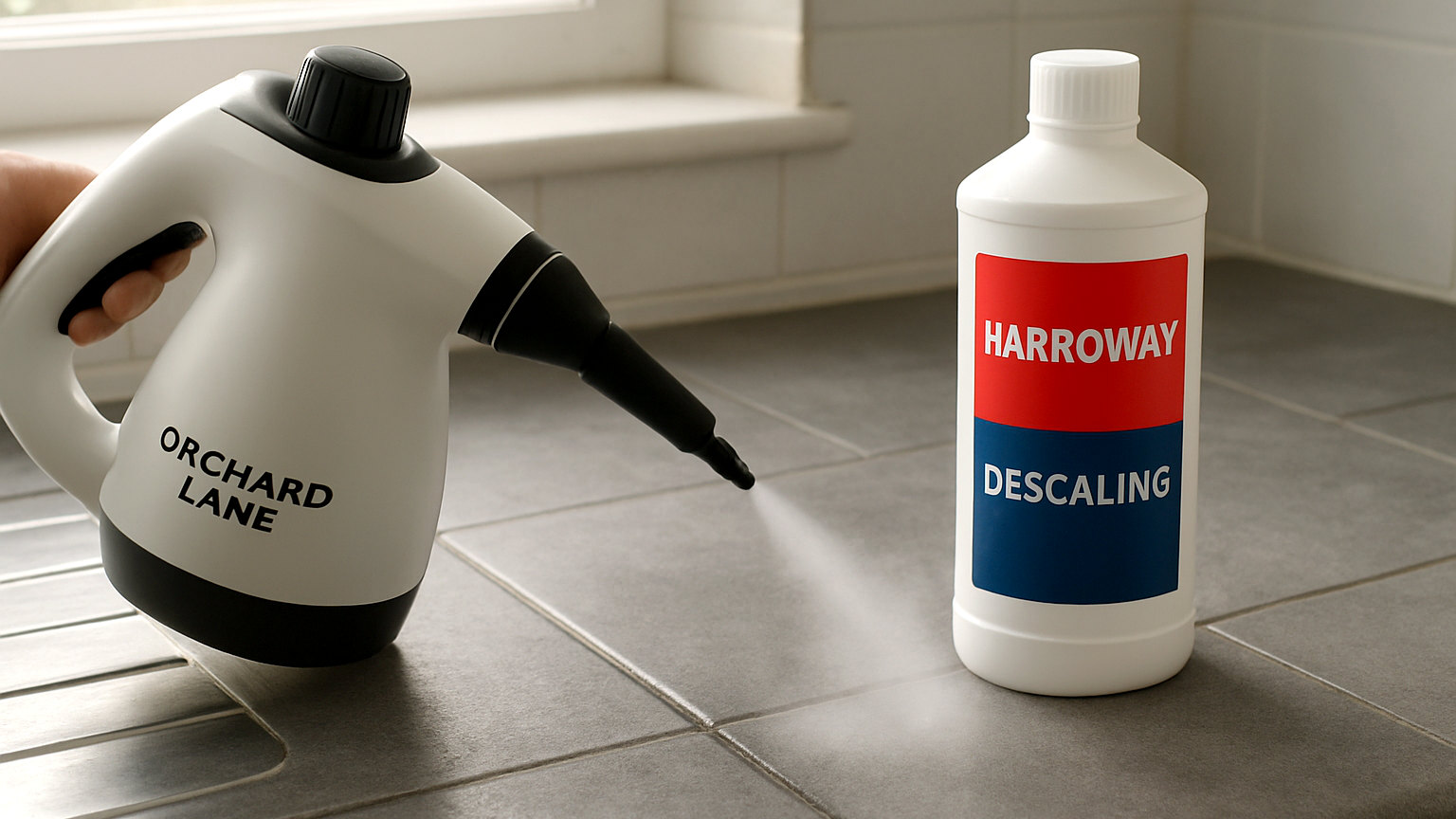
Holding the nozzle close, with a concentrated tool, and pausing on the spot gives a far higher surface temperature than passing a wide floor head over an area at walking pace.
How should the claims be read?
Claims of killing a specific percentage of bacteria are usually based on laboratory testing under controlled conditions: a specified nozzle, a specified distance and a specified dwell time, on a hard non-porous surface.
Those conditions are reproducible at home if you work slowly with a detail nozzle. They are not reproduced by moving a steam mop briskly across a kitchen floor.
What does it work well on?
- Hard non-porous surfaces, held under a detail nozzle.
- Grout and tile, where the heat penetrates.
- Bathroom fittings and seals.
- Surface mould, which is killed on contact.
- Mattresses and upholstery, for surface organisms.
- Bins, toilets and other unpleasant jobs.
Does the surface need cleaning first?
Yes. Dirt and grease shield organisms from the heat exactly as they deactivate a chemical disinfectant. Steam applied to a greasy surface softens the grease, which then has to be wiped away before any second application will reach what is underneath.
Clean first, then steam, then wipe.
How does it compare with a chemical disinfectant?
A chemical disinfectant with a stated contact time and a test standard gives a predictable result. Steam gives a variable one that depends entirely on technique.
Steam has the advantage of leaving no residue, which matters on food preparation surfaces, in homes with young children and pets, and for anyone avoiding chemicals. It also reaches into textures that a wiped disinfectant does not.
What does it not do?
It does not sterilise. It does not reliably kill everything on a surface at normal working speed. And it does not remove the dirt, which is what most household hygiene actually depends on.
It also cannot disinfect somewhere the steam does not physically reach.
How do you get the best result?
- Clean the surface first.
- Use a concentrated nozzle rather than a wide head.
- Hold it close, a few centimetres from the surface.
- Work in small sections and pause on each for several seconds.
- Wipe with a clean cloth.
- Repeat on anything that genuinely matters.
Where is it genuinely useful?
On the jobs people dislike doing with chemicals: toilets, bins, nappy changing areas, pet areas and children play surfaces. And on textured surfaces where a wiped disinfectant never reaches the recesses.
What is the honest position?
Steam is effective hygienic cleaning and a variable disinfectant. For most household purposes that is sufficient, since cleaning removes the great majority of microorganisms. Where disinfection genuinely matters, such as after raw meat or during illness, a product with a stated contact time is the more reliable choice.
What about the cloth you wipe with?
It matters, and it is often forgotten. A cloth used to wipe a steamed surface picks up whatever was loosened, and using the same cloth on the next surface moves it there. Change cloths between areas and wash them at sixty degrees, exactly as with any other cleaning.