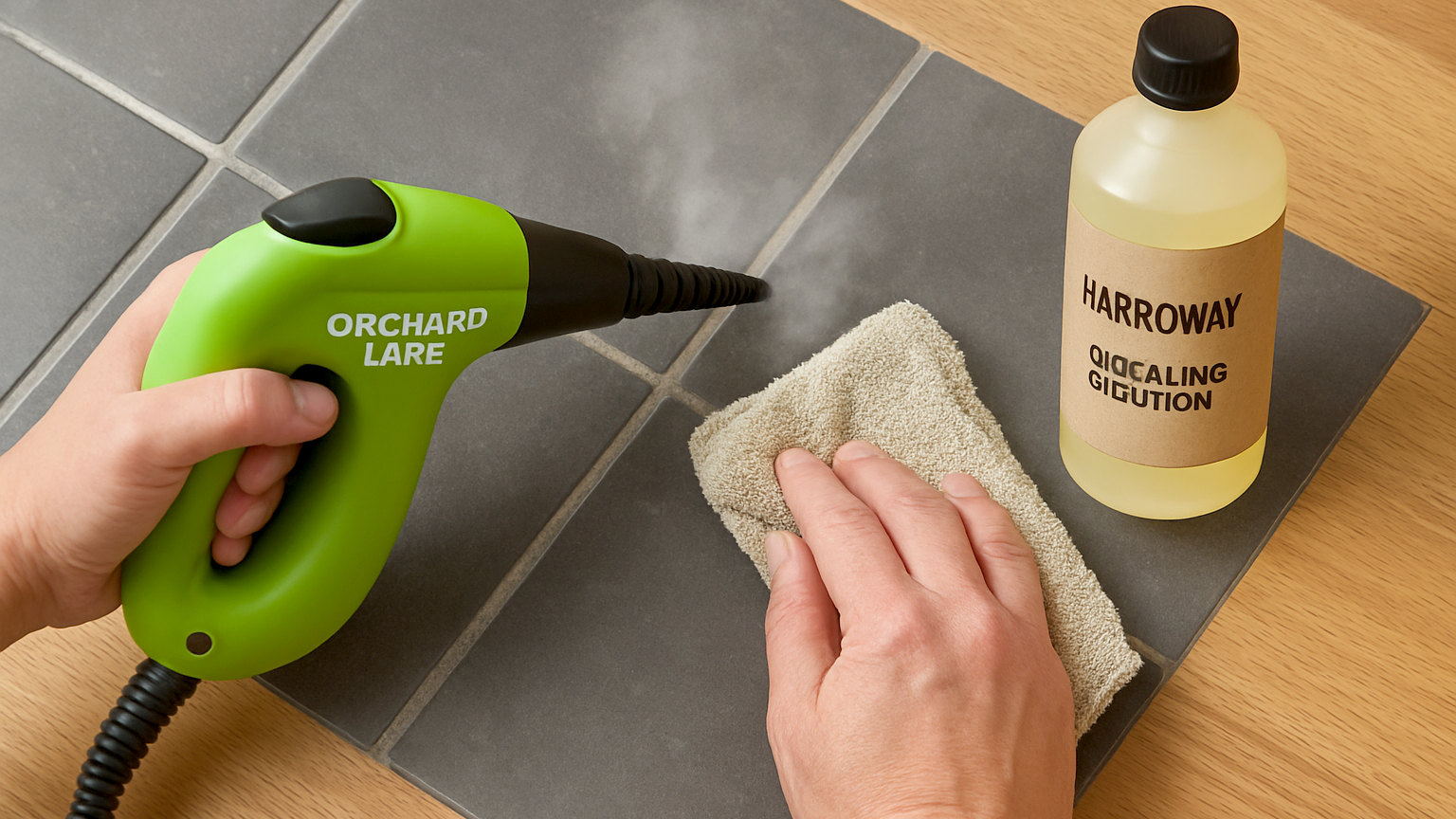
Dust mites are killed by heat, and steam is hot enough. The practical question is whether the heat reaches them, because mites live within mattresses, carpets and upholstery rather than on the surface, and steam loses most of its temperature within the first few millimetres.
What temperature kills them?
Sustained exposure above roughly 55 to 60 degrees kills dust mites. Steam at the nozzle is well above that, and the temperature falls rapidly as it travels and as the material absorbs the heat.
Working slowly with the nozzle close to the surface achieves it at the surface. It does not achieve it several centimetres into a mattress.
Does killing them solve the allergy problem?
Only partly, and this is the point that gets missed. People are allergic to proteins in mite droppings and body fragments, not to living mites. Killing them leaves the allergen behind.
The allergen has to be physically removed, which means vacuuming with a good filtered machine and washing what can be washed. Steam alone reduces the population without removing what causes the reaction.
What actually reduces dust mite allergens?
- Wash bedding weekly at sixty degrees, which kills mites and removes allergen.
- Use allergen barrier covers on the mattress, duvet and pillows.
- Vacuum regularly with a sealed HEPA filtered machine.
- Keep bedroom humidity below about fifty per cent, since mites need moisture.
- Air the bed each morning rather than making it immediately.
- Reduce soft furnishings and carpet in bedrooms where practical.
Humidity control is the one with the most evidence behind it, since mites cannot survive in dry conditions.
Where does steam genuinely help?
On surfaces where the heat reaches: the top of a mattress, upholstery surfaces, curtains and soft toys. It reduces the surface population and kills surface mould, and it needs to be followed by vacuuming to remove what is left.
The sequence that works is steam, allow to dry, then vacuum thoroughly.
Does it introduce a problem?
It can. Dust mites thrive in humidity, and steaming a mattress puts moisture into it. If it does not dry properly, the conditions afterwards are better for mites than before.
Use minimal steam, keep the tool moving, and dry thoroughly with a fan and open windows before the bed is remade.
What about bed bugs?
Steam is used professionally against bed bugs and it works, with the same qualification about penetration. It kills on contact at a sufficient temperature, including eggs, which many insecticides do not.
Effective treatment requires a slow, methodical application to every seam, crevice and joint, with a specific nozzle and technique. It is difficult to do comprehensively enough at home to eliminate an infestation.
A confirmed bed bug infestation warrants professional treatment. Steam is a useful part of that and rarely sufficient alone.
What about fleas?
Steam kills adult fleas and larvae on contact where the heat reaches, and eggs deep in carpet pile frequently survive. As with bed bugs, it is a useful component rather than a complete solution.
Treating the animal, washing bedding at sixty degrees and thorough regular vacuuming matter more, with the vacuum emptied outdoors immediately afterwards.
What about soft toys?
A good use. Steaming a soft toy kills surface mites and is gentler than washing for anything delicate. Better still, where the toy allows, is a sixty degree wash or a spell in a freezer for twenty four hours, both of which kill mites reliably.
What is the honest summary?
Steam kills what it touches at a sufficient temperature, which is genuinely useful. It does not penetrate deeply, it does not remove allergens, and it adds moisture that has to be managed.
For allergy sufferers it is a supporting measure alongside barrier covers, hot washing, humidity control and good vacuuming, all of which do more.
Should an allergy sufferer do it themselves?
Ideally not, since steaming and the vacuuming that follows both disturb settled allergen and put it into the air. Where that is unavoidable, wear a mask, ventilate well, and leave the room for an hour or two afterwards before returning.