Steam combines heat and moisture, and there are materials that tolerate one and not both. The exclusion list is longer than most manufacturers emphasise, and several of the items on it are things people buy a steam cleaner specifically to use it on.
Which floors should be avoided?
- Laminate, where moisture penetrating a joint swells the fibreboard core irreversibly.
- Unsealed or waxed wood, where steam strips the finish and raises the grain.
- Engineered wood, unless the manufacturer explicitly permits it.
- Unsealed stone, which absorbs moisture.
- Vinyl planks with glued seams, where heat can lift the adhesive.
- Any floor with damaged or lifting sections, where water gets underneath.
Laminate is the most common mistake. Some steam mops are marketed as laminate safe, and most laminate manufacturers void warranties where steam has been used, so check the flooring guidance rather than the machine packaging.
What about sealed hardwood?
Contentious. Some manufacturers permit occasional use with a well wrung pad on a low setting; many advise against it entirely. The risk is moisture finding its way through any gap in the finish, particularly at the board joints, which causes cupping.
Where a floor is valuable or the finish is uncertain, the safe answer is not to.
Which materials are damaged?
- Waxed and oiled surfaces of any kind, including furniture.
- Painted surfaces, where heat can blister or lift the paint.
- Unsealed grout that is loose, cracked or crumbling.
- Silicone sealant, which steam can soften and lift.
- Delicate and antique fabrics, including silk and velvet.
- Leather, which dries and cracks.
- Thin plastics, which warp.
- Cardboard, paper and anything porous.
What about electrical items?
Never steam anything electrical, including sockets, switches, appliance control panels, televisions and screens. Moisture reaching electrics is a genuine hazard rather than a caution.
Turn off and cover any socket near a floor being steamed, and keep the nozzle away from appliance controls.
What about natural stone?
Marble, limestone and travertine should generally be kept away from steam. The heat can damage sealers and some finishes, and the moisture penetrates any unsealed area.
Slate and sealed granite tolerate it better, and manufacturer guidance for the specific stone is worth checking.
What about glass?
Steam works well on glass and carries a thermal shock risk on cold glass, particularly a cold window in winter. Warm the pane gradually by working from a distance and moving closer rather than applying full steam to one cold spot.
Never steam a cracked or double glazed unit with a failed seal.
What about carpet?
A steam cleaner is not a carpet cleaner in the usual sense, and heat sets protein stains such as blood, milk and pet accidents permanently.
Never steam a carpet with an untreated stain. Deal with the stain first, then steam if you wish to refresh the fibres.
How do you test safely?
- Find a genuinely hidden area: under furniture, inside a cupboard, behind a door.
- Apply steam briefly from a few centimetres away.
- Wipe and let the area dry completely.
- Check for discolouration, swelling, lifting, dulling or texture change.
- Wait a day before judging a floor, since damage can take time to show.
What is the general rule?
If a surface would be damaged by a wet cloth, steam will be worse, because it adds heat. If the material is porous, waxed, glued, painted or electrical, assume not until the manufacturer says otherwise.
What about sealed grout and silicone?
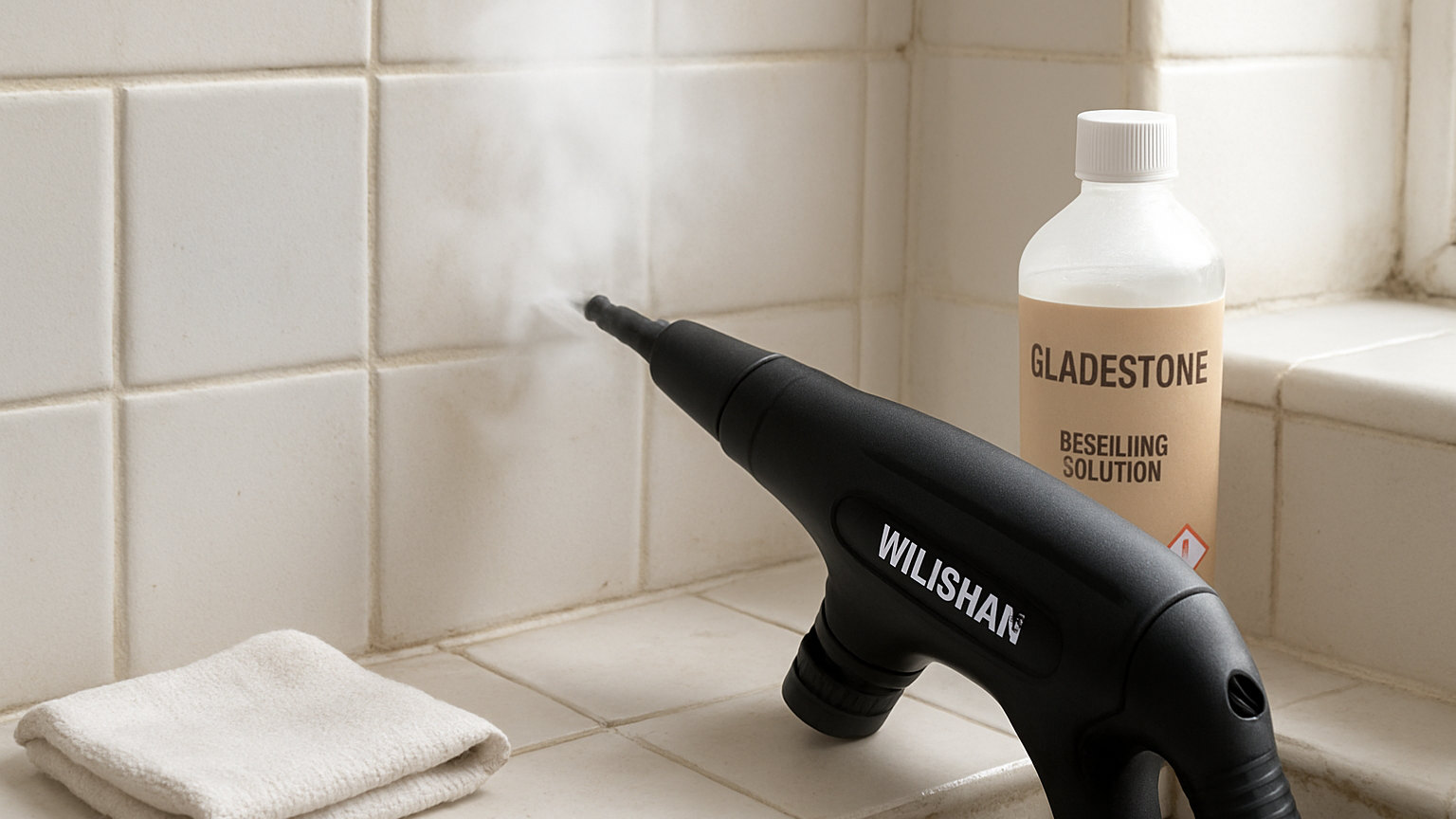
Sound grout in good condition is generally fine and benefits from steam. Loose or crumbling grout will be worsened by the pressure, and silicone sealant can soften and lift with prolonged heat. Keep the nozzle moving along a sealant line rather than holding it in one place.
Does the manufacturer guidance override this?
Check both the machine manual and the surface manufacturer, and where they disagree, follow the surface. A steam mop marketed as suitable for laminate does not override a flooring manufacturer who voids the warranty if steam is used, and it is the floor you will have to replace.