A blocked vacuum usually announces itself with a change in pitch, a loss of suction or a machine that cuts out. Blockages form where the airflow changes direction: the head opening, the elbow at the base of the wand, the hose connections and the bends.
How do you find the blockage?
- Unplug the machine and empty the container or change the bag.
- Check the filters, since a clogged filter produces identical symptoms.
- Detach the floor head and look through the opening.
- Detach the wand and hold it up to the light.
- Run the machine with just the hose and feel the suction at the end.
- Detach the hose and check it the same way.
- Check the inlet on the machine body itself.
Working section by section takes a few minutes and avoids dismantling anything unnecessarily.
What is safe to push through a hose?
Something flexible and blunt: a length of flexible curtain wire, a plumbing snake, a broom handle for a straight section, or a straightened wire coat hanger with the end bent into a small loop.
Feed it gently and never force it. A rigid tool pushed hard through a corrugated hose will puncture it, and a hose with a hole in it never regains full suction.
Work from both ends where you can, since pushing a blockage forward is easier than dragging it back.
What about a floor head blockage?
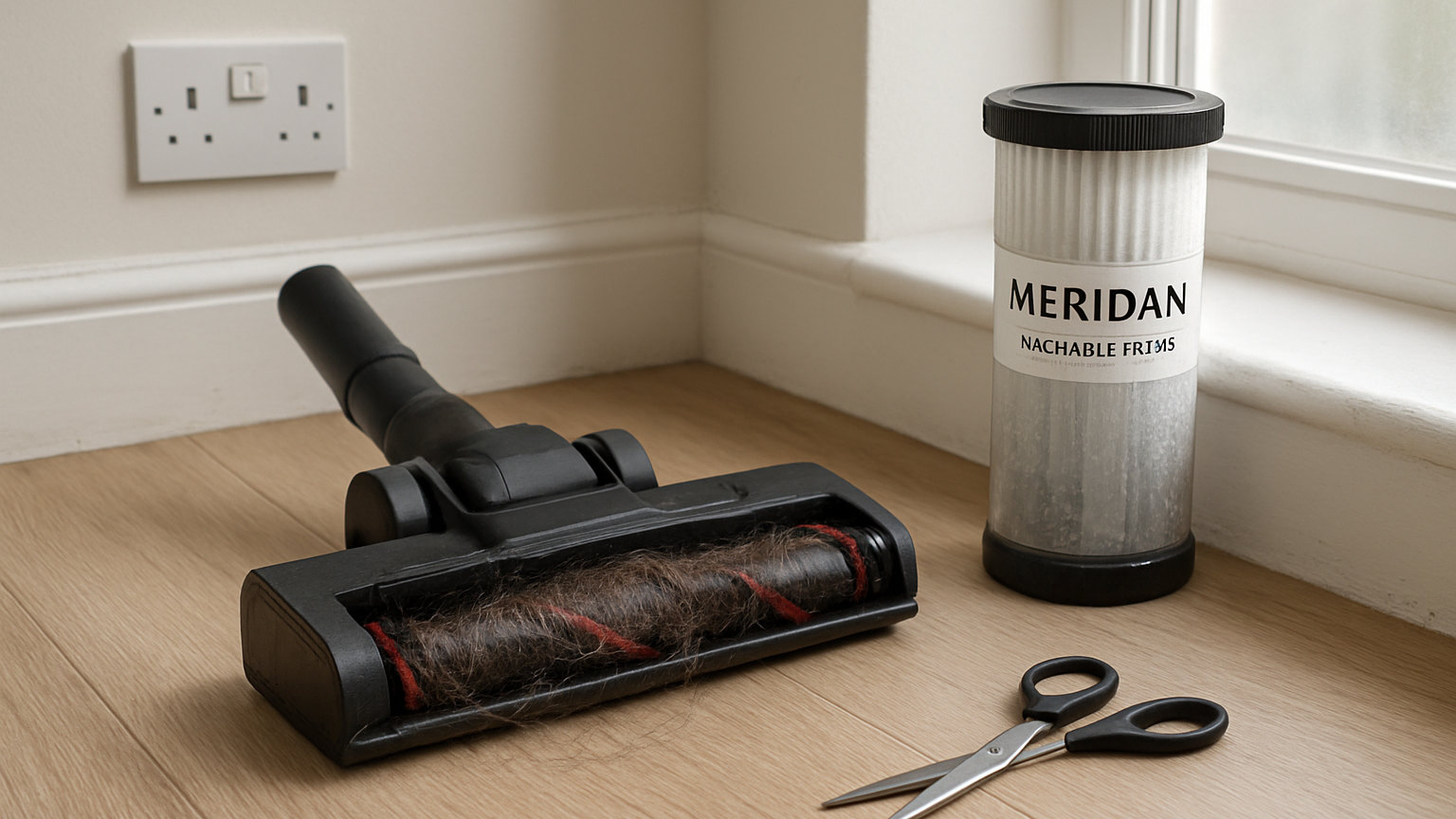
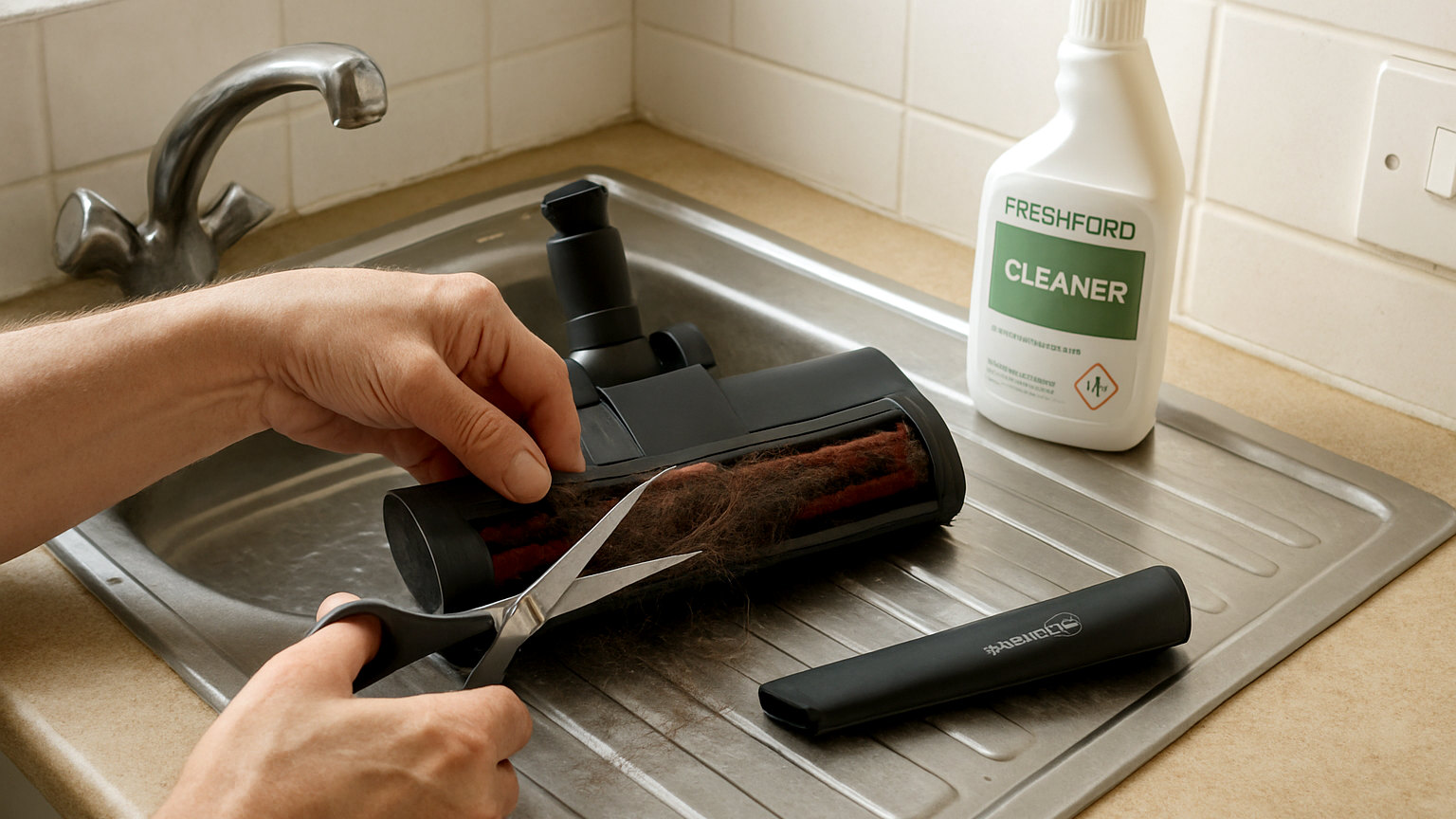
Turn the head over and look at the intake slot. Socks, tissues, large fragments of paper and pieces of toy are the usual culprits, and they sit across the opening where they are easy to miss.
Most heads have a removable cover or a base plate held by clips or screws, which gives access to the channel behind the brush bar.
How do you clear a stubborn blockage?
Detach the hose completely and try to flush it. For a plastic hose that can take it, running warm water through it in a bath works, provided it is hung to dry completely for a day or two afterwards before being refitted.
Check the manual first, since some hoses contain electrical connections for a powered head and must never be wetted.
Why does the machine cut out?
Most vacuums have a thermal cut-out that stops the motor when it overheats. Restricted airflow causes overheating, because the air passing through the motor is what cools it.
A machine that cuts out and restarts after twenty or thirty minutes is telling you clearly that something is blocked. Clear the restriction rather than continuing to run it, since repeated overheating shortens the motor life.
What causes blockages most often?
- Socks and small items of clothing.
- Tissues and kitchen paper, which expand and jam.
- Hair combined with dust, forming a felt like plug.
- Pieces of toy, coins and hair grips.
- Christmas tree needles and pet litter, which pack tightly.
- Anything damp, which sticks to the hose wall and collects more.
What should never be vacuumed?
Water or anything damp, unless the machine is a wet and dry model. Fireplace ash, which is extremely fine and passes through filters into the motor, and hot ash which is a genuine fire risk. Plaster dust and fine building debris, which clog filters instantly. Broken glass, which can cut a hose. And anything sticky.
What if it keeps blocking?
Usually a habit rather than a fault. Picking up larger items by hand before vacuuming, keeping small toys off the floor and checking the head periodically prevent most of it.
A hose that blocks repeatedly in the same place may have a split or a rough internal section that catches debris, and replacing it resolves it.
When should you stop?
If the blockage is inside the machine body rather than in a detachable part, and it does not clear with the container removed. Dismantling the body means working around the motor and the electrics, which is a repair rather than maintenance.