HEPA stands for high efficiency particulate air, and it is a defined standard rather than a marketing term. A true HEPA filter captures at least 99.95 per cent of particles at the most penetrating particle size, which in European classification is around 0.3 micrometres.
What does that mean in practice?
That the filter captures the very fine particles that matter most for air quality and allergies: dust mite debris, pollen fragments, pet dander, mould spores and fine dust.
Ordinary vacuum filters capture the larger material and let a proportion of the finest particles through, which are then blown back into the room by the exhaust.
Why does a sealed system matter as much?
Because air takes the path of least resistance. If the machine has gaps around the filter housing, at the hose joints or around the dust container, air escapes there without passing through the filter at all.
A HEPA filter in an unsealed machine delivers much less than the badge suggests. Look for wording about a fully sealed system rather than just a HEPA filter, which is what genuinely determines performance.
Who actually benefits?
- Anyone with asthma, hay fever or a dust mite allergy.
- Households with pets, where dander is continuously produced.
- Homes with small children, who spend time at floor level.
- Anyone sensitive to dust during and after vacuuming.
For a household with none of these, the benefit is real and modest.
What are the fake versions?
Terms such as HEPA type, HEPA style and HEPA like have no defined meaning and do not indicate a filter meeting the standard. A genuine HEPA filter will usually state a classification such as H12 or H13.
Higher numbers indicate finer filtration, and H13 is common in domestic machines.
Do they need washing or replacing?
Both, depending on the type. Some HEPA filters are washable and some are not, and washing a non-washable one destroys it.
Check the manual. Washable filters typically need rinsing monthly and must be completely dry before refitting, which takes twenty four hours or more. A damp filter grows mould and smells.
Non-washable filters usually need replacing every six to twelve months.
What happens if the filter is neglected?
Suction falls, sometimes dramatically, because the airflow is restricted. The motor works harder and runs hotter, which shortens its life. And the exhaust air carries more fine dust back into the room.
A vacuum that seems to have lost power has a clogged filter far more often than a fault.
Does it make the air cleaner?
It reduces what vacuuming puts back into the air, which is genuinely useful. It is not an air purifier and will not clean the air in a room generally.
Vacuuming itself disturbs settled dust, so a machine with poor filtration can leave a room dustier than before.
Is it worth paying extra for?
For anyone in the groups above, yes, provided the machine is a sealed system. For a household without allergies, it is a reasonable feature rather than a priority, and weight, head design and capacity matter more.
What else affects dust exposure?
How you empty it. A bagless cylinder emptied indoors releases a cloud of exactly the fine dust the filter was capturing, which undoes much of the benefit.
Empty it outdoors or into a bag held tightly around the opening, and wash the filters on schedule with the machine unplugged.
How do you know if yours has one?
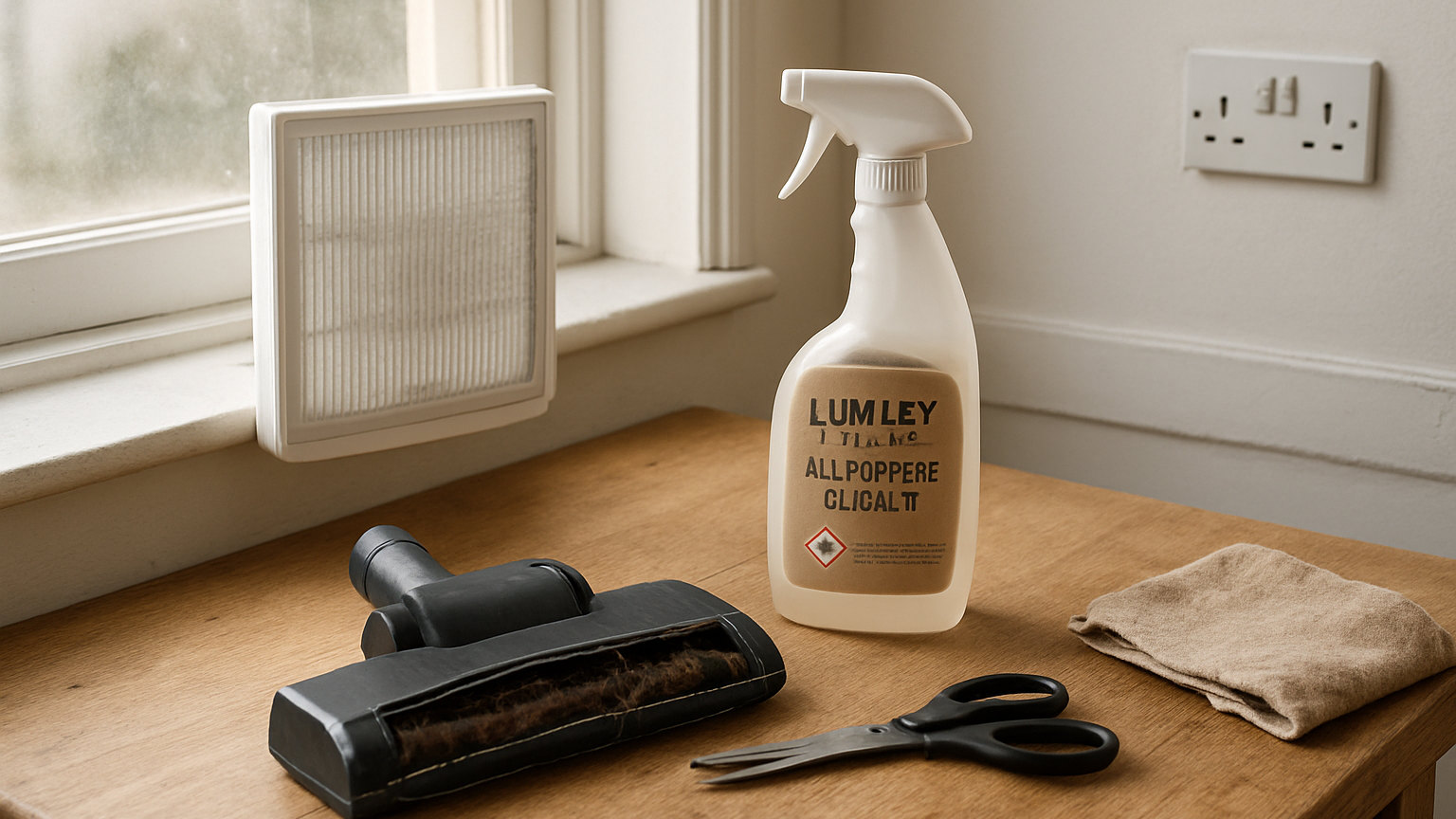
Check the manual or look at the filter itself, which will usually be marked with a classification. Many machines have more than one filter: a pre-motor filter that catches the bulk and a post-motor or exhaust filter, which is the one most likely to be HEPA rated. Both need attention.
What do the classifications mean?
Under the European system, H13 captures at least 99.95 per cent of particles at the most penetrating size and H14 slightly more. Anything below H10 is not strictly HEPA. For domestic use H13 is common and more than adequate.