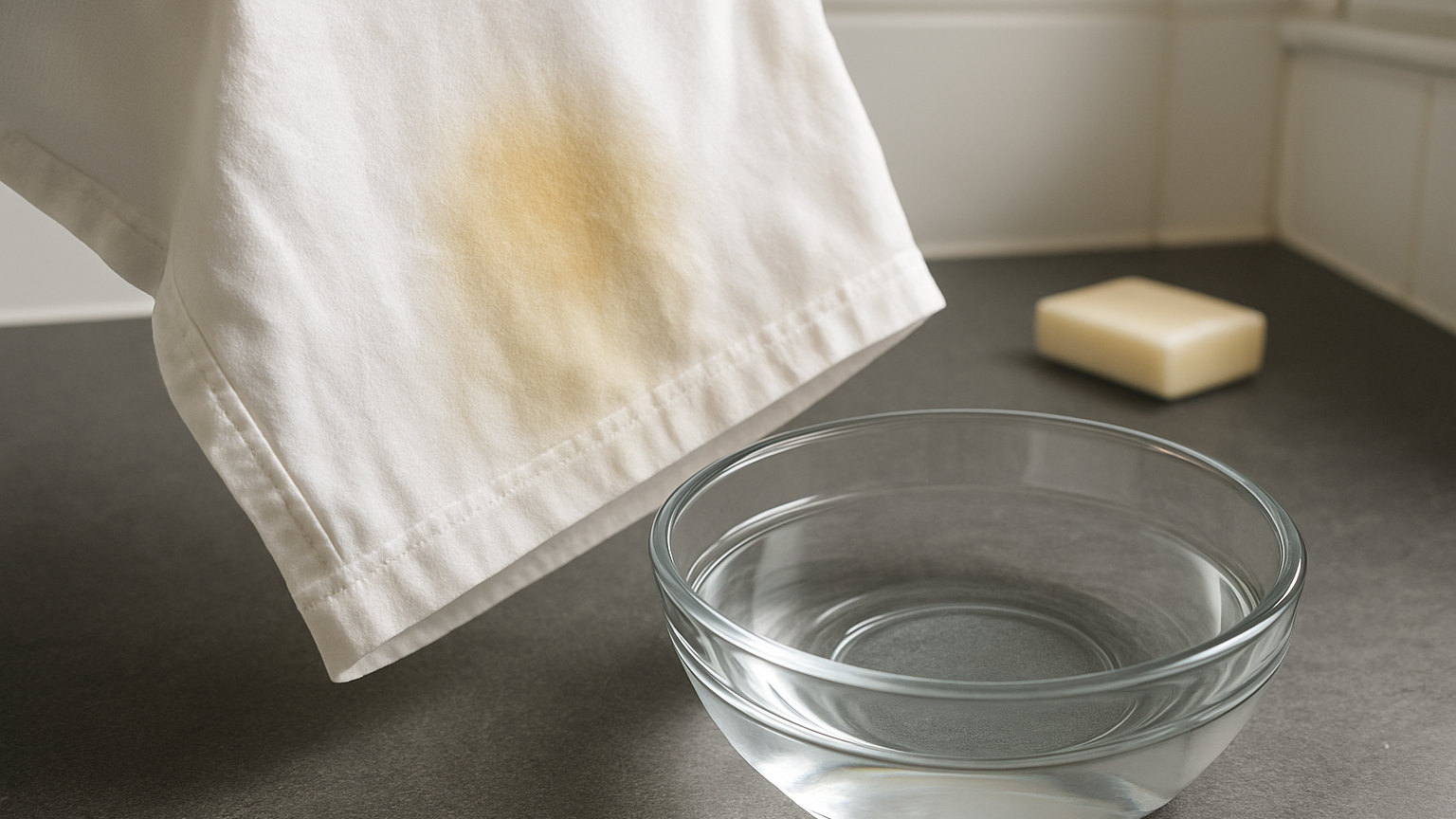
Sweat itself is largely water and salt and leaves very little. The yellow, stiff marks that develop under the arms of shirts are a combination of body proteins, skin oils and the aluminium compounds in antiperspirant, which react together and then oxidise over weeks and months in a wardrobe.
What is the treatment for a fresh mark?
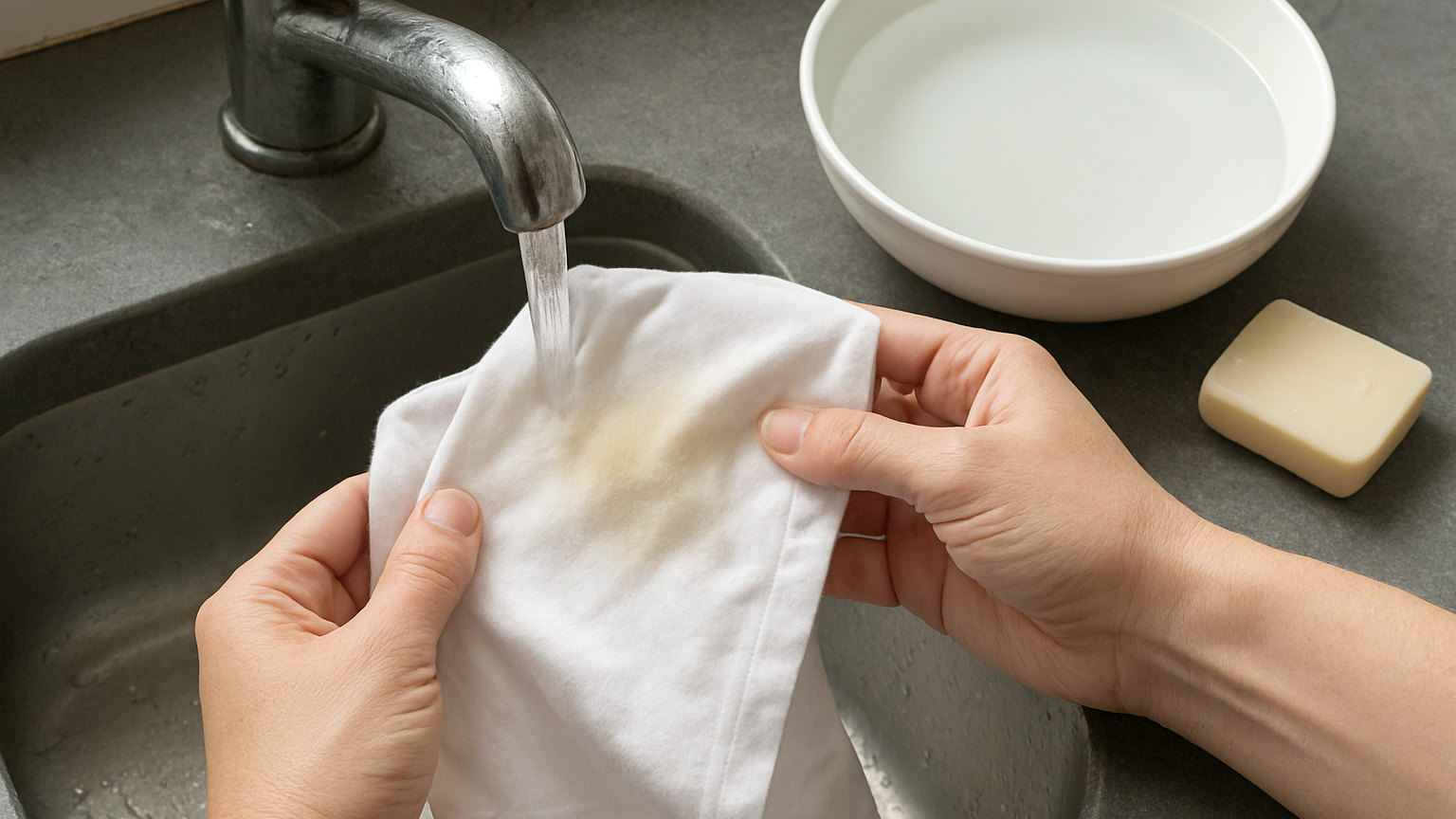
- Rinse the underarm area under cold running water as soon as the shirt comes off.
- Rub a little washing up liquid into the area to deal with the skin oils.
- Leave it for ten minutes.
- Soak in cool water with a biological detergent for an hour, which breaks down the protein.
- Wash at the warmest temperature the shirt allows.
- Dry in sunlight if the weather permits.
Done after every wear, this prevents the yellowing from ever developing. The marks people struggle with are always the ones that have accumulated.
What works on established yellowing?
An oxygen bleach soak. Dissolve a generous dose in water as warm as the fabric allows, submerge the shirt and leave it overnight. Oxygen bleach oxidises the discoloured compounds into colourless ones and is safe on most colours.
Follow with a wash at 40 or 60 degrees with a powder detergent, then dry in sunlight. Repeat if the improvement is partial, which is common on a mark that has been building for a year.
What about the stiffness?
The crusty texture is aluminium residue from antiperspirant combined with protein. A paste of bicarbonate of soda and a little water, worked into the area and left for an hour before washing, softens and lifts it.
White vinegar has the opposite pH and also works, applied to the area and left for thirty minutes. Use one or the other rather than both together, since they neutralise each other.
Why does chlorine bleach make it worse?
Because it reacts with the proteins in sweat and with antiperspirant residue to form yellow compounds. Applied to an underarm that already has a build up, bleach frequently makes the mark darker and stiffer, and sets it permanently.
It also weakens cotton, which matters at the underarm where the fabric is already under stress. This is the single most common way people ruin a shirt they were trying to save.
What works on coloured shirts?
Oxygen bleach is colour safe in principle, though a long warm soak can affect a poorly dyed shirt. Test on an inside seam for an hour first.
Otherwise rely on the biological detergent soak, the bicarbonate paste and sunlight. Coloured shirts show the stiffness more than the yellowing, so treating the residue matters more than bleaching.
Does hydrogen peroxide help?
On white cotton, yes. A mixture of one part hydrogen peroxide to two parts washing up liquid, with a spoonful of bicarbonate of soda stirred in, applied to the mark and left for thirty minutes, is an effective home treatment.
Test on a seam, and keep it off coloured fabric.
What temperature should shirts be washed at?
Forty degrees rather than thirty for white cotton shirts, since the skin oils need warmth to dissolve and a cool wash leaves them behind to oxidise later. Sixty is better still where the fabric allows.
This is one of the few cases where washing cooler is a disadvantage, because the residue left behind is what causes the problem.
When is a shirt beyond saving?
When the fabric under the arm has gone thin or brittle, which happens after repeated bleaching, or when three oxygen soaks produce no further improvement. At that point the fibres have been damaged rather than stained.
A shirt that has reached that stage is worth keeping for wear under a jumper rather than treating again.
Does the shirt fabric matter?
A good deal. Pure cotton shows the yellowing most clearly and responds best to treatment, since it tolerates hot soaking and oxygen bleach. Polycotton and non-iron shirts hold the residue more stubbornly and cannot take the same temperatures, which is why a treated non-iron collar often stays faintly discoloured when a cotton one comes clean.