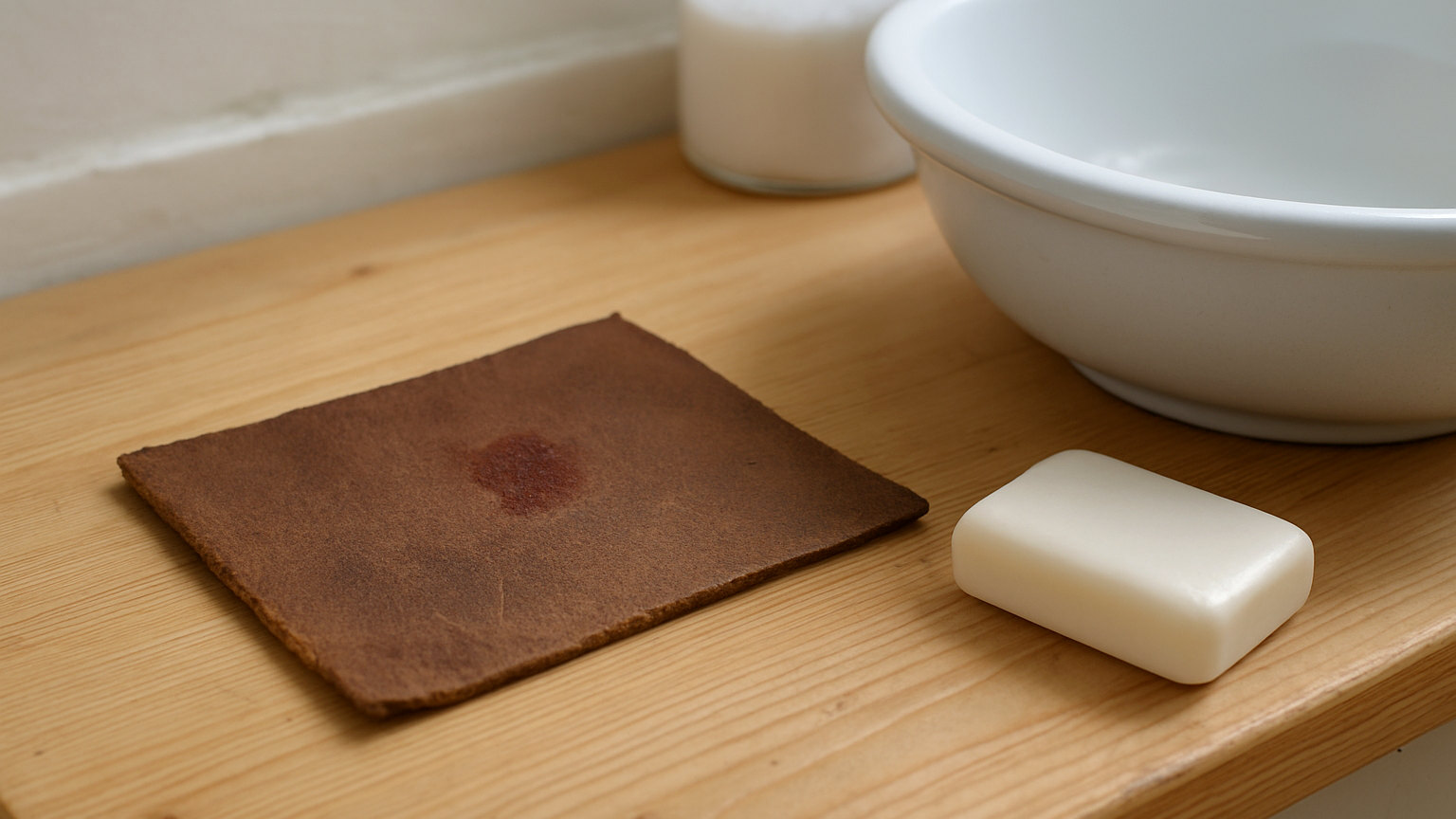
Leather presents a particular difficulty with blood. Leather is itself a protein material, made from animal hide, so the enzyme cleaners and oxidising agents that break down blood protein will attack the leather with equal enthusiasm. That rules out most of the standard treatments.
What should you do first?
Blot immediately with a clean dry cloth, pressing rather than wiping. On coated or pigmented leather, blood sits on the surface for a short time and a prompt blot removes most of it.
Speed matters more here than with almost any other surface, because once blood has penetrated an uncoated hide there is very little that can safely be done.
What is the method for coated leather?
- Blot the wet blood with a dry cloth.
- Dampen a cloth with cold water only and wipe the area gently.
- Blot dry with a clean cloth.
- Repeat two or three times rather than scrubbing.
- If a mark remains, use a small amount of a leather cleaner formulated for the type.
- Dry naturally, away from heat.
- Apply a leather conditioner once dry, since any cleaning dries the finish.
Cold water and patience deal with most fresh marks on coated leather without any product at all.
Why must the water be cold?
The same reason as with fabric: heat coagulates the protein and sets it. Warm water on blood on leather sets the stain and dries the hide at the same time, which is two problems where there was one.
What should never be used?
- Enzyme cleaners, which digest protein and will damage the leather itself.
- Hydrogen peroxide and oxygen bleach, which bleach and embrittle hide.
- Chlorine bleach, which destroys leather.
- Surgical spirit and solvents, which strip the finish and dry the hide.
- Abrasives of any kind, including melamine sponges.
- Heat, including a hairdryer used to speed drying.
What about aniline and unfinished leather?
These absorb blood into the hide within seconds. Blot immediately and then stop. Home treatment on uncoated leather usually spreads the mark and adds a water ring, which is worse than the original.
A leather specialist has solvents and recolouring techniques that are not available domestically, and on a sofa or a good jacket the cost is far less than the damage from an experiment.
What about suede and nubuck?
Keep all liquid away from them. Let the blood dry completely, then brush with a suede brush to lift the surface fibres and remove what has dried on top. A suede eraser handles what remains.
For anything that has soaked in, a suede specialist is the realistic option. Water on suede leaves a permanent mark even when the stain does not.
What about a leather sofa or car seat?
Both are usually heavily coated and more forgiving. Blot, wipe with cold water, and use an automotive or furniture leather cleaner if needed. Condition afterwards, particularly on a car seat, where heat dries the leather anyway.
Perforated seats need care, since liquid runs through the holes into the foam beneath where it cannot be reached.
Is there a home remedy worth trying?
On coated leather, a drop of mild soap in cold water, applied on a cloth and wiped away promptly, is about as far as it is sensible to go. Some people use a small amount of hydrogen peroxide on a cotton bud for a tiny mark on light coloured coated leather, which occasionally works and frequently leaves a pale patch.
Test anything in a hidden area, such as the back of a sofa or the underside of a bag, and wait for it to dry fully before judging.
How do you avoid the problem?
A throw over the part of a leather sofa that gets the most use, and prompt attention to any spill. Leather is far more forgiving of an immediate blot than of a careful treatment an hour later, so keeping a soft cloth to hand somewhere near the sofa is worth more than owning the right product.