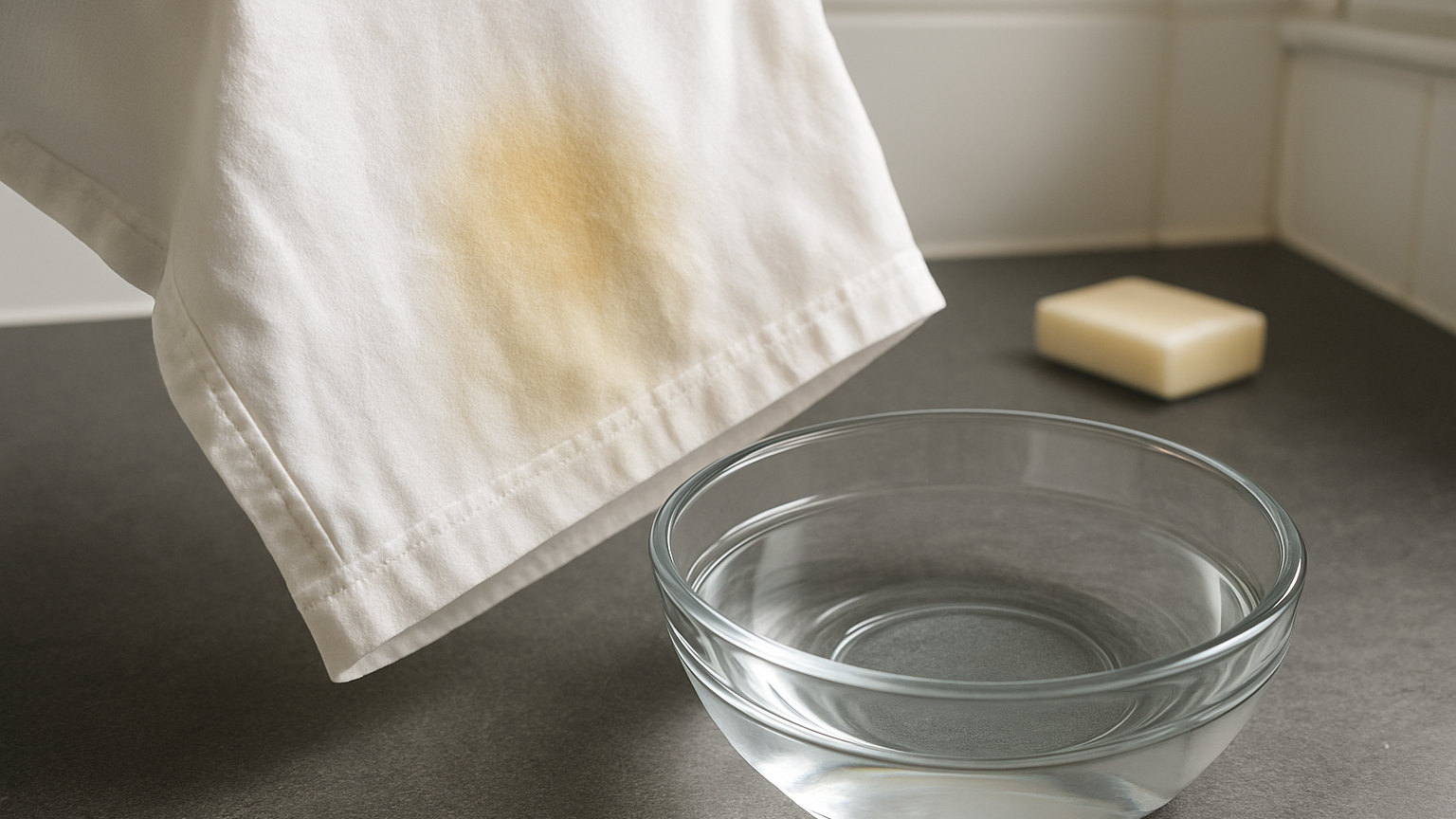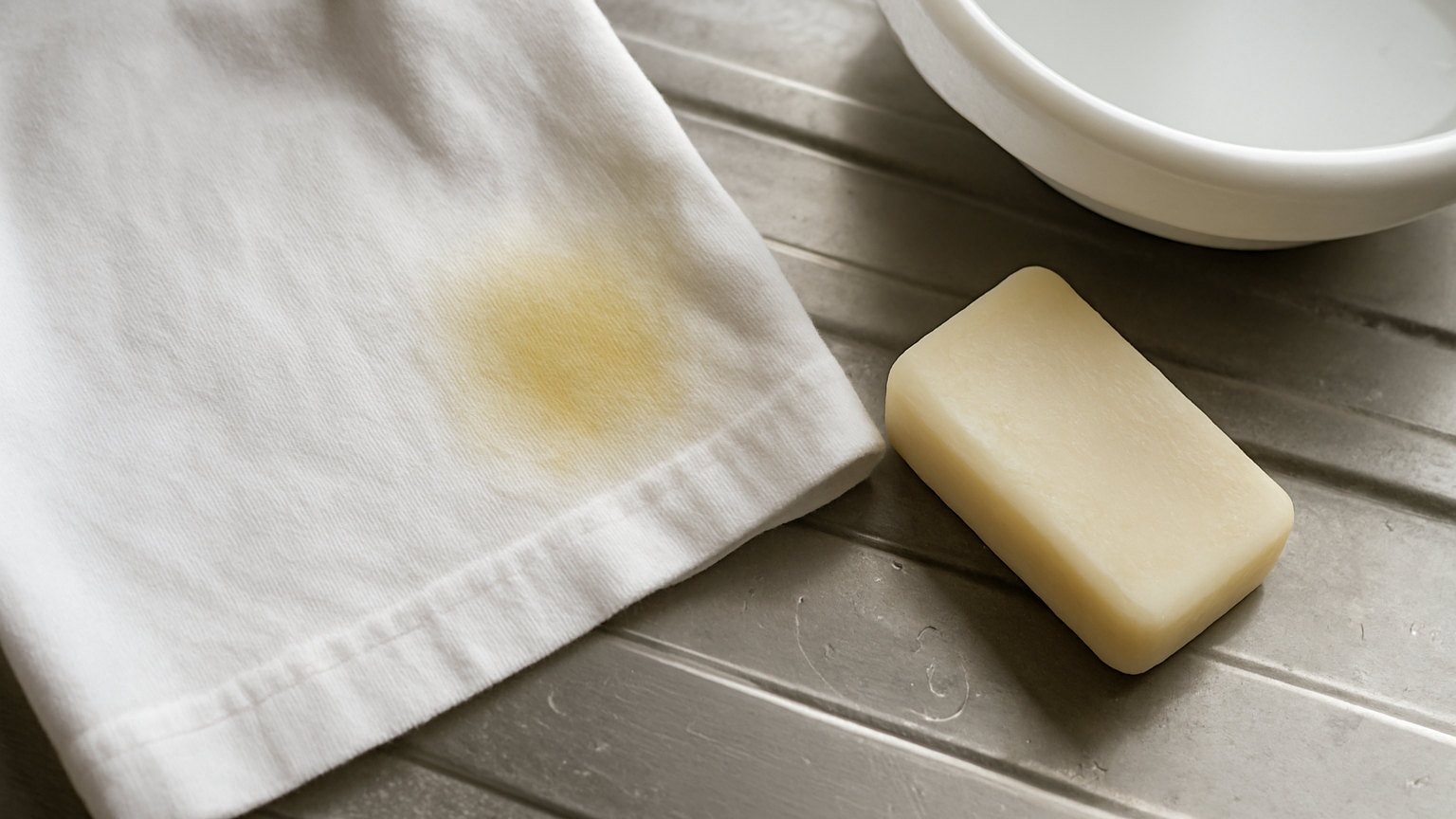
Sweat on its own is mostly water and salt, and it leaves a faint mark at worst. The distinctive yellow, crusty underarm on a white shirt is the result of a chemical reaction between the aluminium salts in antiperspirant and the proteins and oils in perspiration, and it develops slowly rather than appearing on the day.
What is actually happening?
Aluminium compounds work by forming a temporary plug in the sweat duct, which is what reduces perspiration. Some of that compound inevitably transfers onto fabric, where it binds with proteins from skin and sweat.
The resulting complex is not water soluble, so it stays in the fibre through a normal wash. Over the following weeks it oxidises, and the colour deepens from invisible to cream to a definite yellow.
Why does it appear after storage?
This is the most disconcerting version. A shirt put away clean in autumn comes out in spring with clear yellow underarms that were not there before. Nothing new has happened: the residue was already present and colourless, and it oxidised in the dark of a wardrobe.
It is the same mechanism that causes stored white linen to yellow, and it is why storing anything with invisible body residue in it is a bad idea.
Why does the fabric go stiff?
Because the aluminium complex is a solid deposit sitting in and around the fibres, and it builds up layer by layer with each wear. The area feels crusty rather than simply marked, and the fabric loses its drape.
That deposit also traps odour compounds, which is why an underarm can smell as soon as it gets damp even after a wash.
What makes it worse?
- Washing at 30 degrees, which does not dissolve the skin oils.
- Wearing a shirt twice before washing, which doubles the deposit.
- Chlorine bleach, which reacts with the proteins to form more yellow compounds.
- Applying antiperspirant heavily or dressing before it has dried.
- Storing shirts unwashed or after a cool wash.
- Tumble drying a shirt with residue still in it, which heat sets the discolouration.
Does the type of product matter?
Considerably. Antiperspirants contain aluminium and cause the reaction. Deodorants without aluminium do not, since they work by controlling bacteria rather than blocking sweat, and they leave a much lighter residue that washes out.
Anyone whose shirts yellow badly is worth trying an aluminium free deodorant for a few months, which frequently resolves the problem entirely. It will not reduce perspiration in the same way, which is the trade.
What prevents it?
- Let antiperspirant dry fully before dressing, which takes longer than most people allow.
- Use less of it, since more does not increase the effect proportionately.
- Rinse the underarm area of a shirt under cold water as soon as it comes off.
- Wash shirts after every wear rather than twice.
- Wash at 40 degrees rather than 30 for white cotton.
- Never store a shirt that has not been washed since it was last worn.
Is the fabric being damaged?
Over time, yes. The aluminium residue and repeated bleaching both weaken cotton, and the underarm is already the most stressed part of a shirt. Fabric that has gone thin or that tears at the seam has usually been bleached repeatedly rather than simply worn out.
What about vest and shield options?
A cotton vest under a shirt takes the perspiration and the residue instead, and it is far easier to wash hot. Underarm shields, which stick into the garment, do the same job for a single shirt and are widely used for exactly this.
For anyone with good shirts and a tendency to sweat, either is a cheaper solution than replacing shirts annually.
Does it happen on dark clothing too?
Yes, and it is simply less visible. The same aluminium and protein deposit builds in a black or navy shirt, stiffening the fabric and weakening it at the underarm over time. The stiffness is the sign to look for, since the yellowing will not show. Treat dark shirts on the same schedule even though nothing appears to be wrong.