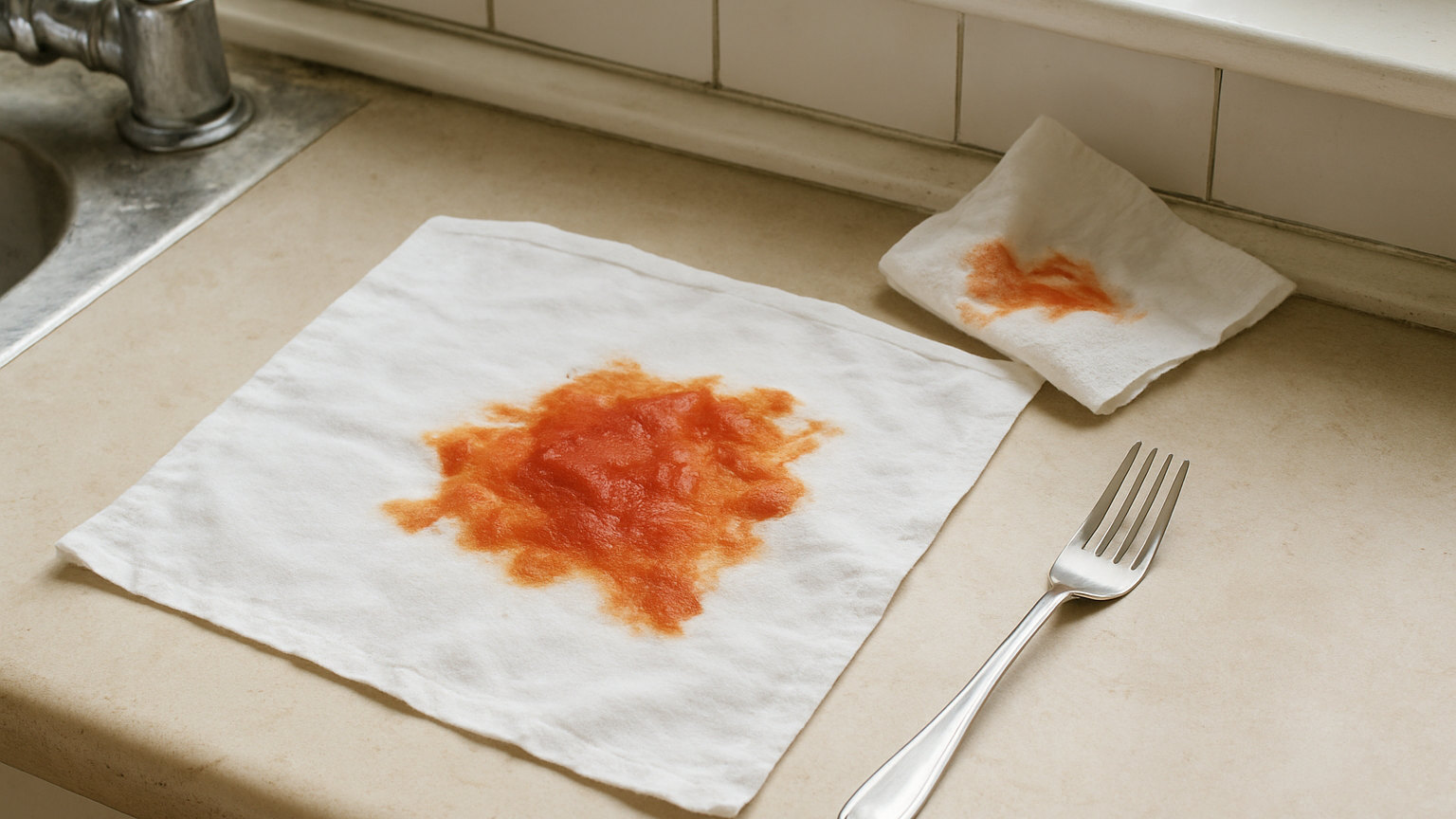
A specific group of stains is chemically altered by heat. Protein based marks coagulate when warmed, in the same way an egg white turns solid in a pan, and once that has happened the material is bonded into the fibre and cannot be dissolved out. Knowing which stains behave this way prevents most permanent laundry damage.
Which stains are protein based?
- Blood, the classic example and the least forgiving.
- Egg, in any form.
- Milk, cream and cheese, and anything containing them.
- Gravy and meat juices.
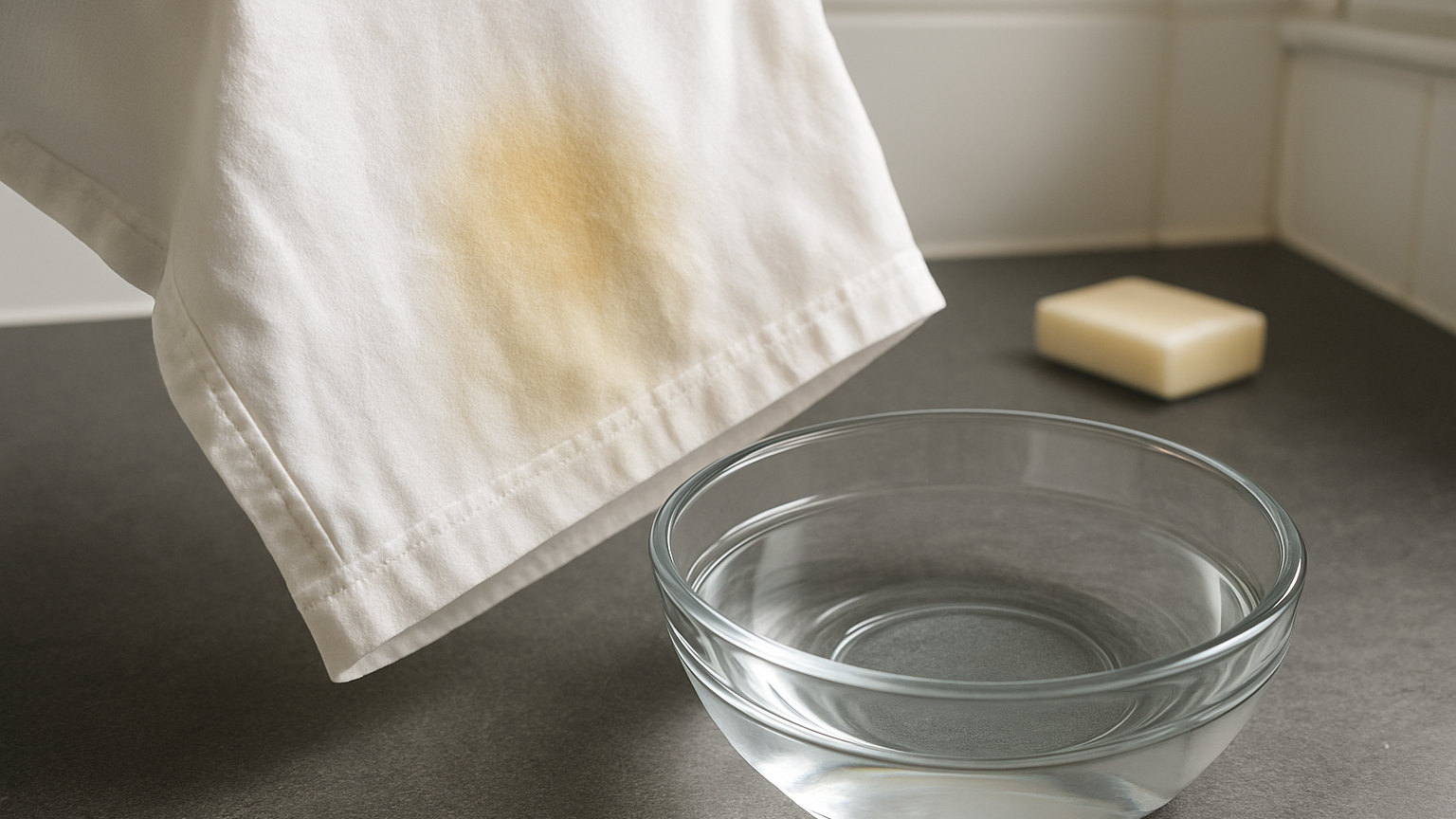
- Sweat, which is why underarm marks yellow over time.
- Vomit, which is both protein and acid.
- Grass, which contains proteins alongside its pigment.
- Baby formula and mucus.
What counts as heat?
Less than people assume. A rinse under a hot tap is enough. A 40 degree wash will begin to set many of them, and 60 will do it thoroughly. A tumble dryer sets anything that survived the wash. An iron will do it in seconds, which is why ironing over a mark is such a reliable way to make it permanent.
Even leaving a stained garment in a hot car or on a sunny windowsill can be enough over a few hours.
What should you do instead?
- Rinse in cold water immediately, from the reverse side of the fabric where possible.
- Soak in cold water for thirty minutes or longer for anything set in.
- Use a biological detergent, whose protease enzymes break protein down, in cool rather than hot water.
- Wash at 30 degrees or on a cold cycle.
- Check the mark while the fabric is still damp before drying.
- Air dry rather than tumble drying until you are sure it has gone.
Why does biological detergent work when heat does not?
Because the enzymes break the protein molecules apart chemically rather than trying to dissolve them. Protease is the relevant enzyme, and it is most active in the cool to warm range and denatures at high temperatures, which is another reason a hot wash is counterproductive on these stains.
Enzymes should not be used on wool or silk, which are themselves protein fibres and will be damaged.
What if a stain has already been set?
It is difficult and occasionally recoverable. Soak the item in cold water with a biological detergent or an enzyme pre-treatment for several hours, or overnight. Repeat two or three times, since each soak removes a little more.
For white cotton, an oxygen bleach soak afterwards will lift some of the remaining discolouration. Expect an improvement rather than a complete removal, and accept that a heat set blood stain on a coloured garment is often permanent.
Are there stains that need heat?
Yes, and confusing the two categories is a common mistake. Grease and oil need warmth to dissolve, and treating a butter mark with cold water achieves very little. Sugar based stains such as jam and syrup dissolve readily in warm water.
The rule is simple: cold for anything from the body or from a protein food, warm for anything greasy or sugary. If a stain has both elements, treat cold first and warm second.
What about tannin stains?
Tea, coffee, wine and fruit juice are tannin based rather than protein based, and they do not coagulate in the same way. They do, however, oxidise and darken over time and with heat, so they still become harder to remove after a hot wash or a dryer cycle.
Cold or warm water is fine for tannins, but the same rule applies about checking before drying.
What is the practical habit?
Check every garment before it goes anywhere near heat. A thirty second look at a damp item after washing catches the marks that survived, and treating them again costs nothing. Once something has been through a dryer, the options narrow considerably.
Does the same apply to dishwashers?
It does, and it catches people out with baby bottles, food containers and anything carrying egg or milk residue. A hot dishwasher cycle bakes protein onto plastic and into the surface of a wooden spoon. Rinsing those items in cold water first, exactly as you would a garment, means the dishwasher then handles them easily.