Butter is not simply fat. It contains milk solids and a small amount of water alongside the fat, which makes it a combination stain. The fat needs a degreaser and warmth; the milk protein sets permanently in heat. Getting the order right is what determines whether the mark comes out.
What is the correct sequence?
- Lift off any solid butter with a blunt edge, scraping rather than pressing it in.
- Blot the area with kitchen paper.
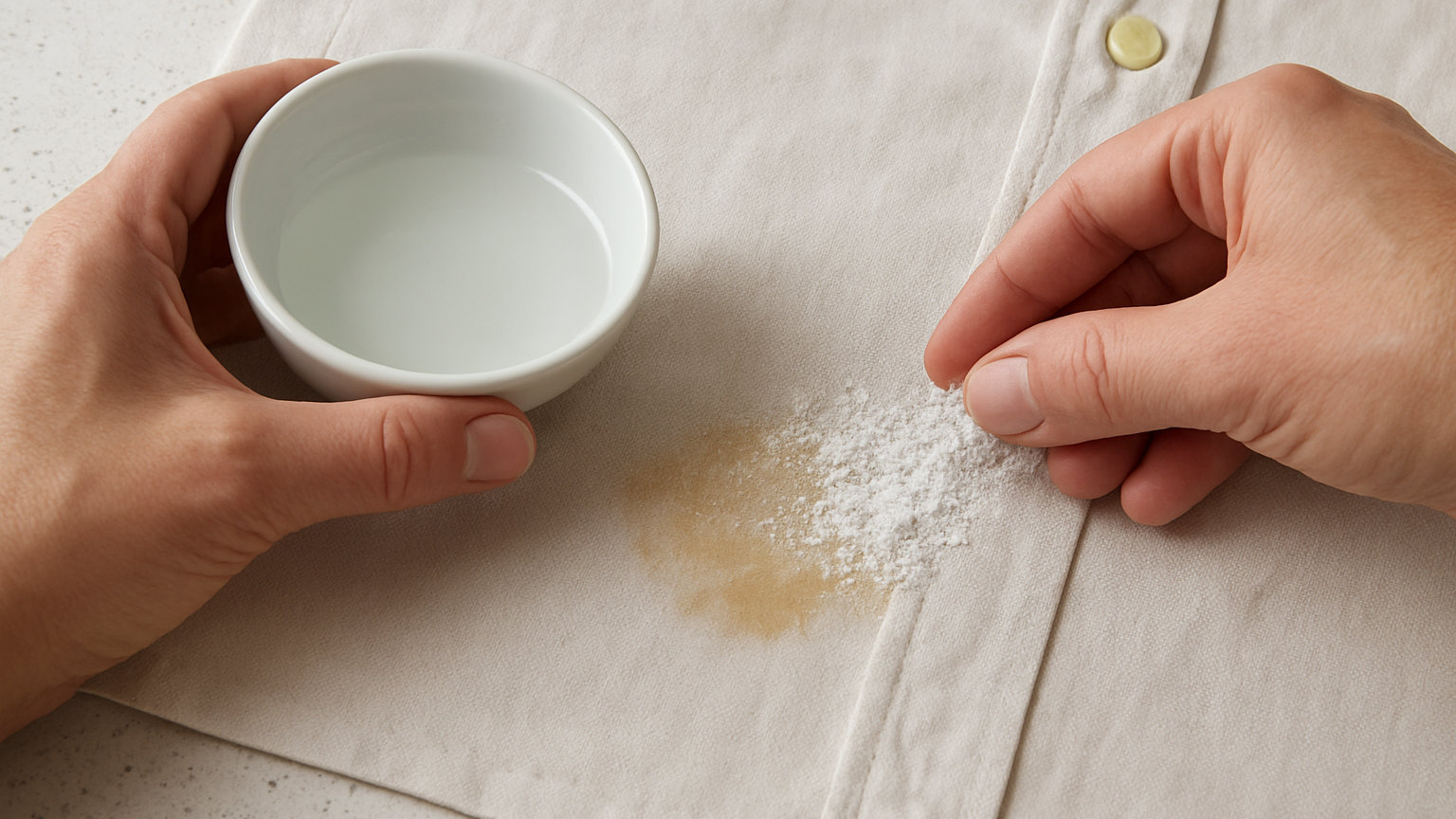
- Sprinkle with cornflour or talc and leave for twenty minutes to absorb the surface fat.
- Brush the powder away.
- Apply washing up liquid to the mark and work it in gently.
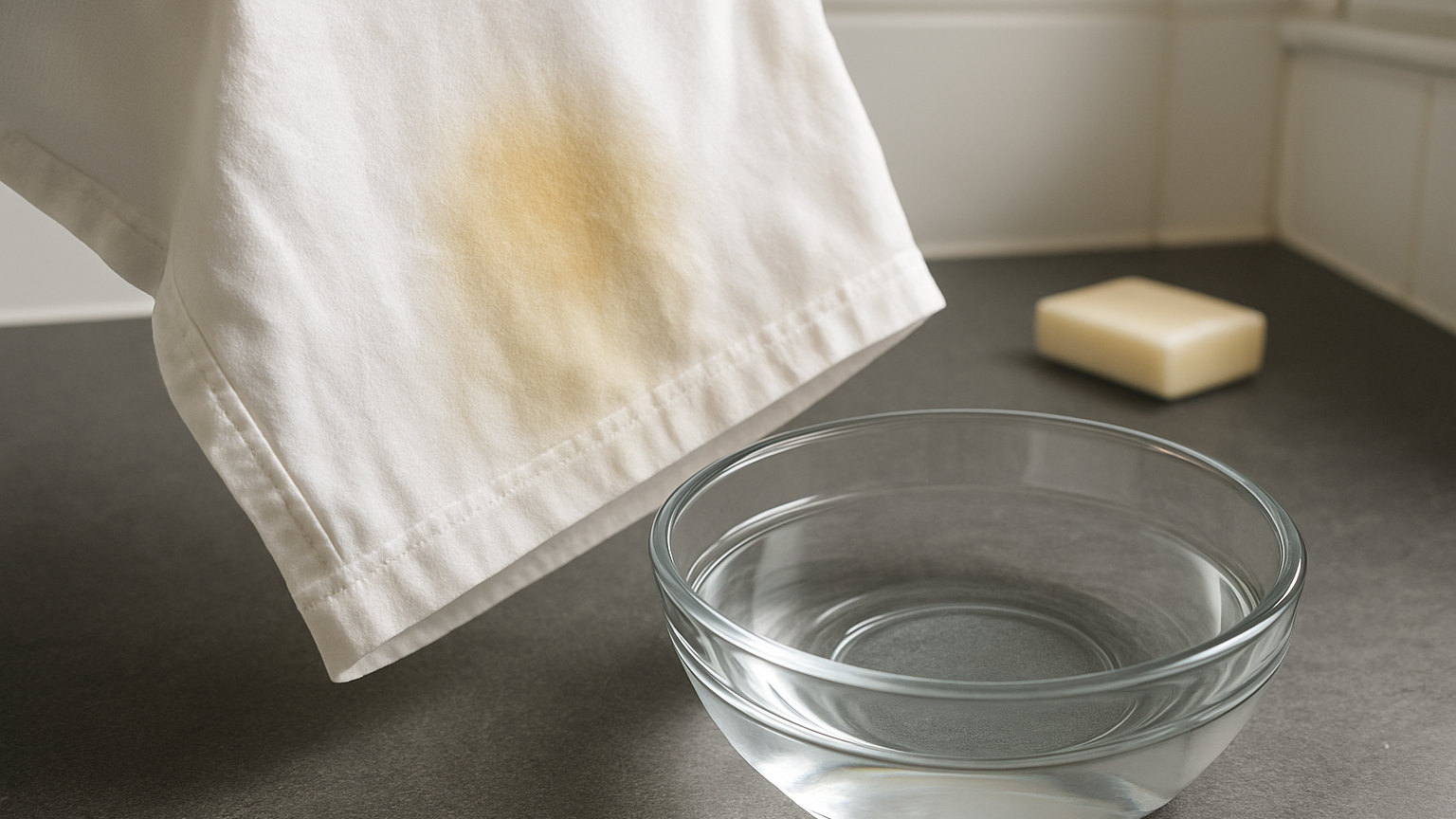
- Leave for ten minutes, then rinse in warm water.
- Soak briefly in cool water with a biological detergent to deal with the milk protein.
- Wash at the warmest temperature the label allows, checking before drying.
Why not simply wash it hot?
Because the milk solids coagulate, exactly as they do in a pan, and bond into the fibre. A butter stain washed hot without treatment frequently leaves a faint yellowish patch that will not shift afterwards, and people conclude the mark was greasier than it was.
Dealing with the fat first, at moderate warmth, and the protein second with enzymes, avoids that.
How do you deal with solid butter?
Harden it rather than trying to wipe it. If it has softened into the fabric, put an ice cube in a bag against it for a few minutes, then lift the hardened fat off with a spoon handle or a plastic scraper.
Wiping soft butter spreads it across three times the area and pushes it into the weave, which is the most common way a small mark becomes a large one.
Is margarine any different?
Slightly easier, since most margarines and spreads contain vegetable oils rather than dairy fat and often have no milk solids at all. Treat as a straightforward grease stain with washing up liquid and warm water.
Some spreads contain colouring, which can leave a faint yellow tint after the fat has gone. Sunlight on damp fabric usually clears it.
What about ghee and clarified butter?
These have had the milk solids removed, so they behave as pure fat. That makes them simpler to treat: degreaser and warmth, with no need for the enzyme stage. Ghee is often used at high heat and may carry a slight colour, which responds to sunlight.
Why is there sometimes a yellow ring?
Two possible reasons. Milk protein that has been heat set and yellowed, or oil that has oxidised over time. Both respond to an oxygen bleach soak on white and colourfast fabric, followed by a wash and drying in sunlight.
On coloured fabric, repeat the detergent treatment and rely on sunlight, which lifts more than people expect.
What about butter on furniture or carpet?
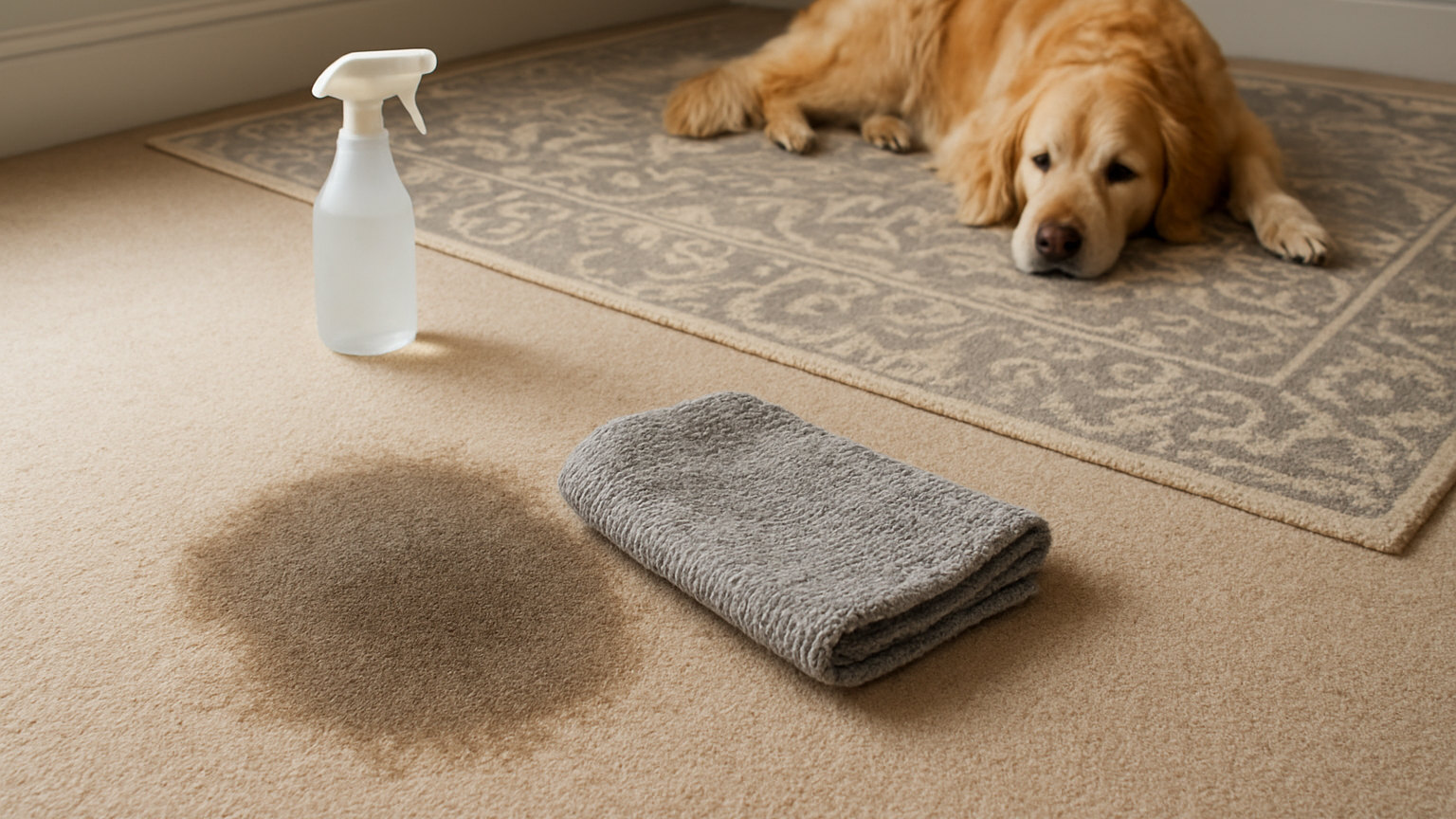
Lift the solids, then blot. Apply warm water with a drop of washing up liquid to a cloth rather than pouring it on, and dab from the outside inwards. Blot, rinse by blotting with clean water, and press a dry towel down under weight.
Follow with an enzyme cleaner on carpet, since the milk residue will smell within days if it is left in the backing. Check the cleaning code before using water on upholstery.
What if it has already been washed and dried?
Apply washing up liquid generously, work it in, and leave it for thirty minutes before washing warm again. Repeat two or three times. Heat set butter often improves substantially, since the fat can still be dissolved even after the protein has bonded, though a faint mark may remain on synthetic fabric.
What about butter on a tablecloth?
Treat the spot with washing up liquid first, then soak the whole cloth rather than spot treating, since a tablecloth after a meal rarely has only one mark. An overnight soak in warm water with oxygen bleach handles the butter, the gravy and everything else at once, followed by a wash at 60 and drying in sunlight.