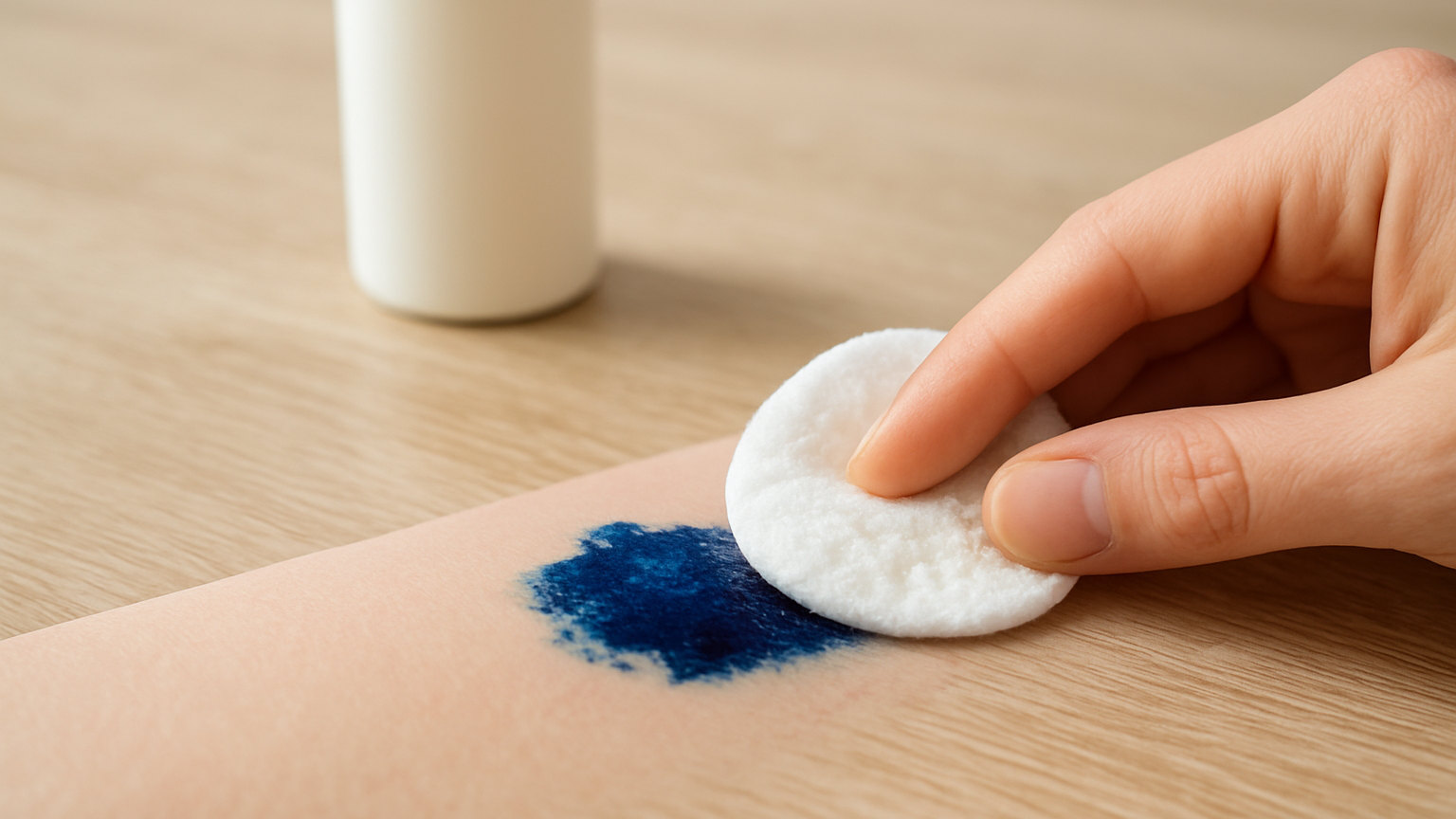
Ink on skin is largely a cosmetic problem that solves itself. The outer layer of skin renews continuously, so almost any ink will fade within a few days without intervention. The useful question is how to speed that up without using something that irritates or damages the skin, which rules out most of what works on fabric.
What works on ballpoint and felt tip?
- Soap and warm water, with a flannel, which handles most water based pens straight away.
- Baby oil or olive oil, rubbed in for a minute and wiped away, which dissolves the oily base of biro ink.
- Hand sanitiser gel, which is alcohol and works well, though repeated use is drying.
- A cleansing balm or micellar water, both designed to lift oil based pigment off skin.
- Bicarbonate of soda with a little water, as a gentle scrub.
- Toothpaste, which contains mild abrasives and works reasonably.
Oil first, then soap, is the sequence that works best on biro. The oil dissolves the carrier and the soap removes the oil.
What works on permanent marker?
The same approach with more persistence. Oil or a cleansing balm applied and left for a couple of minutes, then wiped and washed. Hand sanitiser works and dries the skin. Expect two or three attempts and expect a shadow that fades over a day or two.
Sun cream rubbed in and wiped off is an odd sounding remedy that works, since it contains both oils and emulsifiers.
What should not be used on skin?
White spirit, acetone, nail varnish remover, bleach and industrial degreasers. All of them will remove the ink and all of them strip the natural oils from skin, cause irritation and can be absorbed. The ink was going to fade anyway; a chemical burn will not.
Scouring pads and pumice stones are similarly a poor trade for a mark that fades on its own.
What about children?
Gentler still. Soap and warm water, then baby oil or a mild cleanser if anything remains. Do not use alcohol based sanitiser repeatedly on young skin, and do not scrub.
Most pens sold for children are water based and wash off readily. If a mark persists, it is worth checking which pen was used, since a permanent marker in a child pencil case is worth removing from circulation.
How do you exfoliate safely?
A paste of bicarbonate of soda and water, or a sugar and oil scrub, worked in gently with a flannel. The aim is to lift the outer skin layer slightly rather than to abrade it. Follow with a moisturiser, since anything that removes ink also removes oils.
Once a day is enough. Repeated scrubbing does more harm than the ink.
What about ink under fingernails?
Soak the fingertips in warm soapy water for a few minutes to soften it, then use a nail brush. A little oil worked around the nail bed first helps. It generally takes a couple of days to clear entirely, since the ink is in the skin rather than on it.
What about printer toner on hands?
Cold water and soap only. Warm water fuses toner onto skin and makes it considerably harder to remove, exactly as it does on fabric. Wash with cold water first, then warm once the powder has gone.
Is any of it harmful?
Ordinary pen ink on skin in the quantities involved is not considered harmful, and children draw on themselves routinely without consequence. The sensible precaution is washing hands before eating and avoiding broken skin. Anyone with a reaction, or ink in an eye, should seek advice from a pharmacist or a GP rather than treating it at home.
What about ink from a broken pen in a pocket?
Deal with your hands last and the garment first, since the ink on skin will fade anyway and the clothing will not. Wash hands with soap and oil afterwards. Check whether the pen has leaked through to anything underneath, since ink on a shirt pocket almost always marks the layer behind it as well.