Permanent hair dye is designed to penetrate and bond to keratin, which is a protein. That explains almost everything about how it behaves outside the intended target: it grips skin, wool and silk tenaciously, it stains porous surfaces such as grout and unsealed stone, and it wipes off smooth plastic and sealed surfaces relatively easily.
How quickly do you need to act?
Immediately. Oxidative dye continues developing for twenty to thirty minutes after application, and a splash wiped up in the first minute usually leaves nothing. The same splash left for half an hour may be permanent on a porous surface.
Keeping a damp cloth within reach while colouring hair is worth more than any removal technique afterwards.
What works on skin?
- A cloth with a little shampoo, immediately, which removes most fresh splashes.
- Oil such as olive, baby or coconut oil, rubbed in and left a few minutes, which is gentle and effective on a hairline.
- Bicarbonate of soda with washing up liquid, as a mild scrub for stubborn marks.
- Toothpaste, which contains mild abrasives and works reasonably.
- A proprietary colour remover wipe, sold for salon use and the most effective option.
Skin stains fade within a few days regardless, as the outer layer renews. Avoid bleach and strong solvents on skin entirely.
What works on fabric?
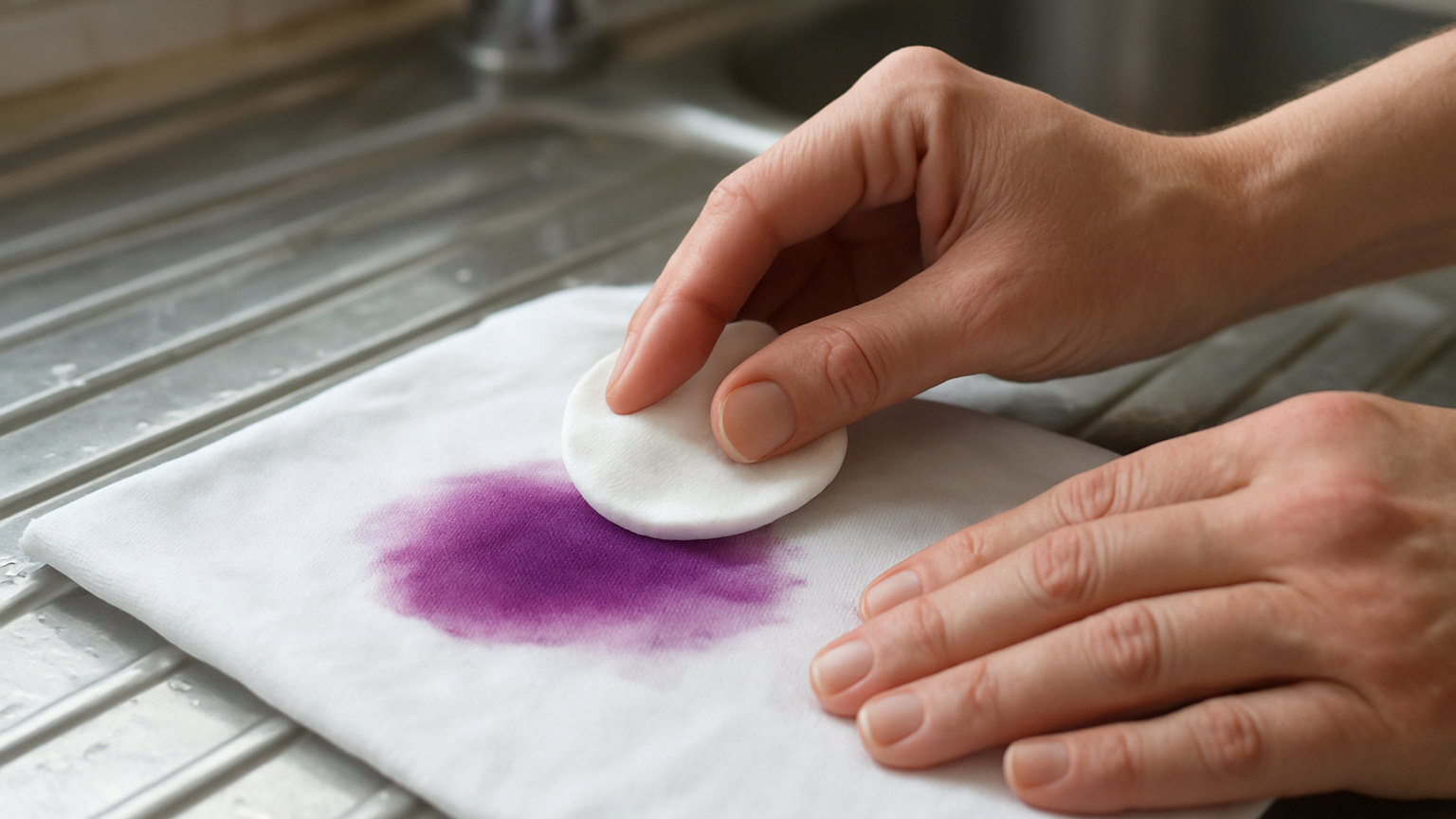
Less than you would hope, and speed is everything. Rinse immediately under cold running water from the reverse, then apply washing up liquid and leave it ten minutes. For white cotton, follow with an oxygen bleach soak, which is the most effective option available.
On coloured fabric there is a fundamental problem: anything strong enough to strip the dye will also strip the fabric colour. A dye stain on a coloured towel or a wool jumper is frequently permanent.
What about bathroom surfaces?
On acrylic, enamel and sealed ceramic, wipe immediately with a damp cloth. For a mark that has set, a cream cleaner or a paste of bicarbonate of soda usually lifts it, and a diluted bleach solution works on white ceramic. Never mix a bleach product with any acidic bathroom cleaner, which releases chlorine gas in an enclosed room.
Grout is the worst case, since it is porous and unsealed grout absorbs dye within seconds. A bleach based grout cleaner or a grout pen are the practical remedies. Natural stone should never meet bleach or acid, and a dye stain on unsealed stone may need professional attention.
What about carpet?
Blot immediately with a dry cloth, then dab with cold water and a little washing up liquid applied to a cloth. Work from the outside in and change the cloth frequently.
For a synthetic carpet, a solution of one part hydrogen peroxide to two parts water sometimes helps, tested first in a hidden area. On wool carpet, do not attempt bleaching agents, and call a professional for anything significant.
Does dye removal from hair work on stains?
Colour remover products designed to strip dye from hair contain reducing agents rather than bleaches, and they do work on some fabric and surface stains. They are aggressive and will affect fabric dye, so they are a last resort on white cotton and a poor idea on anything coloured.
How do you prevent it?
- Apply a barrier of petroleum jelly or a thick balm along the hairline, ears and neck.
- Wear the gloves supplied, and change them if they tear.
- Cover the floor and any surfaces with old towels or a plastic sheet.
- Wear an old dark t-shirt you do not mind losing.
- Keep a damp cloth to hand and wipe splashes as they happen.
- Use dark towels afterwards, since dye continues to transfer for several washes.
What about dye on a bath or shower tray?
Rinse it away immediately with plenty of water rather than letting it sit. On acrylic, a set mark responds to a cream cleaner and gentle work with a non-scratch pad. Avoid abrasives, which scratch acrylic and make future staining worse.
Does it stain differently on grey and blonde hair?
The skin staining is the same, but it shows more against pale skin and is more noticeable at a light hairline. Anyone colouring grey or blonde hair at home is worth applying the petroleum jelly barrier more carefully, since the contrast makes even a light mark obvious for several days.