Ink on carpet is awkward for two reasons. The carpet cannot be rinsed, so every drop of solvent stays in the pile unless it is lifted back out, and the latex backing that holds the tufts in place can be dissolved by the solvents that remove ink. Both problems are solved the same way: put the solvent on the cloth, never on the carpet.
What is the method?
- Blot any wet ink immediately with a dry white cloth, pressing rather than wiping.
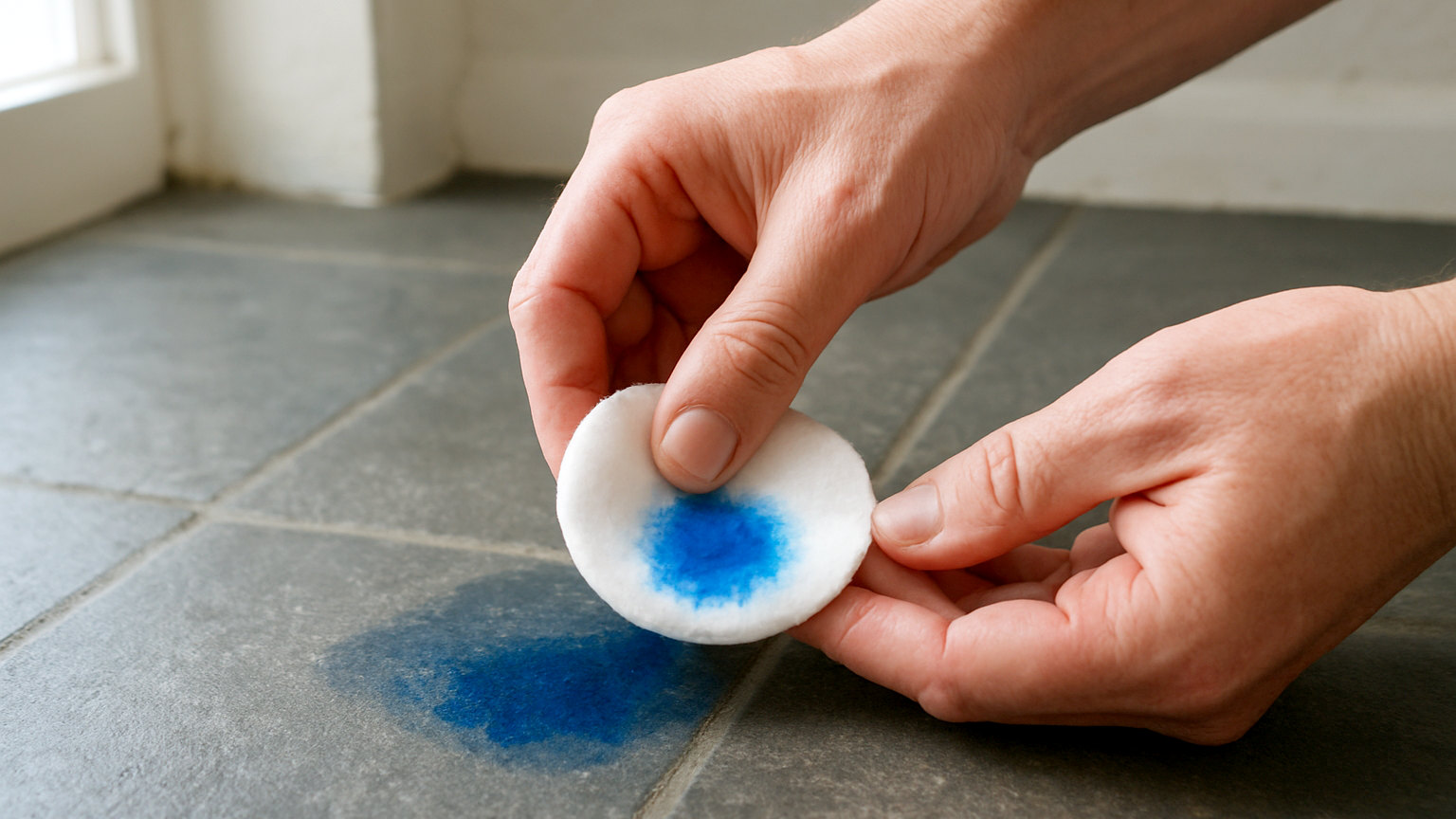
- Apply surgical spirit to a clean white cloth until it is damp, not soaked.
- Dab the mark from the outside inwards, pressing briefly and lifting.
- Change to a clean section of cloth as soon as it picks up colour.
- Alternate with a dry cloth to lift the dissolved ink out of the pile.
- Continue until no more transfers, which may take twenty or thirty passes.
- Rinse by blotting with a cloth dampened in cold water.
- Press a dry towel down under weight to extract the moisture, then dry with a fan.
Why must the solvent go on the cloth?
Because solvent poured onto carpet sinks straight through to the backing. Alcohol and stronger solvents soften the latex adhesive that holds the tufts, and the result can be a patch where the pile comes loose. It also spreads the ink outwards into a much larger mark.
Damp cloth, short dabs, frequent changes. That is the whole technique.
Why does it take so many passes?
Because each dab dissolves a small amount of pigment and transfers it to the cloth. There is no way to flush the rest away, so the removal is incremental. People give up after five or six attempts when twenty would have finished it.
Patience genuinely is the main requirement with ink on carpet.
Which solvents can be used?
- Surgical spirit – the standard choice and effective on ballpoint and marker.
- A proprietary carpet ink remover – formulated to be safe on backing, worth buying for a significant mark.
- Hand sanitiser gel – useful in an emergency and leaves a residue that needs rinsing.
- Dry cleaning solvent – effective, needs good ventilation and a test first.
Avoid acetone and nail varnish remover entirely on carpet, since they attack synthetic fibres and backing.
What about wool carpet?
Wool is more absorbent and less tolerant. Test any solvent on an offcut or in a wardrobe first, use less of it, and work more slowly. Avoid alkaline cleaners and oxygen bleach entirely.
On a wool carpet with a significant ink mark, a professional is frequently the better decision, since the cost of a bleached or felted patch exceeds the call out.
What about dried ink?
Soften it first. Apply a little glycerine to the mark with a cotton bud and leave it for an hour, which rehydrates the pigment and makes the solvent stage far more effective. Then proceed as above, expecting more passes than with a fresh mark.
Dried ink often reduces to a shadow rather than disappearing, which on a patterned carpet is usually acceptable.
What should you do at the end?
Rinse and extract properly. Solvent residue left in carpet attracts dirt and can continue to affect the backing, and any cleaning product left behind creates a patch that darkens over the following weeks.
Blot with clean water, press a dry towel down under a weight for several hours, and dry quickly.
What if it spreads while you are working?
Stop, let the area dry, and reassess. Spreading means too much solvent on the cloth or dabbing from the middle outwards. Dry the area fully, then restart with a barely damp cloth working strictly from the outside in.
A mark that has spread badly and dried is a reasonable point to call a professional rather than continuing.
Does it matter how old the carpet is?
It does. Older carpet has usually lost its factory stain protection, so ink penetrates further and faster than it would on a new one. It may also have a more brittle backing that solvent affects more readily. Test in a wardrobe or under a sofa before treating a visible area on any carpet more than a few years old.