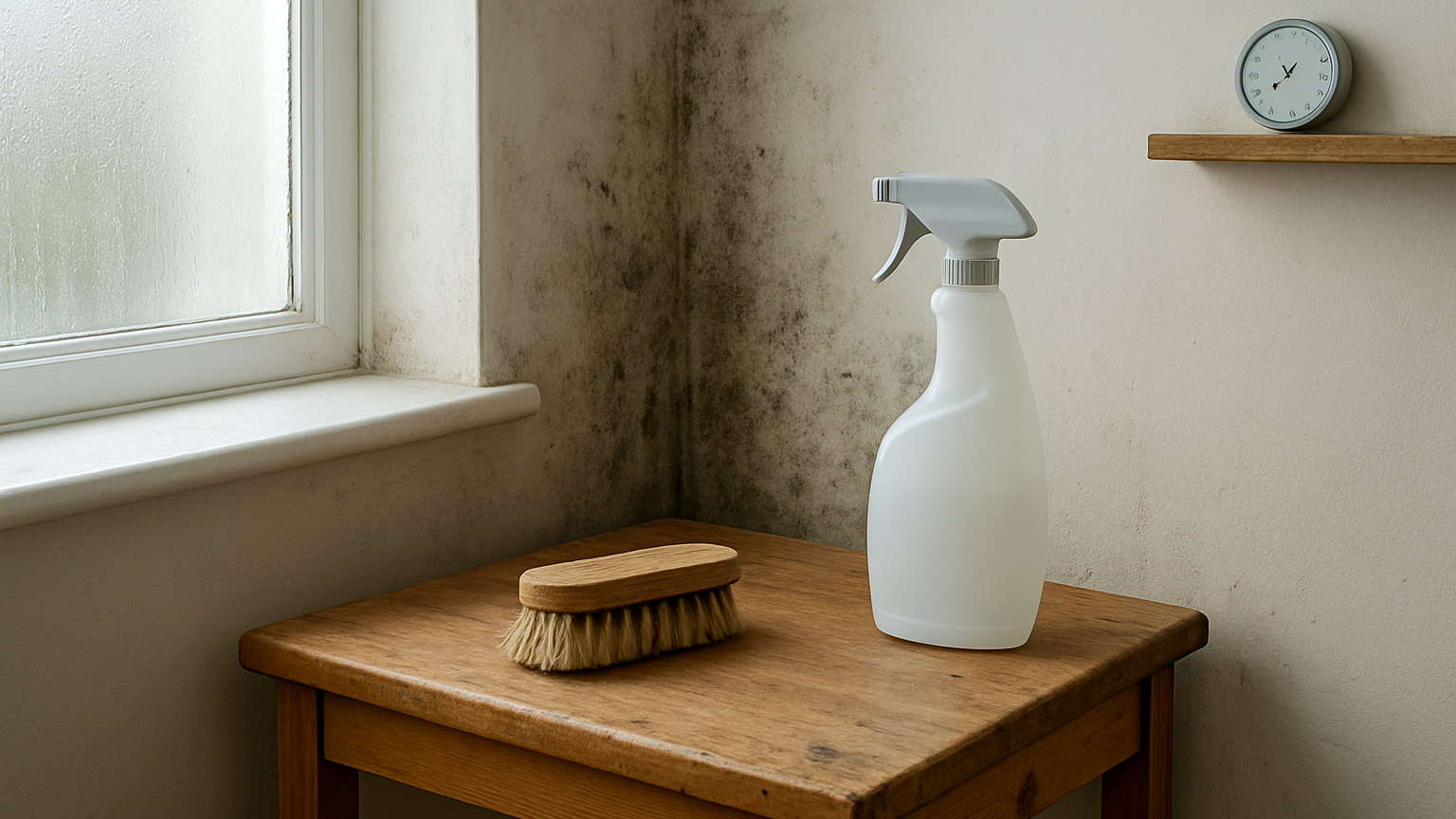
Removing mould from a wall is straightforward, and the way it is usually done spreads the problem. Brushing or vacuuming dry growth releases enormous numbers of spores into the air, which then settle throughout the room and germinate wherever conditions suit them. The safe method keeps the growth wet from the start.
What should you do before starting?
- Open the window in that room and close the door to the rest of the house.
- Wear disposable gloves, and a mask rated for fine particles if the area is more than a small patch.
- Move furniture away and cover anything that cannot be moved.
- Have a bin bag ready for the cloths.
- Never dry brush or vacuum the growth.
Anyone with asthma, a respiratory condition or a weakened immune system should not do this work themselves.
What is the method?
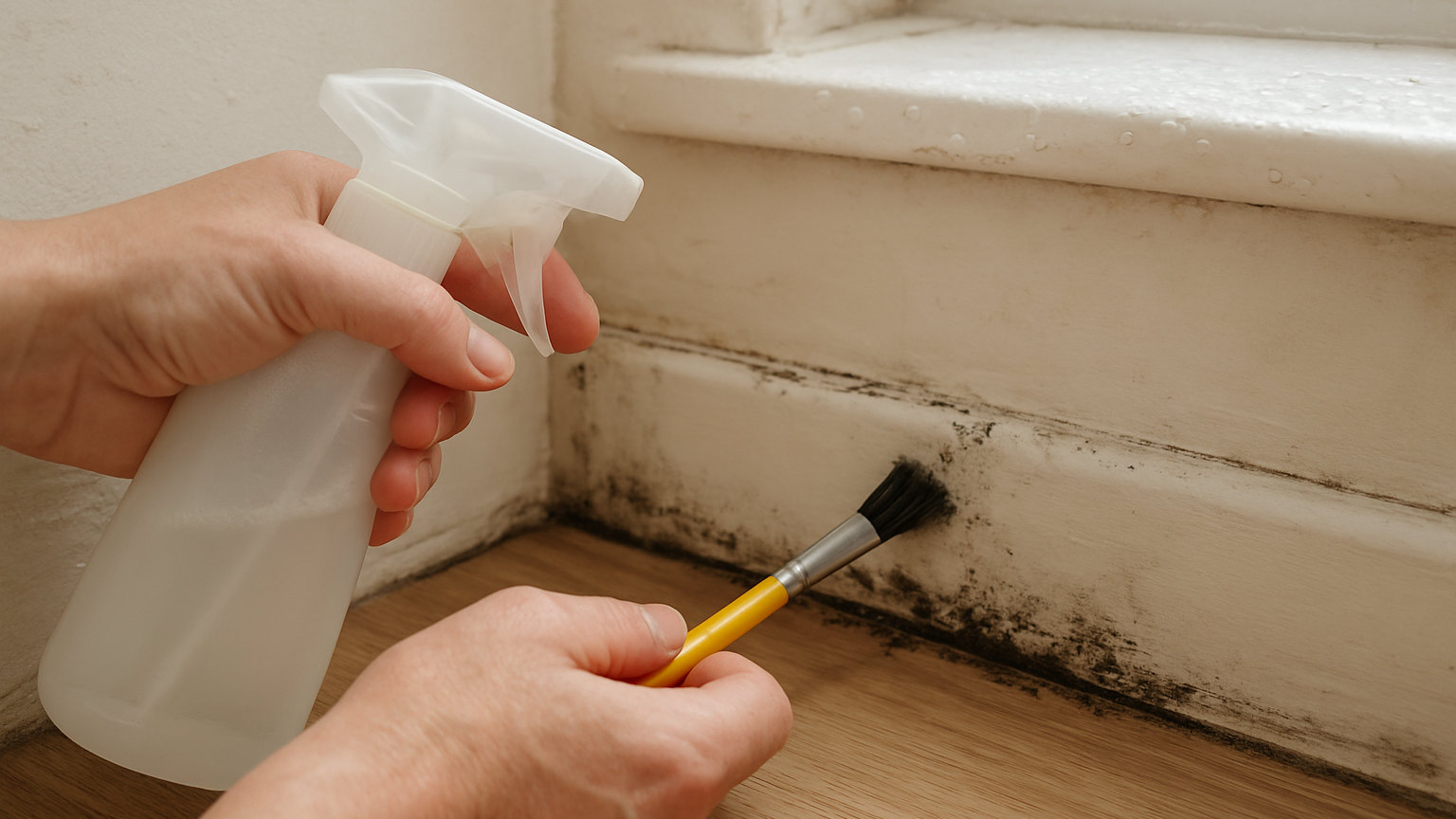
Dampen the affected area lightly with water from a spray bottle, which stops spores becoming airborne. Then wipe the growth off with a disposable cloth, working gently rather than scrubbing, and put each used cloth straight into the bag.
Apply a fungicidal wash or a dilute bleach solution to the cleaned area, leave it for the time stated on the label, and wipe again with a fresh cloth. Let the wall dry completely, which may take a day or two with a fan or a dehumidifier running.
Bag and dispose of everything used rather than rinsing cloths in a sink.
What should you use?
A proprietary fungicidal wash is the most reliable, since it is formulated to kill the growth rather than simply remove the colour. A dilute bleach solution works on non-porous surfaces and is less effective on porous ones such as plaster, where it lightens the surface while leaving growth below.
White vinegar has a genuine antifungal effect and is a reasonable option on light growth, particularly where bleach is unsuitable.
Never mix bleach with any other product, and particularly not with anything acidic or containing ammonia.
Why does it come back?
Because the moisture is still there. Cleaning removes the growth and changes nothing about the conditions that produced it. In most homes that means condensation from cooking, showering, drying laundry indoors and breathing, meeting a cold wall surface.
Ventilating daily, heating the room to a steady low background temperature, keeping furniture off external walls and running a dehumidifier in a damp room all address the cause rather than the symptom.
Should you repaint?
Once the wall is completely dry and the growth has been killed, an anti-mould emulsion is worth using in an affected room. It contains a fungicide in the paint film and delays regrowth considerably.
Painting over live mould, or over a damp wall, simply hides it for a few months. The paint will blister and the growth will return through it.
What about wallpaper?
Mould growing on wallpaper has usually got into the paste and the plaster behind. Surface cleaning gives a temporary result at best. Where the paper is affected over any significant area, stripping it, treating the plaster and redecorating is the honest answer.
When should you stop and get help?
When the affected area is larger than about a square metre, when growth returns quickly despite good ventilation and heating, when plaster is blown or crumbling, when there is a smell but no visible growth, or when the damp is present year round rather than seasonally.
Those point to a building fault such as a leak, a failed damp proof course or a cold bridge, and no amount of cleaning will resolve it.
What if you rent?
Report it to the landlord in writing, with photographs and dates. Landlords in the UK have legal obligations regarding damp and mould, and a written record matters if the problem persists. Local authority environmental health departments can advise where a landlord does not act.
How long before it comes back?
If the moisture has been addressed, months or years. If it has not, typically four to eight weeks, and often sooner in winter. That timescale is a useful diagnostic in itself: growth returning within a month means the conditions are unchanged, and no amount of repeat cleaning will alter that.