Pet vomit combines three problems: solid material, protein that sets with heat, and stomach acid strong enough to strip dye from carpet. The acid is the reason speed matters more here than with most pet accidents, because colour loss happens within minutes and cannot be reversed by any amount of later cleaning.
What is the order of work?
- Put on disposable gloves.
- Lift off the solid material with a scraper, a piece of card or paper towels, working from the outside inwards.
- Bag it rather than putting it in an open bin.
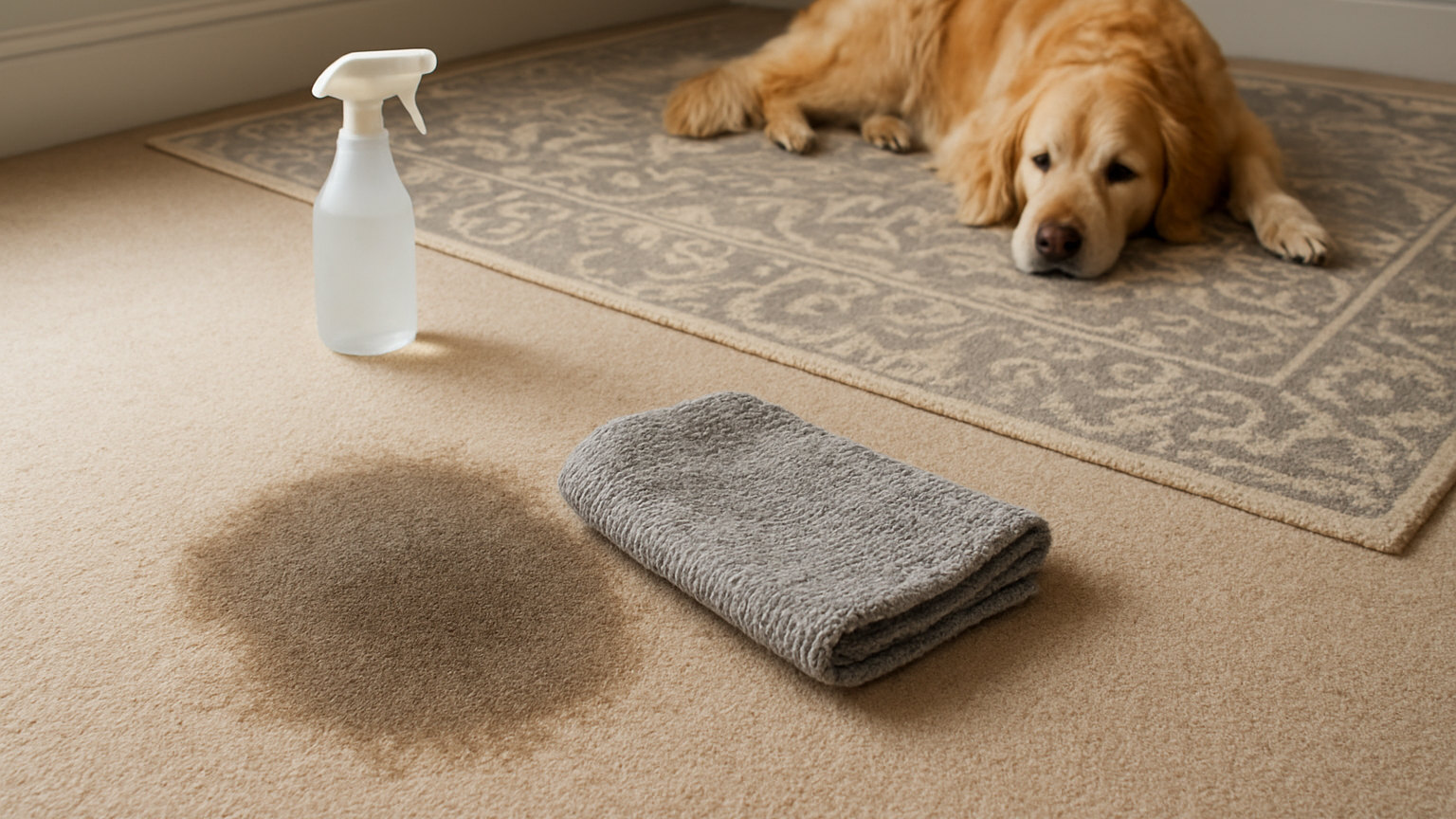
- Blot the remaining liquid with dry paper towels, pressing hard.
- Dilute what remains by dabbing with cold water on a cloth, then blot again.
- Repeat the damp and dry cycle several times, which removes the acid.
- Apply an enzyme cleaner generously and leave it for the full contact time.
- Blot, extract the moisture with a dry towel under weight, and dry with a fan.
Why does diluting the acid come first?
Because stomach acid continues to act on carpet dye for as long as it is in contact. Getting plain cold water onto the area and blotting it out repeatedly is the single most useful thing you can do in the first few minutes, ahead of reaching for any product.
A pale patch that appears afterwards is chemical damage rather than a stain, and no cleaner will restore it.
Why cold water rather than warm?
Because vomit contains protein, which coagulates in heat and bonds into the fibre. Warm water or a steam cleaner will set both the protein and the colour of whatever the animal ate.
Cold throughout, until the enzyme cleaner has done its work.
Why an enzyme cleaner?
Because the residue that causes the lingering smell is protein and fat that has soaked below the surface, where blotting cannot reach. An enzyme cleaner continues breaking it down wherever the liquid went.
Apply enough to cover the whole area the liquid reached rather than the visible mark, and keep it wet for the contact time on the label.
What about the colour from food and bile?
Bile leaves a yellow stain and many pet foods contain strong colourings that behave like dye. After the enzyme stage, treat any remaining colour with a carpet stain remover suitable for the fibre, tested first in a hidden area.
On colourfast synthetic carpet, a dilute hydrogen peroxide solution helps. Never use it on wool.
What about hard floors?
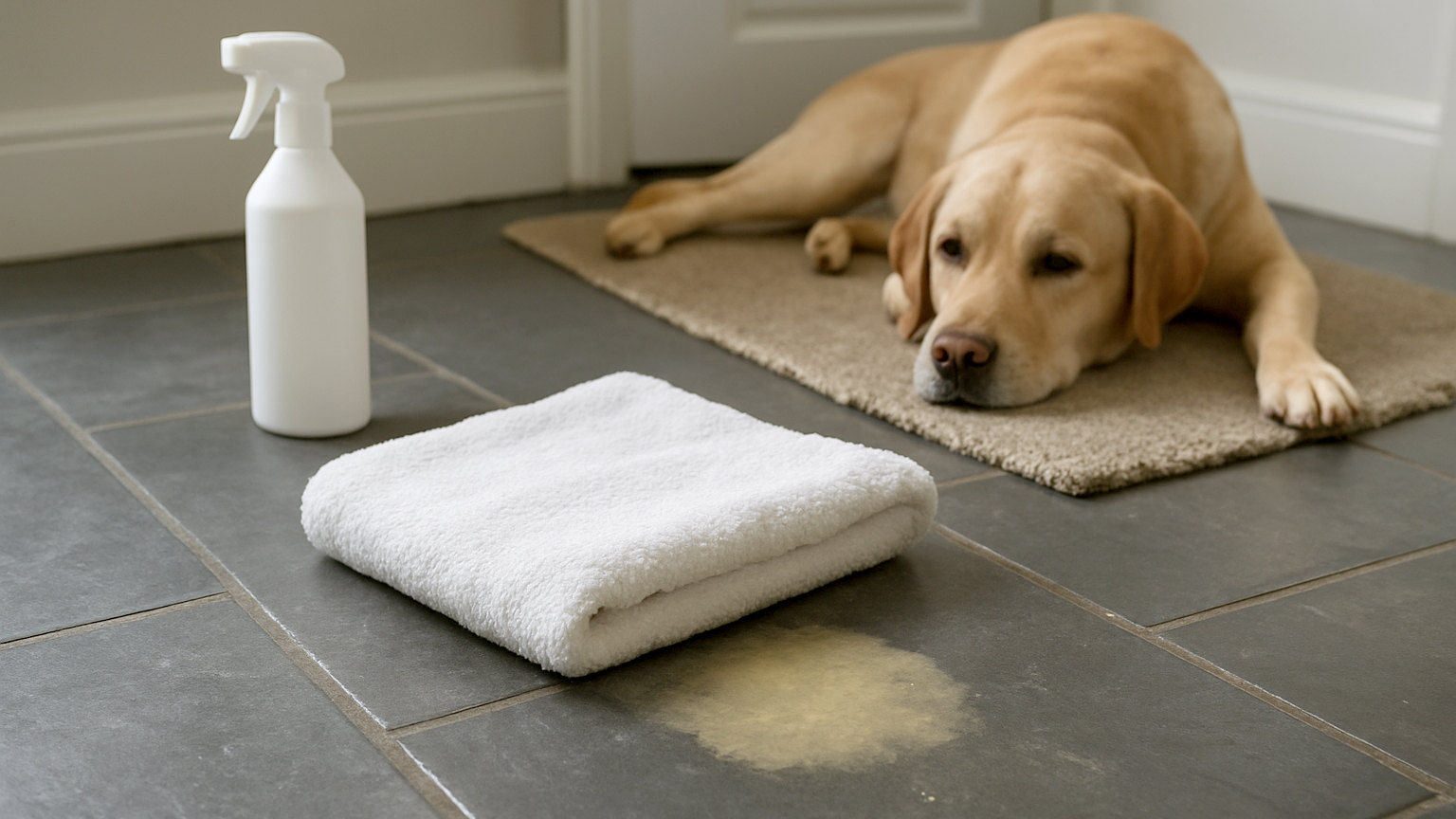
Much simpler than carpet. Remove the solids, clean the area with warm water and detergent, then disinfect with a product stated as safe around animals. Check the joints between boards or tiles carefully, since liquid runs straight into them and will smell later even when the surface looks spotless.
On unsealed wood and porous stone, act quickly, because both the acid and the colour will penetrate.
What should you disinfect afterwards?
The area itself and anything nearby that was splashed, plus your hands. Some causes of vomiting in animals are transmissible, so gloves and thorough handwashing are sensible precautions rather than fussiness. Bag the cloths and paper towels rather than reusing them.
When should you contact a vet?
This is worth saying plainly. Occasional vomiting in an otherwise well animal is common. Repeated vomiting, blood in the vomit, vomiting alongside lethargy, diarrhoea or refusal to drink, or any vomiting in a very young, very old or unwell animal warrants a call to a vet rather than a cleaning routine.
The same applies if there is any chance the animal has eaten something it should not have.
What about vomit on bedding or a sofa?
The same sequence, with the advantage that most of it can be washed. Remove solids, rinse in cold water, then wash at 60 degrees with a biological detergent. For a sofa, check the cleaning code first and use a foam rather than liquid on W or WS fabric, following with an enzyme cleaner for the protein residue that would otherwise smell.