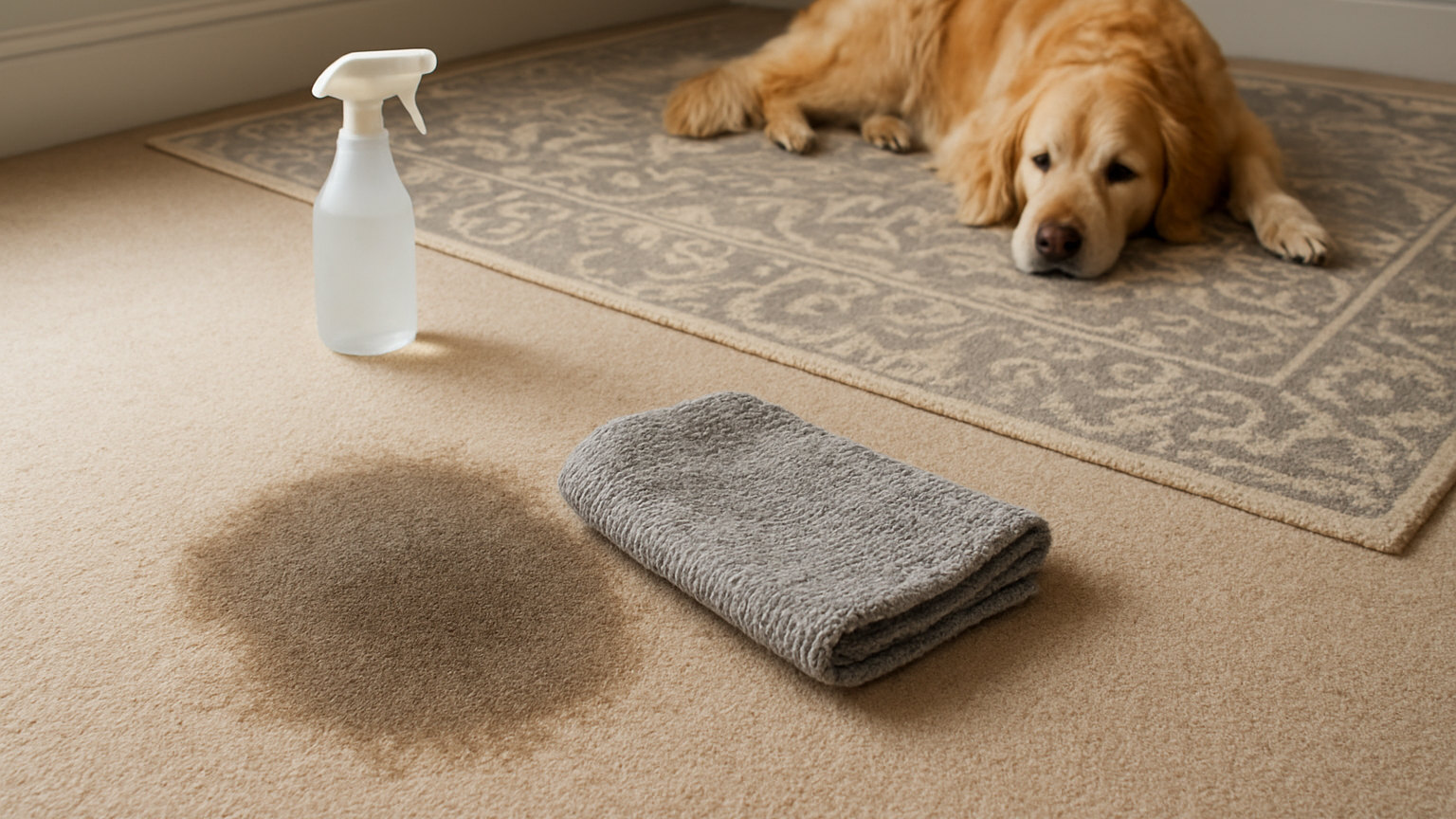
Pet urine on carpet is not a surface stain. Liquid spreads outwards through the pile and downwards into the backing and the underlay, so by the time you see a damp patch the affected area is considerably larger than it looks and most of it is below the surface. Treating only the visible mark is why so many of these come back.
What should you do immediately?
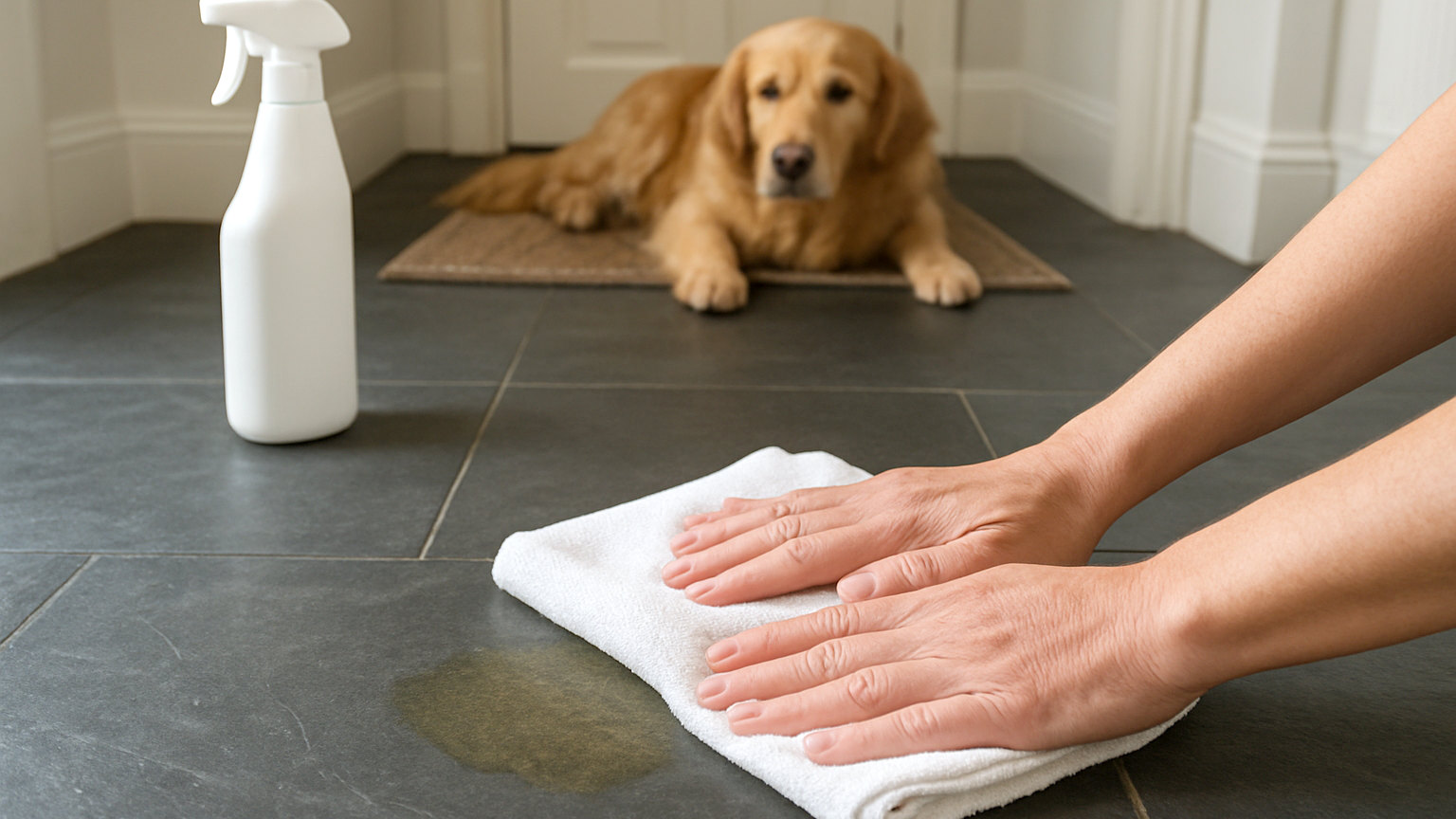
- Blot with thick dry towels, pressing hard and standing on them if necessary.
- Keep moving to dry sections until little further transfers.
- Press down repeatedly rather than wiping, to draw liquid up from the backing.
- Rinse by blotting with cold water applied to a cloth, then blot dry again.
- Apply an enzyme cleaner generously, covering more area than the visible stain.
- Leave it wet for the full contact time on the label, which is often ten to fifteen minutes.
- Blot, then press a dry towel down under weight for several hours.
- Dry the area quickly with a fan.
Why does it have to be an enzyme cleaner?
Because urine contains uric acid crystals, which are not water soluble. Detergent and disinfectant remove the liquid and the visible mark and leave the crystals bonded to the fibres, where they continue releasing odour indefinitely and reactivate in humid weather.
Enzyme cleaners contain biological agents that break those compounds down chemically. Nothing else does, which is why this is the one category of stain where a specific product genuinely matters.
How much should you apply?
More than feels reasonable. The treatment has to reach everywhere the urine reached, which means saturating the carpet, the backing and ideally the underlay in an area wider than the stain. A light spray over the visible patch treats a fraction of the problem.
Cover the area with a damp cloth or a sheet of cling film afterwards so it stays wet for the full contact time, since enzymes stop working as soon as they dry.
Why does the smell come back later?
Because residue remains in the backing or the underlay. Uric acid crystals are hygroscopic, meaning they draw moisture from the air, and in humid conditions they reactivate and release odour again. A spot that smells only on damp days is a reliable sign of untreated residue below the surface.
The remedy is a second, more generous enzyme treatment rather than a stronger product.
What should never be used?
- Steam cleaners, which set the proteins permanently into the fibre.
- Hot water, for the same reason.
- Ammonia based cleaners, which smell like urine to an animal and encourage repeat marking.
- Chlorine bleach, which damages carpet and can react with urine to produce harmful fumes.
- Scented products applied over an untreated stain, which mask rather than remove.
What about the underlay?
For a large or repeated accident, the underlay is usually the real problem and it cannot be treated from above. Lifting a corner of the carpet to check is worth doing. Where the underlay is soaked, replacing that section is the only reliable fix, and it is a much smaller job than replacing the carpet.
What about wool carpet?
Wool is a protein fibre and some enzyme cleaners will damage it over time. Use a product specifically stated as safe for wool, keep the contact time to the minimum on the label, and rinse thoroughly afterwards.
Urine is also alkaline and can strip colour from wool, so some permanent lightening may occur regardless of how promptly you treat it.
What if it has been there for months?
It is still treatable and needs more of everything: more product, longer contact, and two or three rounds with full drying in between. An old stain that has been walked into the pile and dried repeatedly may leave a permanent mark even once the smell has gone, which is a reasonable outcome.
Should you disinfect afterwards?
Only after the enzyme treatment has finished and the area has dried. Disinfectant applied first will kill the bacteria in a biological cleaner and stop it working, which is a common reason a treatment fails. Where disinfection matters, rinse with plain water, let the enzymes do their job, then disinfect as a final step.