Household cleaning safety comes down to a small number of habits. Most serious incidents trace back to one of them being missed, and none of them takes more than a few seconds once they are established.
What are the rules that matter?
- Never mix products. One at a time, rinse in between.
- Store everything high, out of reach of children and pets.
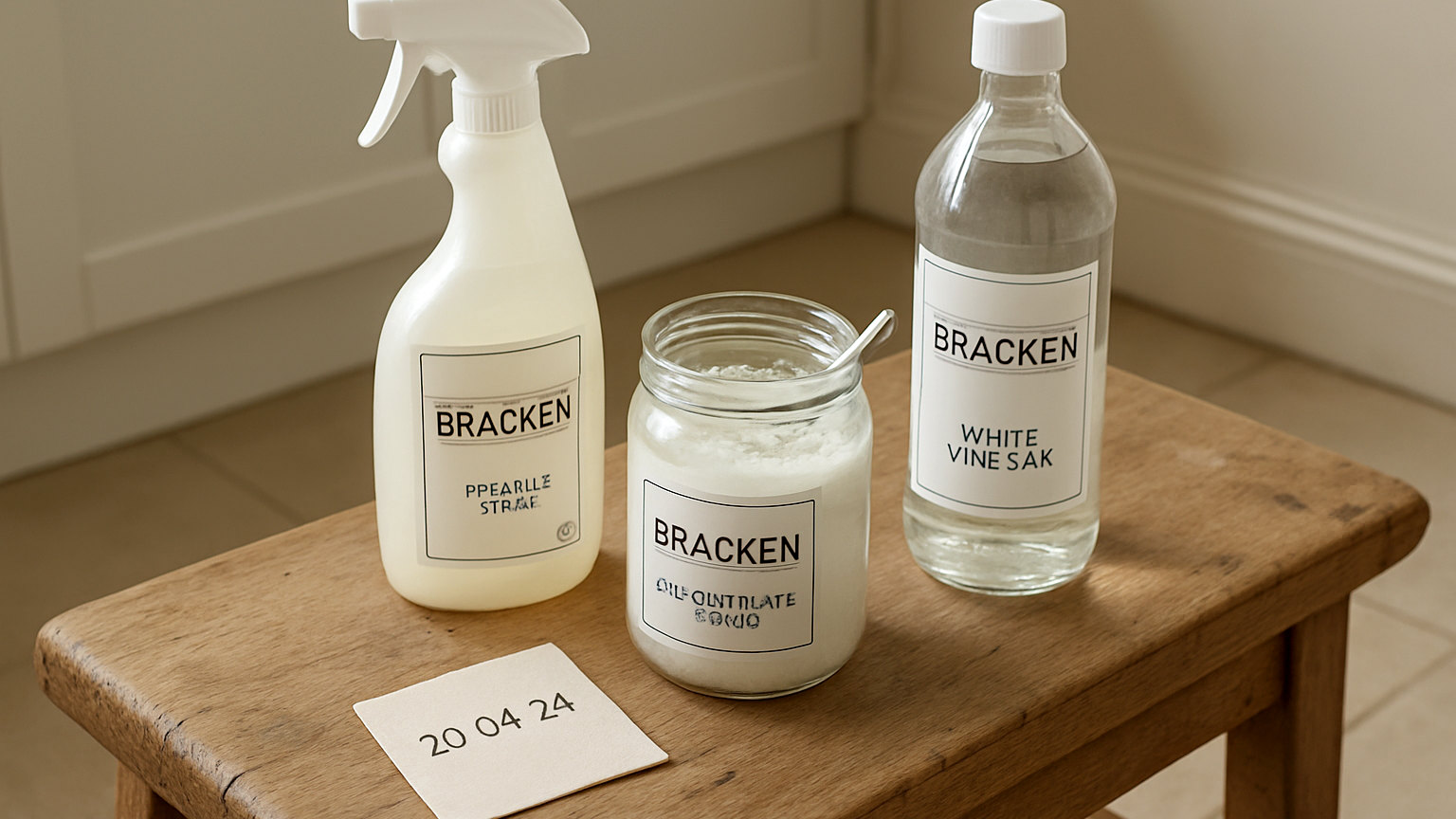
- Keep everything in its original labelled container.
- Ventilate whenever you clean, particularly in bathrooms.
- Wear gloves for anything corrosive, and eye protection for anything sprayed upwards.
- Never leave a product out while cleaning.
- Read the label once when you buy something.
Which single rule prevents the most harm?
Never mixing. Bleach with any acid produces chlorine gas, and bleach with ammonia produces chloramine. Both happen accidentally, usually when one product follows another in a small bathroom without rinsing.
If a product contains bleach, nothing else goes near it, and the surface gets rinsed before anything else is applied.
What is the most commonly ignored rule?
Ventilation. Most cleaning happens in the two smallest rooms in the house, often with the door shut, and vapours concentrate rather than dispersing.
Open a window before you start rather than after, create a through draught, and leave it open afterwards.
What should you never do?
- Put a cleaning product in a drinks bottle.
- Mix two products for any reason.
- Leave a laundry capsule out on a worktop.
- Induce vomiting after someone swallows a product.
- Leave oily cloths in a pile.
- Store aerosols in heat or direct sunlight.
- Use a product you cannot identify.
What should you know before you need it?
That for a chemical splash in the eye, you rinse with plenty of running water for at least fifteen to twenty minutes, holding the lid open, and then seek medical advice.
That for swallowing, you do not induce vomiting, you keep the container, and you call 999 for serious symptoms or NHS 111 for advice.
That if fumes have been produced, you leave the room, ventilate from outside and stay out.
What equipment is worth having?
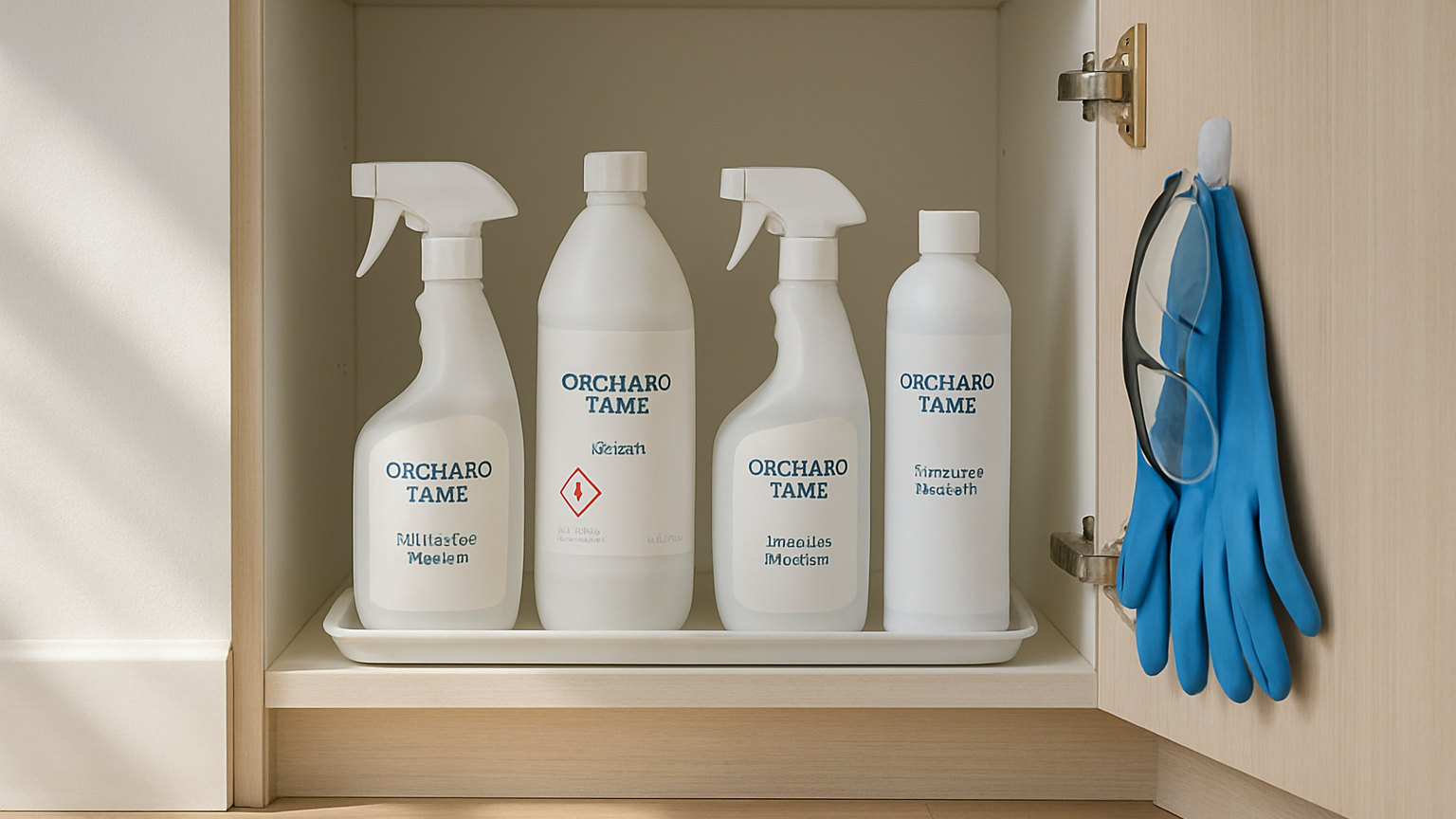
Nitrile gloves, safety glasses, and a fire blanket in the kitchen. All three are inexpensive, and the gloves and glasses should live with the cleaning products rather than elsewhere, since equipment that is not to hand does not get used.
What about the products themselves?
Owning fewer reduces the risk directly. Most households have several products doing the same job, and the corrosive ones, oven and drain cleaners in particular, are worth asking whether you need at all.
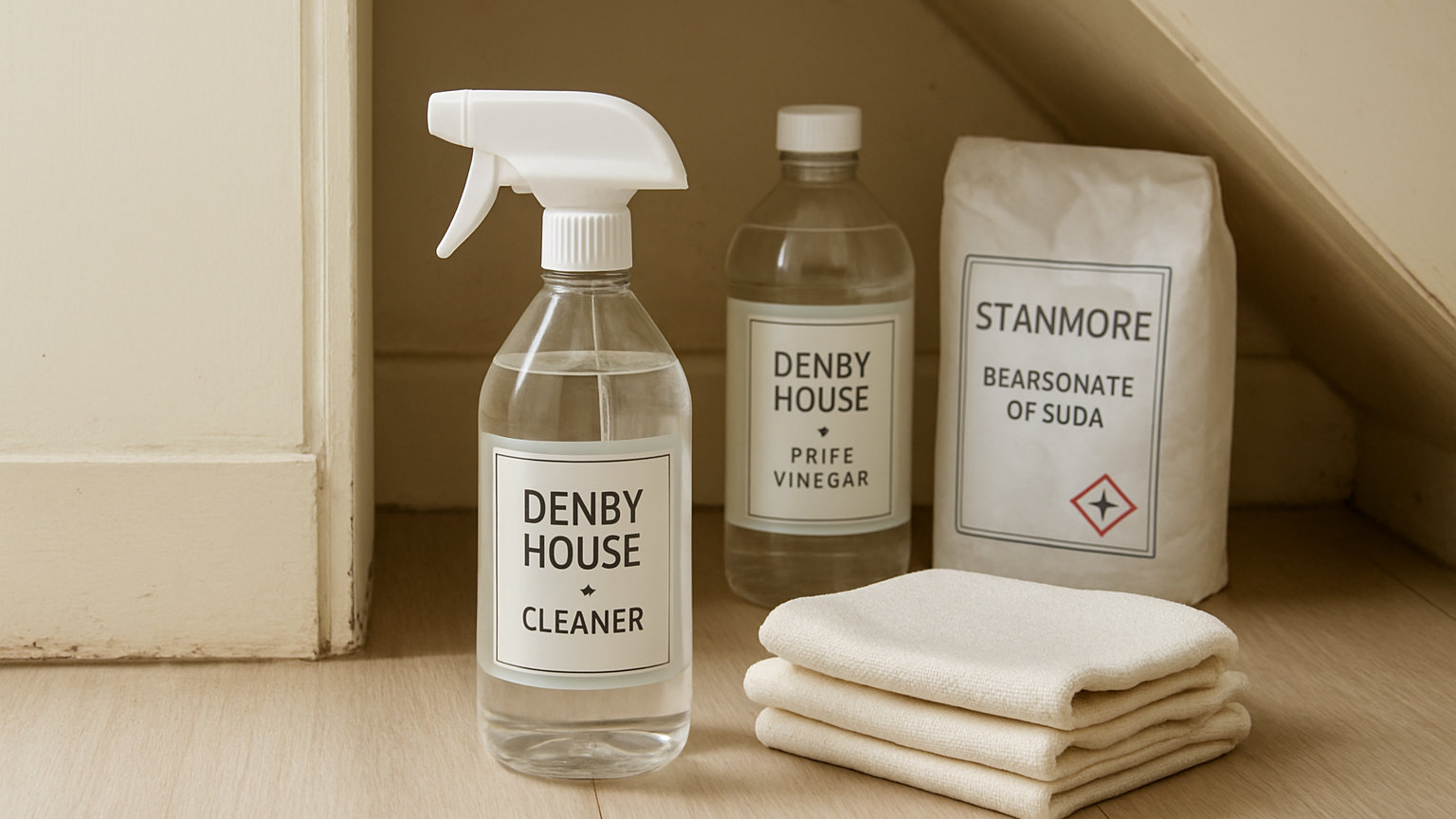
Soaking an oven overnight with bicarbonate does much of what a caustic gel does, and soda crystals clear most drains that a caustic unblocker would.
What about children and pets specifically?
Store high, keep capsules in their tub, never leave anything out during cleaning, and keep animals out of a room until the floor has dried. Cats are affected by substances dogs tolerate, particularly phenol based disinfectants and essential oils.
What is the honest summary?
Household cleaning is not dangerous work, and the accidents that do happen are concentrated in a few entirely predictable situations: mixing two products, storing things low where children can reach them, decanting into unlabelled bottles, and cleaning in a small room with the door shut and no window open.
Address those four and almost nothing else is likely to go wrong.
What is the simplest version to remember?
One product at a time. Everything high and labelled. Window open. Gloves on for anything strong. Nothing left out. And keep the container if anything goes wrong.
How do you make these stick?
By changing the arrangement rather than relying on memory. Products stored high are stored high by default. Gloves hanging inside the cupboard door get worn. Bleach on its own shelf is not reached for alongside a descaler. A system that makes the safe option the convenient one does not need anyone to remember a rule.