Microfibre is a synthetic fabric, usually polyester and polyamide, made from fibres finer than a human hair. What makes it work is not the fineness alone but the fact that the fibres are split during manufacture, creating an enormous number of tiny hooks and an extraordinary surface area for the size of the cloth.
What does splitting the fibre do?
An unsplit synthetic fibre is smooth and round and pushes dirt around. Splitting divides each fibre into many wedge shaped segments, and those wedges scrape and grip particles rather than sliding over them.
The gaps between the split segments then hold what has been lifted, which is why a used microfibre cloth is visibly dirty while the surface it cleaned is clean.
Why does surface area matter?
Because cleaning is about contact. A cotton cloth touches a surface at relatively few points. A split microfibre cloth makes contact at an enormous number of points across the same area, so far more dirt is engaged with every pass.
The often quoted figure is that microfibre can hold several times its own weight in water, and the same structure holds dirt and grease.
Does static play a part?
Yes, on dry dust. A dry microfibre cloth develops a slight electrostatic charge as it moves across a surface, which attracts fine dust rather than pushing it into the air. That is why dry dusting with microfibre works better than a feather duster, which mostly redistributes.
Why can it clean with just water?
Because the mechanism is mechanical rather than chemical. The fibres physically grip and lift soil, so for light everyday dirt no detergent is needed at all. Water simply helps the fibres release what they have collected and provides some lubrication.
For grease, baked deposits and anything chemically bonded, a product is still required. Microfibre lifts what is sitting on a surface; it does not dissolve what is stuck to it.
How do you tell a good cloth from a poor one?
- Drag it lightly across dry skin. A good cloth catches slightly; a poor one slides.
- Check the weight, given in grams per square metre. Around 250 to 350 suits general cleaning.
- Look at the blend. Around 80 per cent polyester to 20 per cent polyamide is typical of a quality cloth; cheaper ones use less polyamide.
- Test absorbency by dropping water on it. A good cloth takes it up immediately.
Cheap microfibre is often unsplit, which means it has the appearance without the mechanism.
What are the different types for?
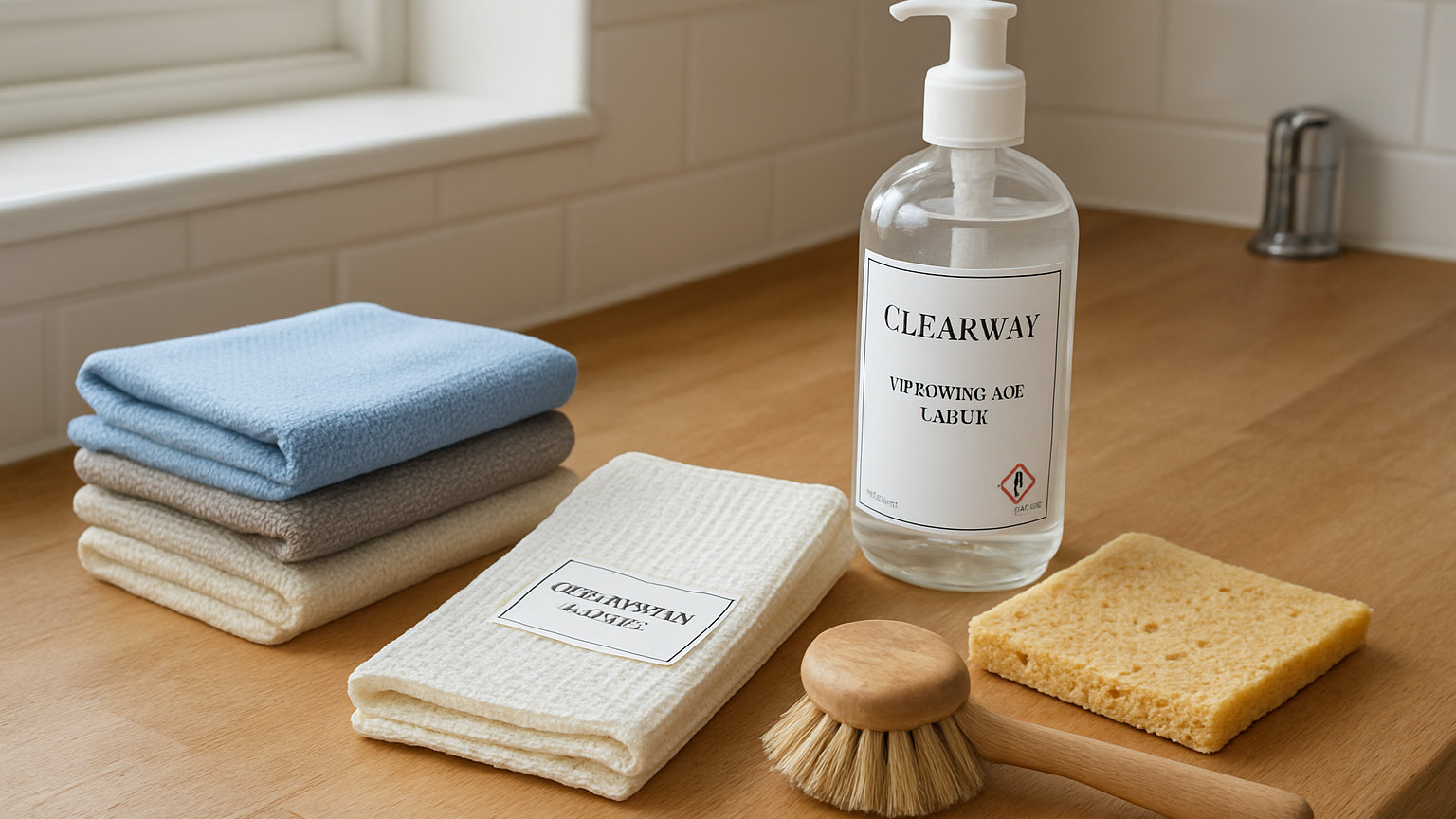
General purpose cloths for surfaces. Flat weave or glass cloths, which are smoother and lint free, for windows and mirrors. Waffle weave for drying. Plush or high pile for dusting and polishing. Scrubbing cloths with a textured panel for tougher work.
Using a general cloth on glass is the most common mismatch and leaves streaks.
Why does fabric conditioner ruin it?
Because conditioner works by coating fibres with a waxy film. On microfibre that film fills the spaces between the split fibres, which is precisely where the dirt is meant to go.
A cloth washed with conditioner stops absorbing and starts smearing, and the damage is often permanent. It is the single most common way people ruin microfibre.
What else damages it?
High heat, which melts the fibres and flattens the pile. Bleach, which degrades the fibre. Washing with cotton items, which sheds lint that clogs the pile. And using it on rough surfaces that snag and pull the fibres.
Is it worth the extra cost?
Yes, on two grounds. A quality cloth cleans noticeably better than cotton, particularly on glass and polished surfaces. And it is reusable hundreds of times, which makes the cost per use negligible compared with disposable wipes.
Buying a pack of good cloths and looking after them properly is one of the better decisions in household cleaning.
Does it shed microplastics?
It does, as all synthetic textiles do when washed, which is a reasonable consideration against its performance. A laundry bag designed to capture fibres reduces the release, as does washing cloths less often at lower agitation. Cotton and cellulose alternatives avoid the issue and clean less effectively, which is the trade to weigh.