Cleaning cloths are not interchangeable. The weave determines what a cloth does well, and the most common household frustration, streaky windows, is usually a cloth problem rather than a technique or product problem.
What are the main types?
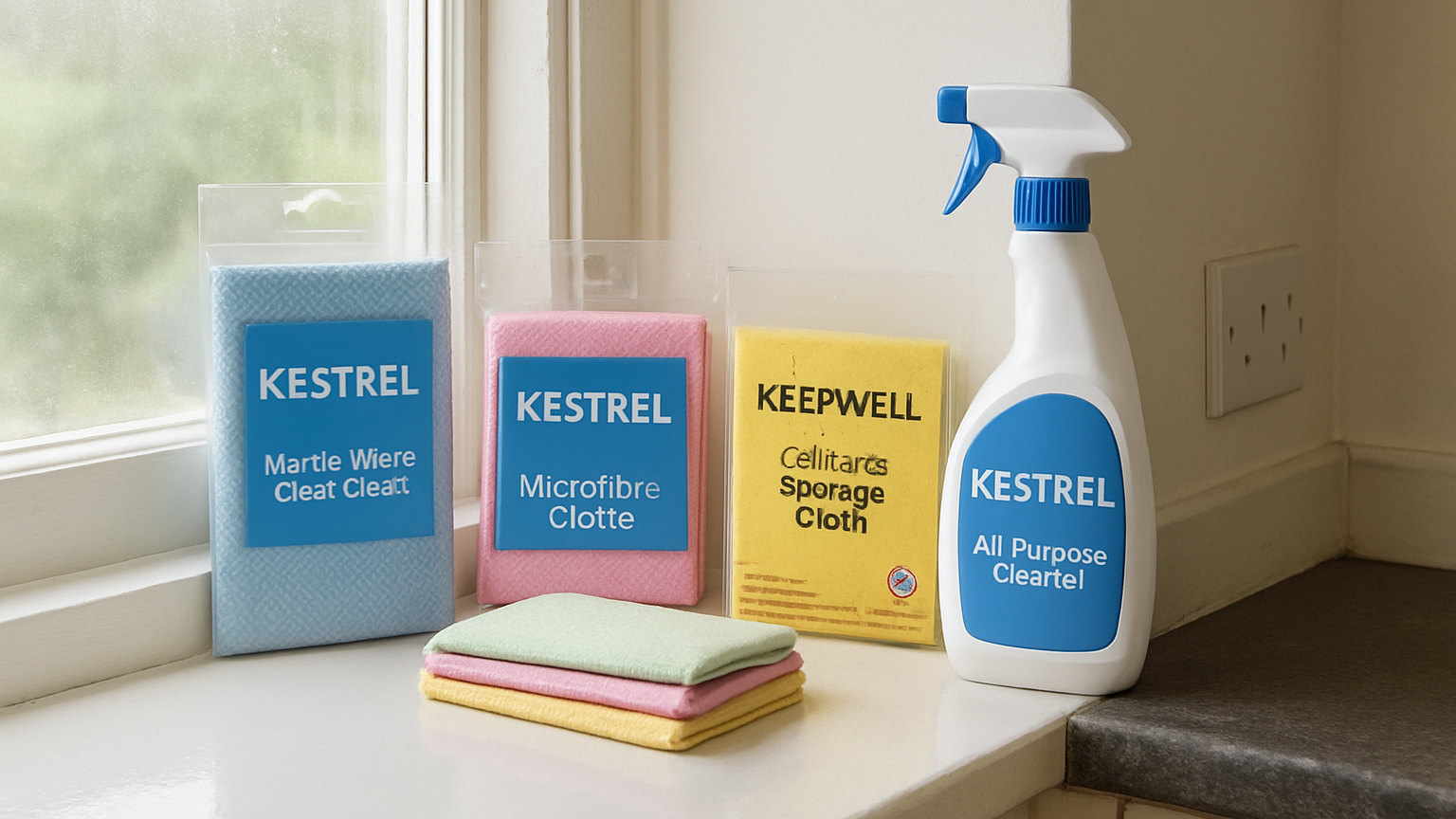
- General purpose microfibre – medium pile, absorbent, for surfaces and everyday wiping.
- Flat weave glass cloth – tight, smooth and lint free, for windows, mirrors and stainless steel.
- Waffle weave – textured squares, highly absorbent, for drying and for glass.
- Plush or high pile – soft and deep, for dusting and polishing.
- Scrubbing cloth – with a textured or mesh panel, for stuck on residue.
- Cotton terry – absorbent, cheap, and it sheds lint.
- Chamois – leather or synthetic, for drying glass and cars streak free.
Which cloth for glass?
A flat weave glass cloth or a waffle weave, never a general purpose one. General cloths have a longer pile that holds moisture and releases it unevenly, which is exactly what causes streaking.
The usual method is two cloths: a damp one to clean and a dry flat weave to buff. That produces a better result than any product applied with the wrong cloth.
Which cloth for dusting?
A dry plush or high pile microfibre, which picks dust up through static attraction rather than moving it around. Dampening it slightly helps on a surface with greasy dust, such as a kitchen shelf.
Avoid cotton for dusting, which sheds lint onto the surface you have just cleaned.
Which cloth for kitchen surfaces?
A general purpose microfibre for everyday wiping, washed at sixty degrees. For anything involving raw meat, use kitchen paper and bin it rather than a cloth, since a cloth carries the contamination to wherever it is used next.
Keep kitchen cloths entirely separate from bathroom cloths.
Which cloth for bathrooms?
A general purpose microfibre for surfaces and a separate dedicated cloth for the toilet that never goes anywhere else. A scrubbing cloth or a non-scratch pad for the bath and the shower tray.
The toilet cloth is the one rule worth keeping absolutely, and a distinct colour makes it automatic.
Which cloth for polished and delicate surfaces?
A soft plush microfibre or a dedicated polishing cloth. Nothing with a textured or scrubbing panel, which will scratch a polished finish, and nothing that has been used with an abrasive product.
Keep one or two cloths for polished surfaces only and do not use them elsewhere.
Does cotton still have a place?
Yes. Cotton terry is absorbent, cheap and tolerates boiling, which suits it to mopping up spills and to jobs where a cloth may need throwing away. Old cotton sheets torn into squares make excellent disposable rags for oil, paint and anything you would not want in a wash.
It is poorer than microfibre for general cleaning, and it does not shed microplastics, which matters to some households.
How many do you need?
Enough that nothing is reused while damp, which in most households means twenty or thirty cloths in circulation across the categories. They are inexpensive and running short is what leads to a cloth being used twice.
How should they be stored?
Clean cloths folded in a drawer or a basket, sorted by type and colour. Used cloths in a dedicated bin or mesh bag rather than draped over a tap, since a damp cloth left in a sink grows bacteria within hours.
Never put a used cloth back with clean ones, which is how the whole system breaks down.
What about cloths for the car?
Keep them entirely separate from household cloths, since car cleaning involves grit, road dirt and sometimes wax or polish that would contaminate anything used indoors afterwards. A separate box in the garage with its own cloths avoids the problem, and demoted household cloths are ideal for the job.
Does the size matter?
Practically, yes. A cloth around forty centimetres square folds into eight usable surfaces, which means one cloth covers a whole room without ever wiping with a dirty face. Smaller cloths run out of clean surface quickly and end up spreading what they have picked up.