Colour coding cloths is standard practice in commercial cleaning, and the reason is not tidiness. It removes the need to remember which cloth was used where, and in a busy environment that is the only thing that reliably prevents cross contamination.
What is the professional system?
The widely used convention in the UK is four colours, each assigned to a zone.
- Red – toilets, urinals and bathroom floors.
- Yellow – bathroom surfaces such as basins, taps and mirrors.
- Blue – general areas, offices, glass and low risk surfaces.
- Green – kitchens and food preparation areas.
The colours themselves are arbitrary; the discipline of keeping them separate is what matters.
Which distinction actually matters at home?
One above all: the cloth used on a toilet should never touch anything else. Everything after that is a refinement.
The second most useful separation is kitchen from bathroom, so a cloth that has wiped a basin does not later wipe a worktop where food is prepared.
If you adopt only those two, you have most of the benefit.
How do you set it up at home?
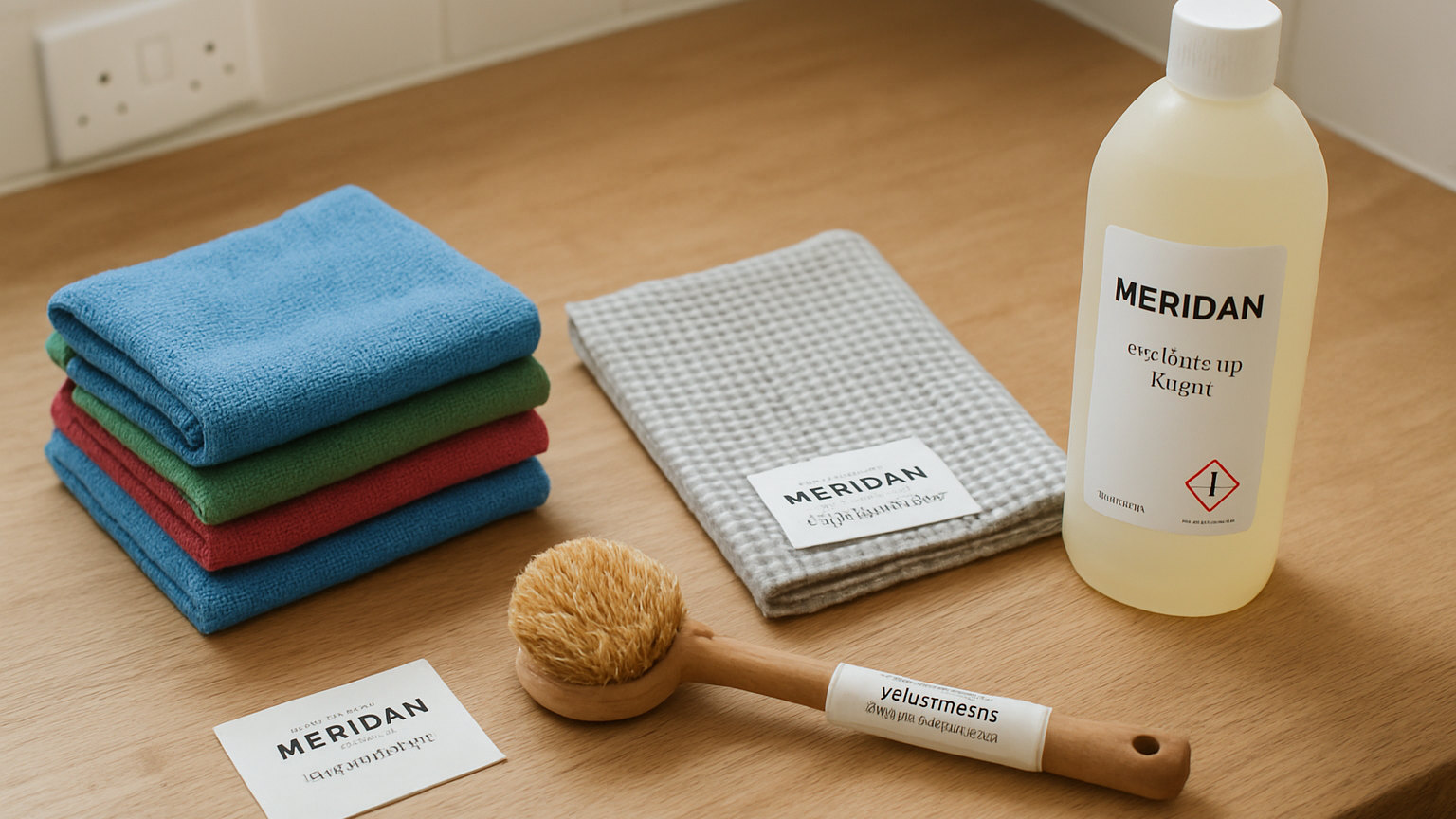
- Buy microfibre cloths in at least three colours.
- Assign one colour to the toilet, one to bathroom surfaces and one to the kitchen.
- Use a fourth for general surfaces and dusting if you want.
- Store clean cloths sorted by colour so the right one is obvious.
- Put used cloths straight into a dedicated bag or bin, never back with the clean ones.
- Wash them together at sixty degrees, which is fine since they are all being washed.
Does the colour matter if you can see which is dirty?
That is exactly the problem. A cloth that has wiped a toilet seat looks identical to one that has wiped a mirror, because the contamination is invisible. The colour is standing in for information you cannot get any other way.
It also removes the question entirely when someone else in the household picks up a cloth.
What about sponges and brushes?
The same logic applies. A toilet brush stays with the toilet. A washing up brush is for dishes only. A scrubbing pad used in a bathroom should not migrate to the kitchen.
Buying these in different colours where possible extends the system to everything that touches a surface.
What about mops?
Worth separating bathroom floors from kitchen floors if you can, either with two mop heads or by doing the kitchen first and the bathroom last. Washable flat mop pads make this straightforward, since a pack of pads in two colours costs very little.
Mop water should also be changed between rooms rather than carried from a bathroom to a kitchen.
Where does the system usually break down?
When someone runs out of the right colour and uses another. Owning plenty of cloths is what makes the system hold, and running short is the most common cause of failure.
The other failure point is putting a used cloth back in the clean drawer, which contaminates the whole stack.
Is it excessive for a family home?
The full four colour system is more than most households need. The toilet cloth rule is not, and it costs nothing to adopt. A packet of cloths in two or three colours and a bag for used ones is the whole system.
What does it actually prevent?
The mechanism by which bathroom bacteria reach kitchen surfaces, which in domestic settings is almost always a cloth rather than the air. A worktop cleaned with a contaminated cloth is dirtier afterwards, and no spray compensates for that.
How do you get a household to follow it?
Make it obvious rather than explaining it. Store each colour in a separate labelled box or compartment, keep the used cloth bag somewhere equally obvious, and the system largely runs itself. Any arrangement that requires someone to remember a rule will fail the first time somebody else does the cleaning.
What about gloves?
The same principle applies. A pair of gloves used to clean a toilet should not then be used to wash up, and colour coding them is as sensible as colour coding cloths. Wash and dry them between uses and replace them when they perish.