Kitchen sponges are regularly reported as among the most heavily colonised objects in a household, with bacterial densities in studies reaching levels comparable to those found in faecal samples. That sounds alarming and it needs context, because most of what grows in a sponge is harmless.
What does the research actually show?
Studies examining domestic sponges have found very large and diverse bacterial populations, concentrated in the internal structure rather than on the surface. The species found are mostly environmental and harmless, with some potential opportunistic pathogens present.
The same research found that attempts to sanitise sponges, including microwaving and boiling, did not reduce overall contamination in the long run and may favour the more resistant species.
Does it make people ill?
Rarely on its own. Most people use sponges throughout their lives without consequence, because the bacteria involved are largely harmless and because dishes are washed in hot soapy water and dried afterwards.
The genuine risk is cross contamination: a sponge used on raw meat residue and then on a worktop or a plate transfers pathogens to somewhere they will not be cooked away.
Who should be more careful?
- Households with anyone immunocompromised.
- Households with very young children or elderly relatives.
- Anyone recovering from illness or surgery.
- Households that handle raw meat and poultry frequently.
For those, switching to brushes and daily washed cloths is a reasonable precaution rather than an overreaction.
What makes a sponge so good for bacteria?
Its structure. An open cell foam has an enormous internal surface area, retains moisture indefinitely, traps food particles in pockets that cannot be rinsed out, and sits at room temperature in a warm kitchen.
Nothing else in a house combines those conditions so completely, which is why it outperforms drains and chopping boards in study after study.
What actually reduces the risk?
- Replace the sponge weekly.
- Never use it on raw meat residue; use kitchen paper and bin it.
- Rinse and wring it out hard after every use.
- Store it standing on edge somewhere it can drain and dry.
- Run it through the dishwasher on a hot cycle.
- Keep separate items for dishes and for surfaces.
Are brushes better?
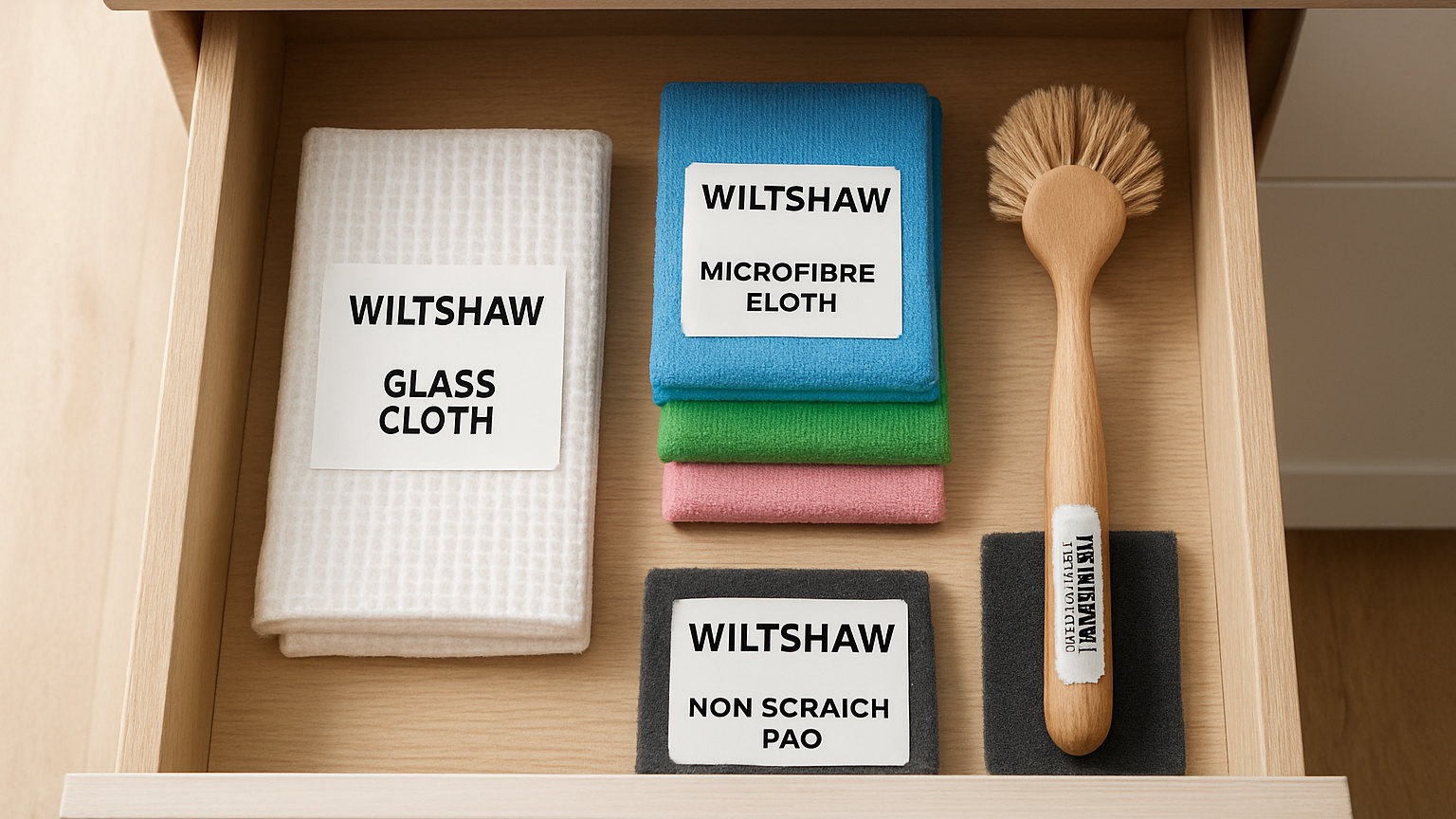
Meaningfully. A washing up brush drains and dries between uses, which prevents the growth that a permanently damp sponge supports. Studies comparing the two have generally found brushes carry far lower bacterial loads.
The head can go through a dishwasher, and the bristles hold far less food residue than a sponge structure does.
What about antibacterial sponges?
They contain an agent intended to slow growth within the sponge itself, and the effect is limited and does not address the food residue trapped inside. They also cost more and there are ongoing concerns about routine use of antibacterial agents in domestic settings.
Replacing an ordinary sponge weekly achieves more than buying a treated one and keeping it for a month.
Where does this sit in household hygiene generally?
Public health bodies tend to recommend targeted hygiene: focusing effort at the points where infection actually spreads rather than disinfecting everything. Cloths, sponges, hands, chopping boards and taps are the points that matter in a kitchen.
A clean worktop wiped with a contaminated sponge is not clean, which is why the cloth matters more than the spray.
What is the proportionate response?
Not to worry excessively, and not to ignore it either. Use a brush for washing up, use a fresh dishcloth daily and wash cloths at sixty degrees, use kitchen paper for raw meat, and replace sponges weekly.
That removes the realistic risk without turning a kitchen into a laboratory, and it costs very little.
What about the sink itself?
Worth mentioning alongside, since a sink is frequently more contaminated than a toilet seat and gets far less attention. The plughole, the strainer and the overflow all hold a biofilm that a sponge then picks up. Cleaning the sink properly is part of keeping whatever you wash dishes with acceptable.