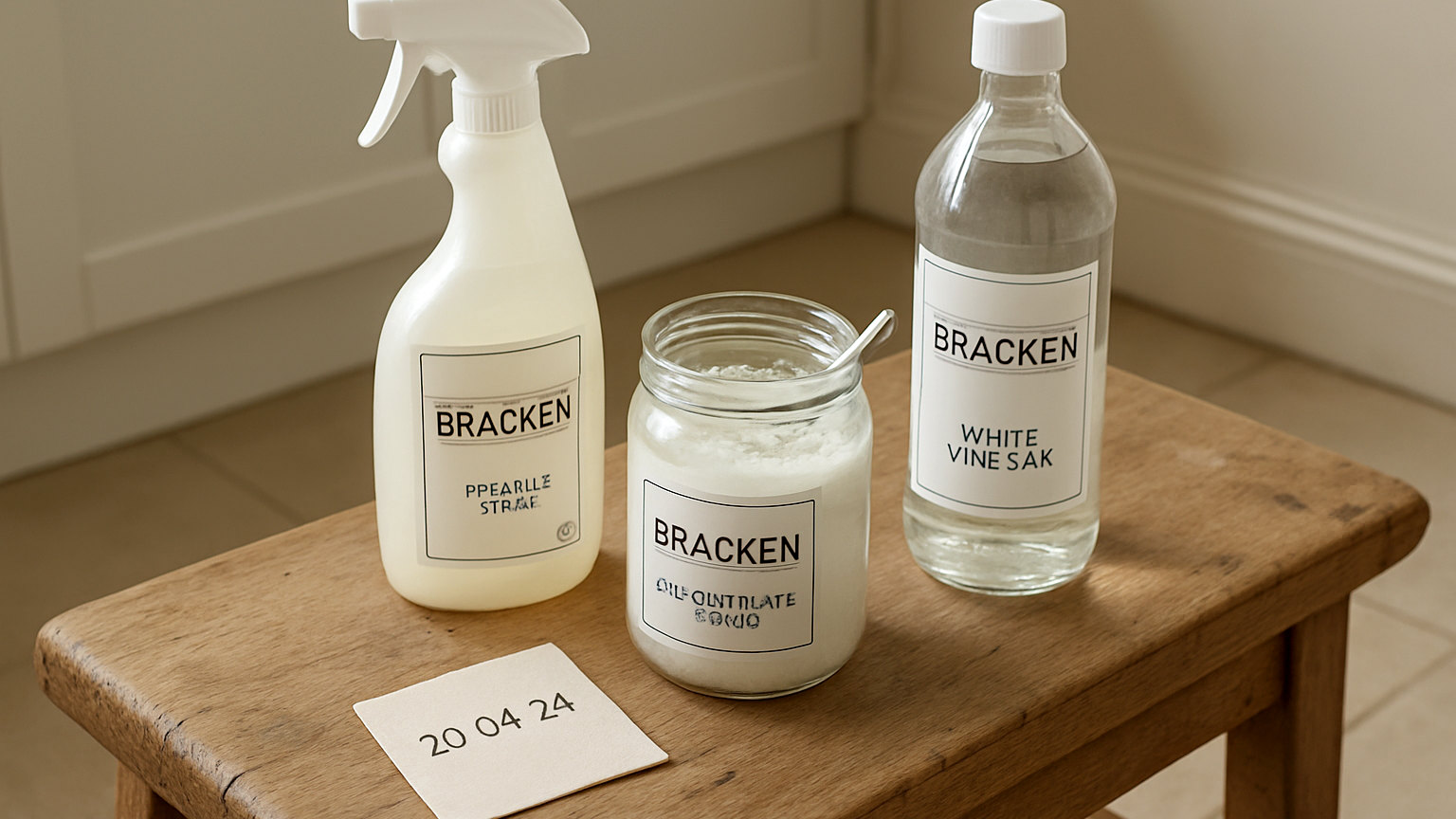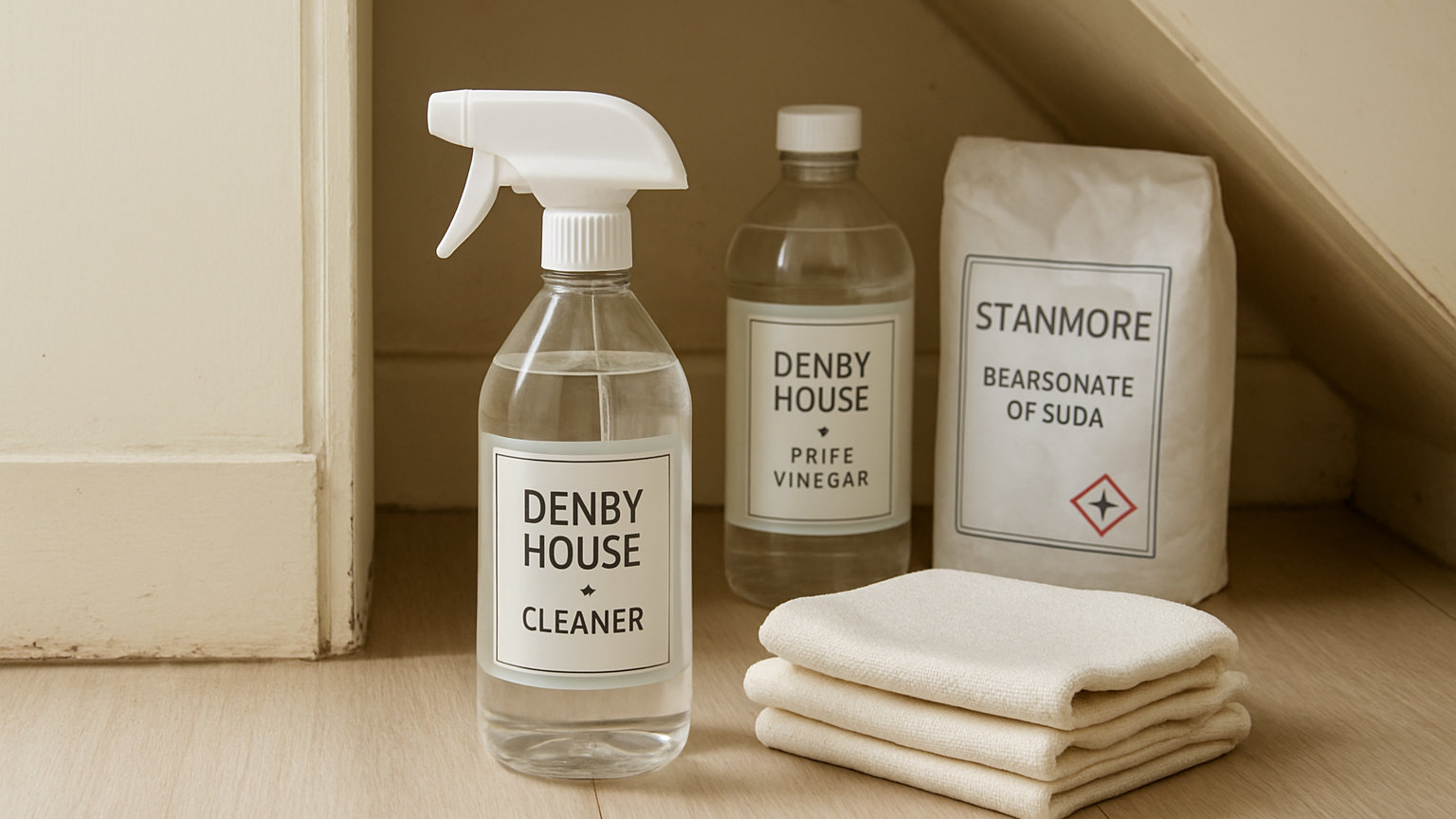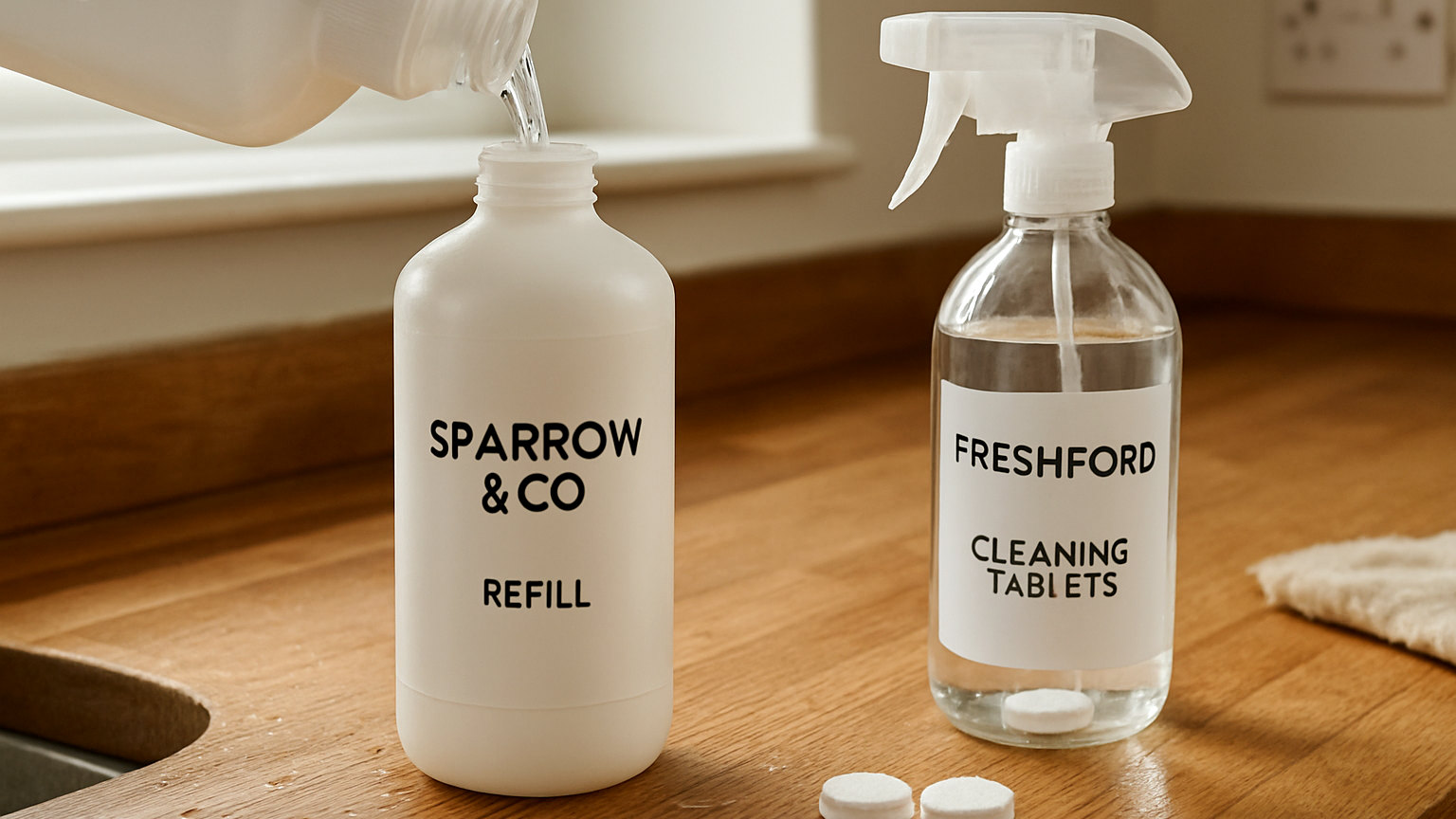
Unwanted cleaning products accumulate in most households: half used bottles of something that did not work, products for a surface no longer owned, and things inherited when moving. Getting rid of them safely is straightforward once you know which category each falls into.
What can go down a drain?
Ordinary water based household cleaners in small quantities, poured away one at a time with plenty of running water. That covers surface sprays, washing up liquid, laundry liquid, and dilute vinegar or citric acid solutions.
Never pour two products away together or in quick succession, since they can react in the trap. Flush thoroughly between them.
What should not go down a drain?
- Paint of any kind, including water based emulsion.
- Solvents, white spirit, turpentine and thinners.
- Engine oil and mineral oils.
- Caustic and acid drain products in quantity.
- Pesticides and garden chemicals.
- Anything with a hazard symbol, in more than a small diluted amount.
- Cooking fat and oil.
Where do those go?
A household waste recycling centre, most of which accept household chemicals, paint, oil and solvents. Check your local authority website for what is accepted and whether booking is required.
Some authorities run separate hazardous waste collections or accept small quantities at specific sites. Never put these in a general waste bin, where they can leak or react.
What about a household on a septic tank?
More restrictive, since the tank relies on a bacterial population. Bleach, disinfectant and antibacterial products in quantity disrupt it. Pour away only small amounts of mild products, and take anything stronger to a recycling centre.
How do you deal with the containers?
- Empty the container as fully as possible.
- Rinse it with water and pour the rinsings away with plenty more water.
- Remove the trigger, pump or lid, which usually cannot be recycled with the bottle.
- Check what your local authority accepts, since rules vary.
- Put the bottle in recycling and the trigger in general waste, unless a return scheme exists.
Do not put a container with product still in it into recycling, since it contaminates the load and creates a hazard for handlers.
What about aerosols?
Many local authorities accept empty aerosols in kerbside recycling, and rules differ. They must be completely empty, and the cap and nozzle usually go in general waste.
A part full aerosol should never be punctured, crushed or put in a bin, and should go to a recycling centre.
What about bleach?
Small quantities can be poured away with plenty of running water, on its own, with nothing else poured before or after. Flush thoroughly.
Larger quantities should go to a recycling centre. Never mix it with anything during disposal, which is exactly the situation where accidental reactions occur.
Can you give products away?
Yes, and it is the best outcome. Unopened or barely used products can go to neighbours, community groups, local social media groups or sometimes to charities and community centres.
Products in their original labelled container only, and nothing that has been decanted.
What about very old products?
Older formulations may contain substances no longer used, and anything unlabelled or unidentifiable should go to a recycling centre rather than being poured away. Take it in its container and tell the staff you do not know what it is.
How do you avoid the problem?
Buy fewer products, in quantities you will use, and finish what you have before buying more. Most of what ends up needing disposal was bought for a single job and never used again.
What about products left by previous occupants?
Common when moving house, and frequently a mixture of unlabelled bottles and things nobody recognises. Do not attempt to identify them by smell or by testing. Put them in a box, keep them upright and separated, and take the lot to a household waste recycling centre.
How should they be transported?
Upright, in a box that will contain a leak, in the boot rather than the cabin, with the windows open if anything smells strongly. Keep bleach separate from anything acidic during the journey, since a spill in a confined space is exactly the situation to avoid.