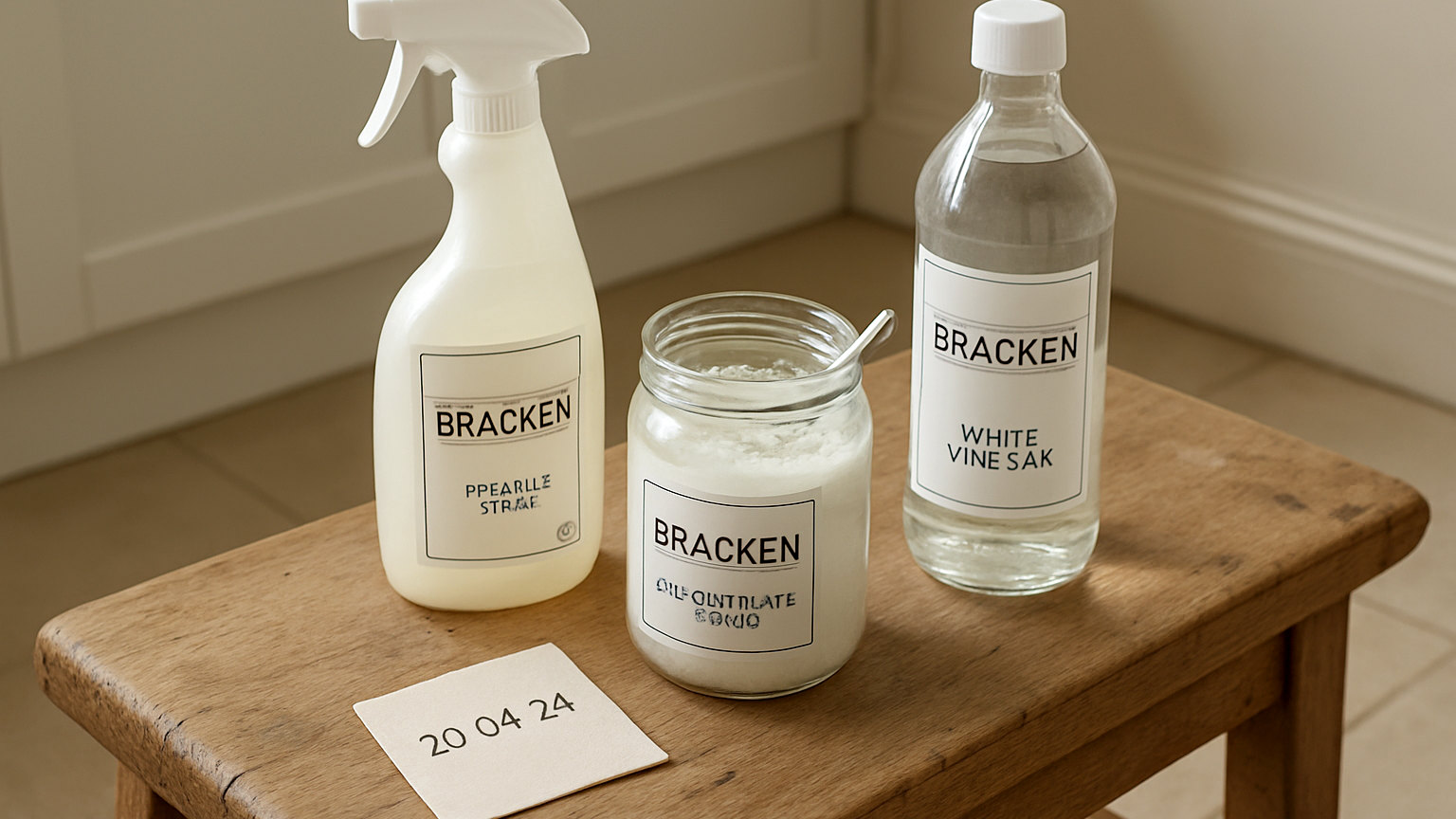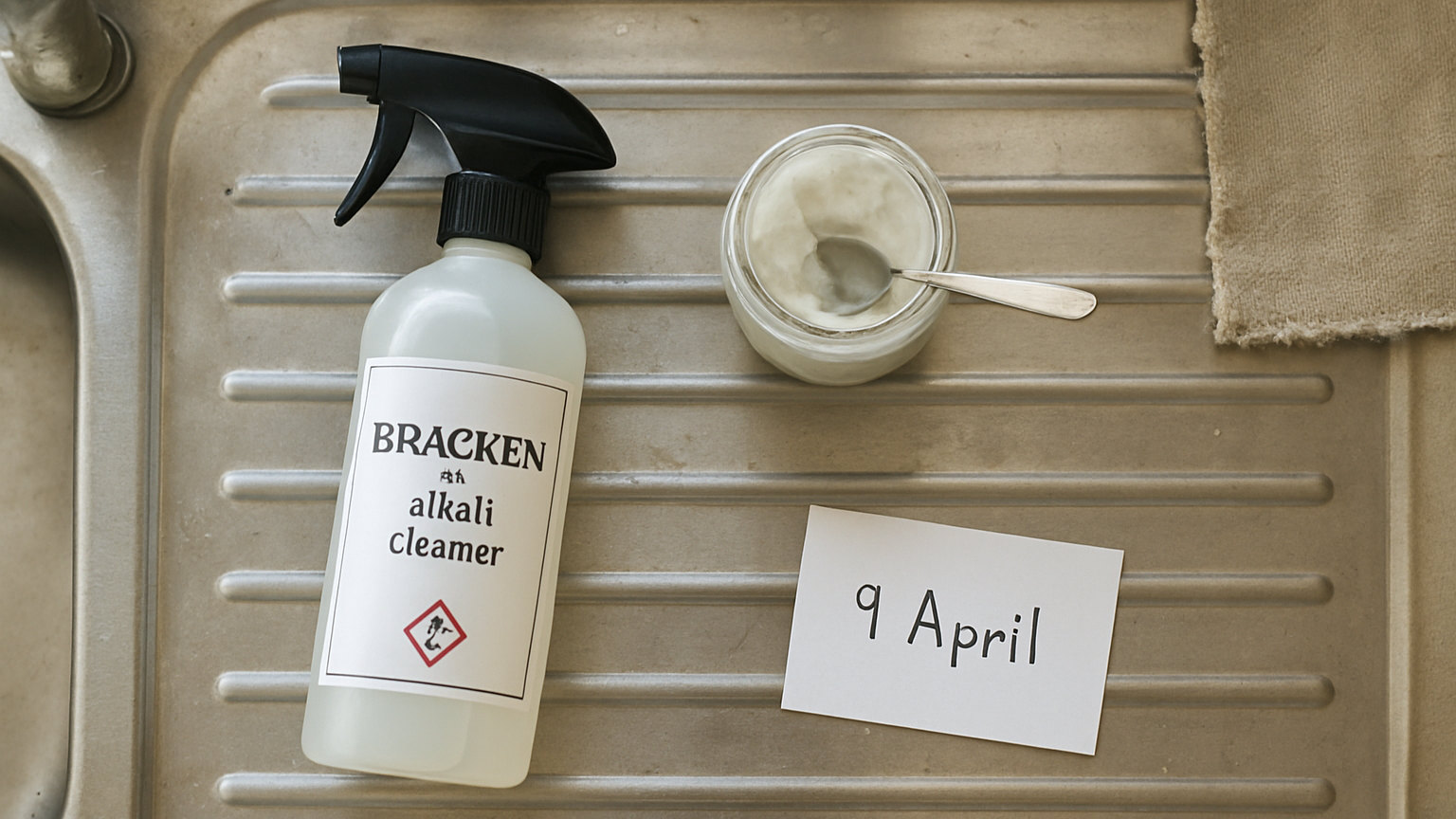
Kitchen drain blockages are almost always fat. Warm fat poured down a sink cools in the pipe, solidifies, and then catches everything else that passes: food particles, coffee grounds and detergent scum. The effective homemade treatment is therefore something that acts on fat, which means an alkali and heat.
What is the recipe that works?
- Pour a generous handful of soda crystals directly down the plughole.
- Follow with a kettle of very hot water, poured slowly.
- Leave it for thirty minutes, or overnight for a slow drain.
- Flush through with more hot water.
- Repeat if there is partial improvement.
Soda crystals are sodium carbonate, strongly alkaline, and they convert fat into a soap that dissolves in water. That is a chemical conversion rather than a physical push, which is why it works where bubbles do not.
What about hot water and detergent?
The simplest first response and often enough on a slow drain. Add a squirt of washing up liquid to the plughole, then pour a kettle of very hot water down slowly in stages.
The detergent emulsifies the fat and the heat melts it. It costs nothing and clears a good proportion of partial blockages.
Use very hot rather than boiling on older plastic waste pipes, which can soften.
Why does the fizzing recipe not work?
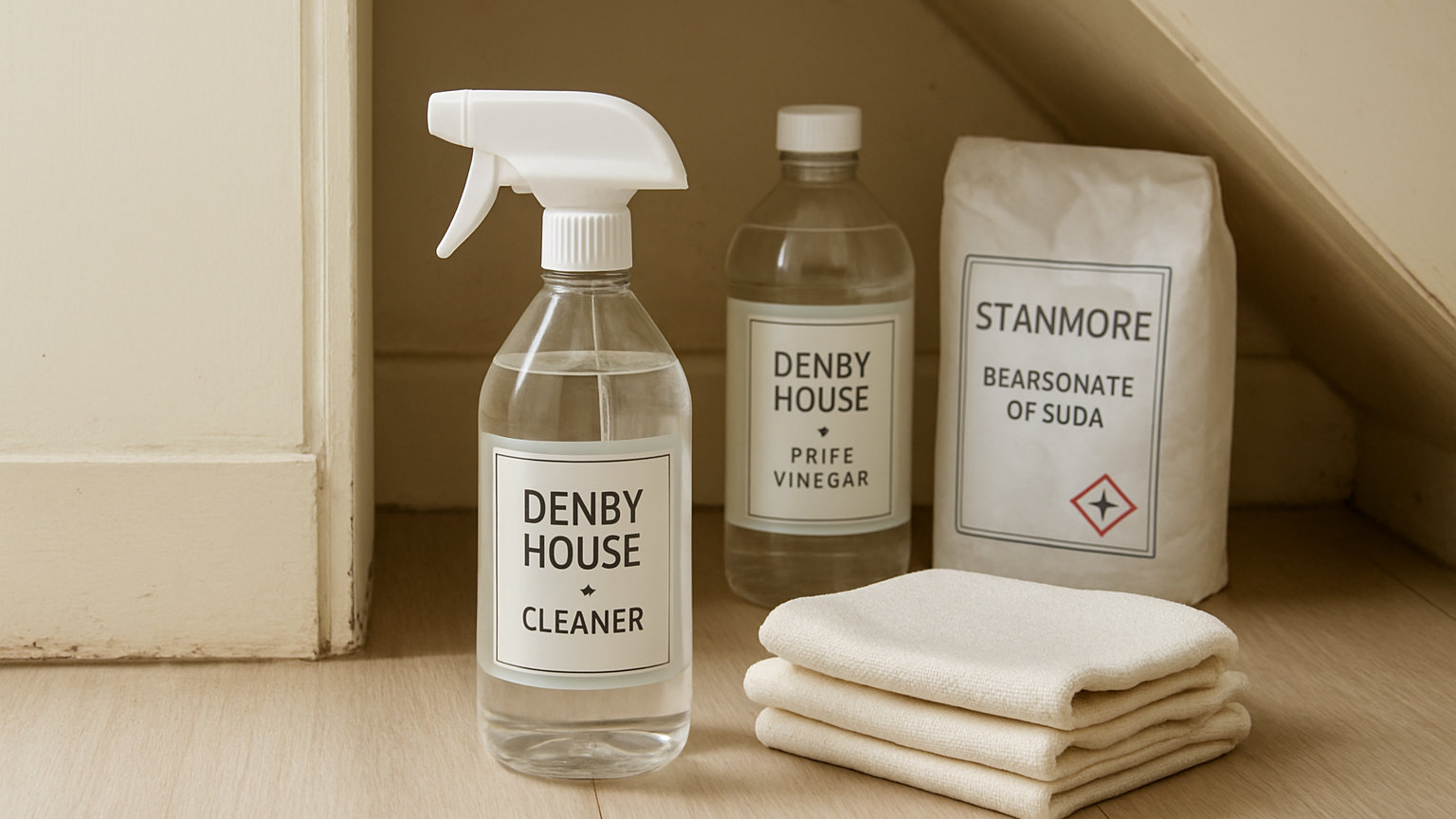
Bicarbonate of soda followed by vinegar produces carbon dioxide, water and a salt. The fizzing is the two ingredients neutralising each other, and what remains has no power against fat at all.
The gas can dislodge loose debris, which is why it appears to do something. Against a genuine fat blockage it achieves very little, and the time spent on it is time the blockage is not being treated properly.
What about biological drain treatments?
Enzyme and bacterial drain products are genuinely useful as maintenance, breaking down fat and organic matter gradually over hours. They are slow, safe on pipes and septic tanks, and poor at clearing an existing blockage quickly.
They cannot be made at home and are worth buying for a drain that blocks repeatedly.
What about caustic drain cleaners?
They work and are hazardous. Caustic soda causes severe burns, reacts violently with water generating heat, and leaves a pipe full of dangerous liquid if it fails to clear.
Never make up a caustic solution at home, never mix it with anything, and never use it after any other product has been poured down. Soda crystals give much of the benefit with far less risk.
What should never be mixed?
Any two drain products, particularly an acid based one after an alkaline one. Bleach with anything acidic. And any product poured into a drain that already contains standing water from another treatment.
If one treatment has failed, plunge or clear mechanically rather than adding a second chemical.
What clears a blockage mechanically?
A plunger, with the overflow blocked with a wet cloth, which is the step people miss. Or cleaning the trap under the sink by hand over a bucket, which is where blockages usually sit and which unscrews on most modern wastes.
These are more reliable than any poured treatment on an established blockage.
What about bathroom drains?
Different material, since these block with hair and soap rather than fat. Remove the hair mechanically with a drain snake or a plastic hair removal strip, which does more than any chemical.
Follow with soda crystals and hot water to clear the soap residue.
What is the maintenance routine?
A handful of soda crystals and a kettle of hot water down the kitchen sink monthly. It takes two minutes and prevents most blockages from forming at all.
What prevents it entirely?
Never pouring fat or oil down the sink. Let it set and bin it, or keep a jar for it. Use a sink strainer and empty it into the bin. Scrape plates properly. Those three habits remove the cause rather than treating it.
What about the smell rather than the blockage?
A drain that smells but flows freely has a film of residue on the pipe walls rather than an obstruction. Scrub the plughole and the underside of the rim with an old toothbrush, then pour soda crystals and hot water down, which addresses both the film and any fat starting to accumulate behind it.