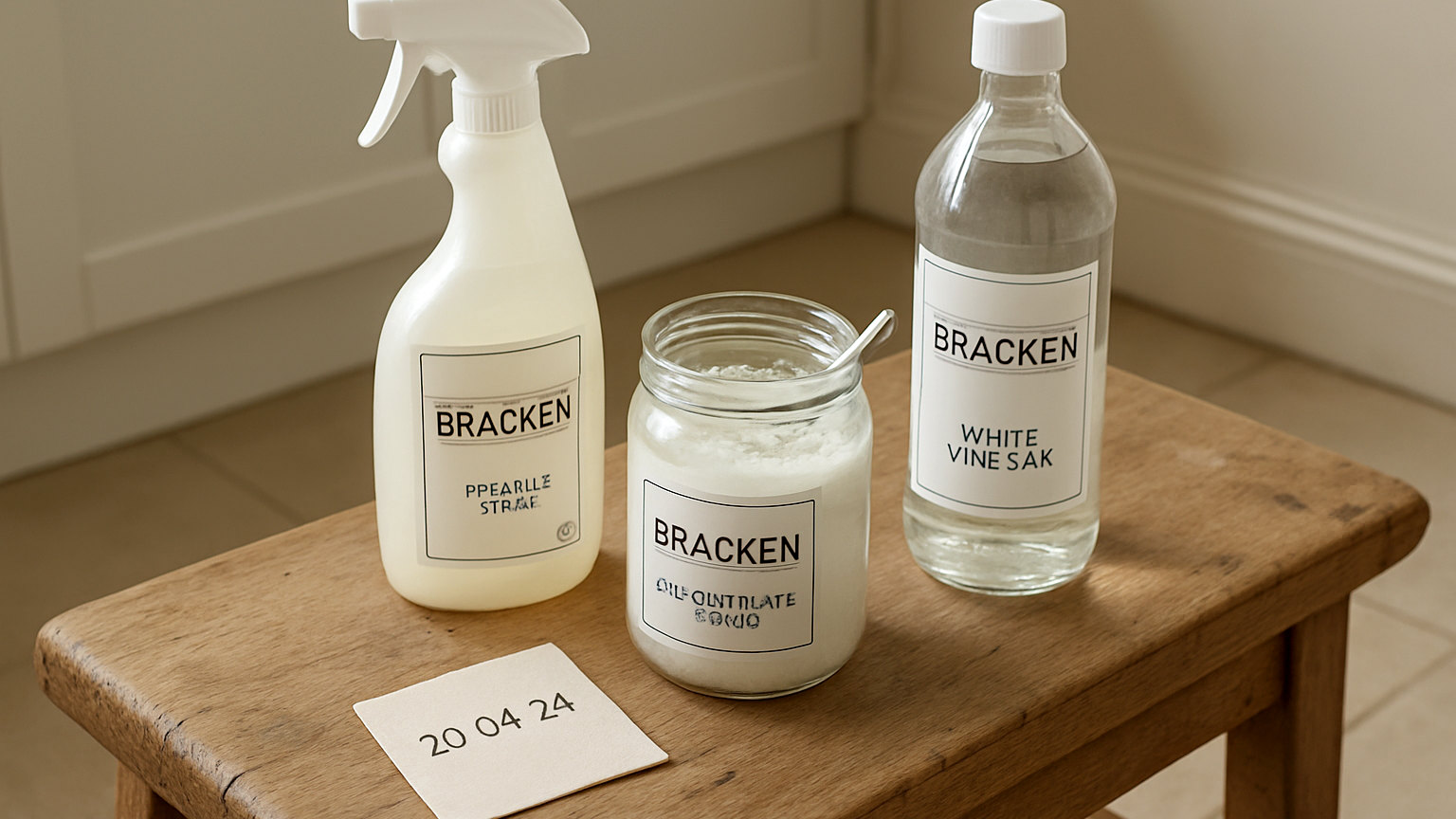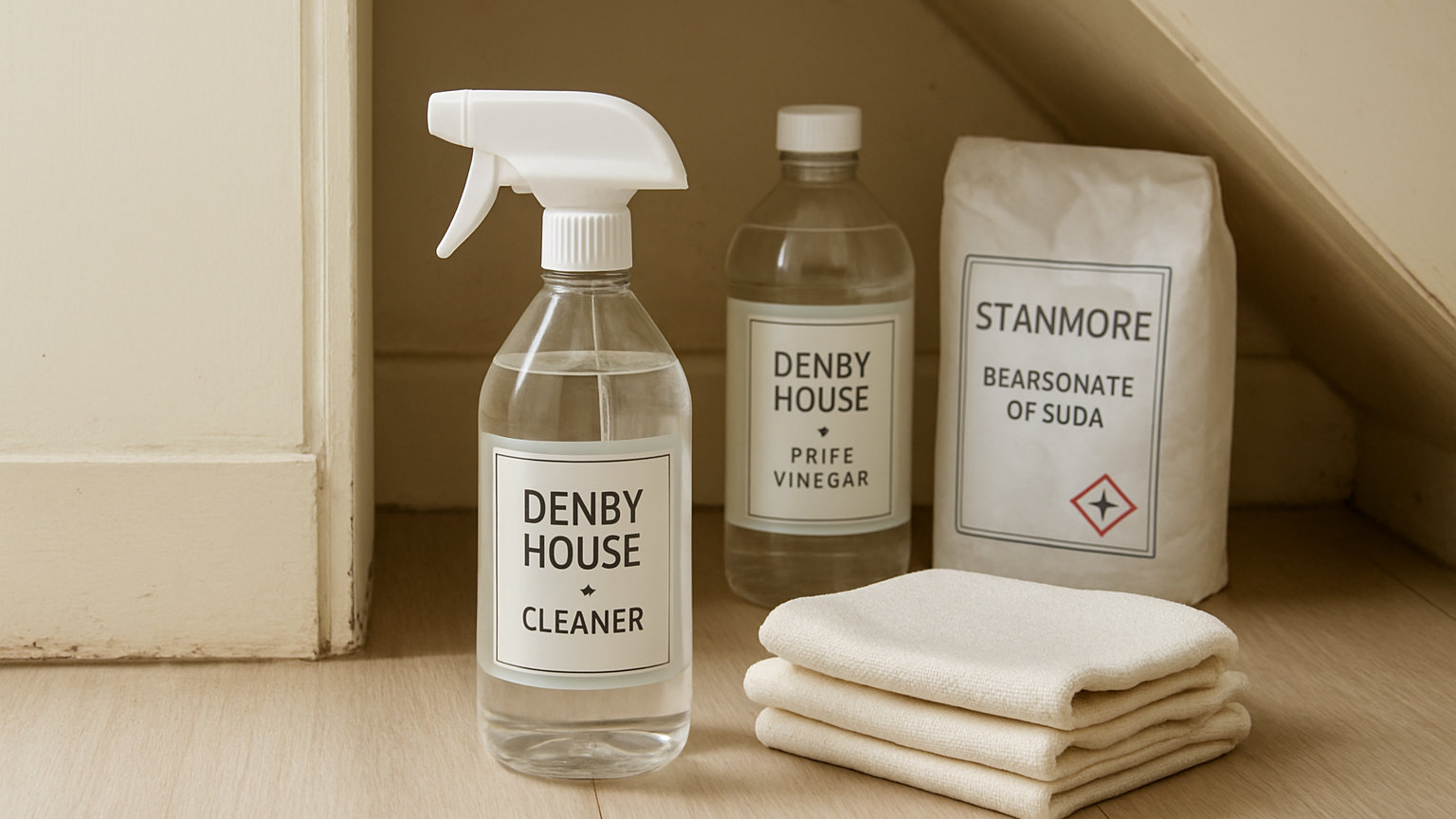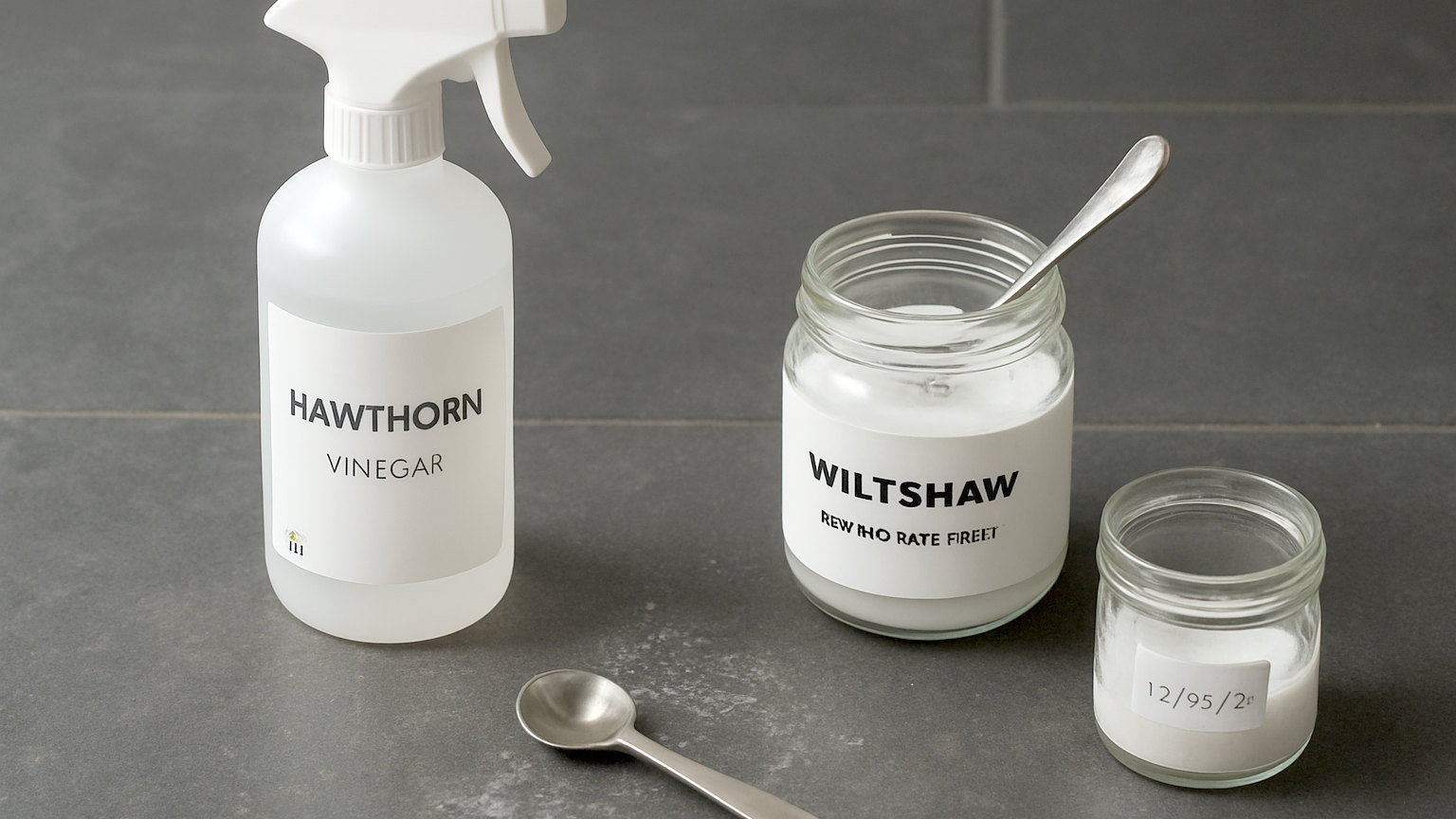
Mixing vinegar and bicarbonate of soda is the most popular homemade cleaning idea there is, and it is chemically self defeating. The dramatic fizzing that makes it look effective is the sound of both ingredients being consumed, and what is left behind cleans almost nothing.
What is actually happening?
Bicarbonate of soda is sodium bicarbonate, an alkali. Vinegar is dilute acetic acid. When an acid meets an alkali they neutralise each other, and this particular pairing produces carbon dioxide gas, water and sodium acetate, which is a salt.
The fizzing is the carbon dioxide escaping. Once it stops, you have a bowl of salty water.
Why does that matter?
Because each ingredient cleans by being what it is. Bicarbonate works because it is mildly alkaline and mildly abrasive. Vinegar works because it is acidic. Combine them and neither property survives.
The mixture has no meaningful degreasing power, no descaling power and no abrasive action once the bicarbonate has dissolved.
Does it ever help?
In one limited way. The gas produced can physically lift and agitate loose debris, which is why it appears to do something in a drain or on a surface with loose material on it.
That mechanical effect is small, and hot water with detergent does considerably more in a drain. It is the appearance of action rather than the action itself.
How should each be used instead?
- Bicarbonate – as a paste for scouring, dry for odour absorption, or dissolved in warm water as a mild alkaline cleaner.
- Vinegar – diluted or neat for limescale, soap scum, glass and mineral deposits.
Both are genuinely useful. They simply address opposite problems and should not meet.
Can they be used one after the other?
Yes, and this is where the confusion comes from. Applying bicarbonate paste to a surface, working it, rinsing, and then applying vinegar to deal with limescale is a perfectly sensible sequence.
The rinse between them is what makes it work. Without it they neutralise on the surface instead of in the bowl.
What about spraying vinegar over bicarbonate?
A common technique for ovens, and here the fizzing is being used deliberately to lift the residue mechanically so it wipes away more easily. The bicarbonate has already done its job overnight by that point.
So it is not that they should never touch. It is that mixing them in advance and storing the result as a cleaner achieves nothing.
What about the drain version?
Pouring bicarbonate down a drain followed by vinegar is widely recommended and does very little on a genuine blockage, which is almost always congealed fat.
Soda crystals followed by a kettle of very hot water is far more effective, because soda crystals are strongly alkaline and convert fat into something water soluble. That is chemistry doing the work rather than bubbles.
Why is the myth so persistent?
Because it looks convincing. A visible reaction feels like evidence in a way that a clear liquid quietly dissolving limescale does not. It is also harmless, cheap and satisfying, which keeps it circulating.
Is there any harm in it?
Not chemically, beyond wasting both ingredients. The practical harm is that people believe they have cleaned something when they have not, and that a genuine problem such as a blocked drain gets left because the fizzing seemed to address it.
Storing the mixture in a sealed bottle is the one real risk, since the gas produced can build pressure.
What is the summary?
Keep both, use both, and use them separately. Bicarbonate for scouring and odour, vinegar for scale and scum, with a rinse in between if you need both on the same surface.
Is the same true of other combinations?
It applies to any acid and alkali pairing, which includes lemon juice with bicarbonate and vinegar with soda crystals. The general rule is that if a recipe fizzes when mixed, the two ingredients are neutralising each other and the result will be weaker than either alone.