A spilled bottle of cleaning product is usually a nuisance rather than an emergency, and doing it in the right order keeps it that way. The order is people, ventilation, containment, then cleaning.
What is the sequence?
- Move people and pets out of the area.
- Open windows and doors to ventilate.
- Put on gloves and eye protection.
- Stop the spread by standing the container upright and containing the liquid.
- Check the label for specific advice.
- Absorb the liquid rather than spreading it.
- Rinse the area thoroughly.
- Dispose of the materials appropriately.
What should you absorb it with?
Kitchen paper for small spills, working from the outside inwards so it does not spread. For a larger spill, cat litter, sand or an absorbent granule poured over the liquid and left for a few minutes before sweeping up.
Old towels work for water based products and should then be washed separately or binned, depending on what was spilled.
Never use a mop, which spreads the product and contaminates the mop head.
What should you never do?
- Pour another product onto it to neutralise it, which risks a reaction.
- Use a vacuum, unless it is a wet and dry machine rated for it.
- Mop it, which spreads it across a larger area.
- Work without ventilation.
- Handle it with bare hands.
- Wash large quantities down a drain, particularly of anything concentrated.
What about a bleach spill?
Ventilate well, since the vapour concentrates quickly. Absorb with paper towel, then rinse the area thoroughly with plenty of water.
Do not use any other cleaning product on the area until it has been rinsed and dried, since anything acidic will react with residue.
Expect bleaching of carpet, fabric and some floor finishes, which is permanent.
What about a caustic spill?
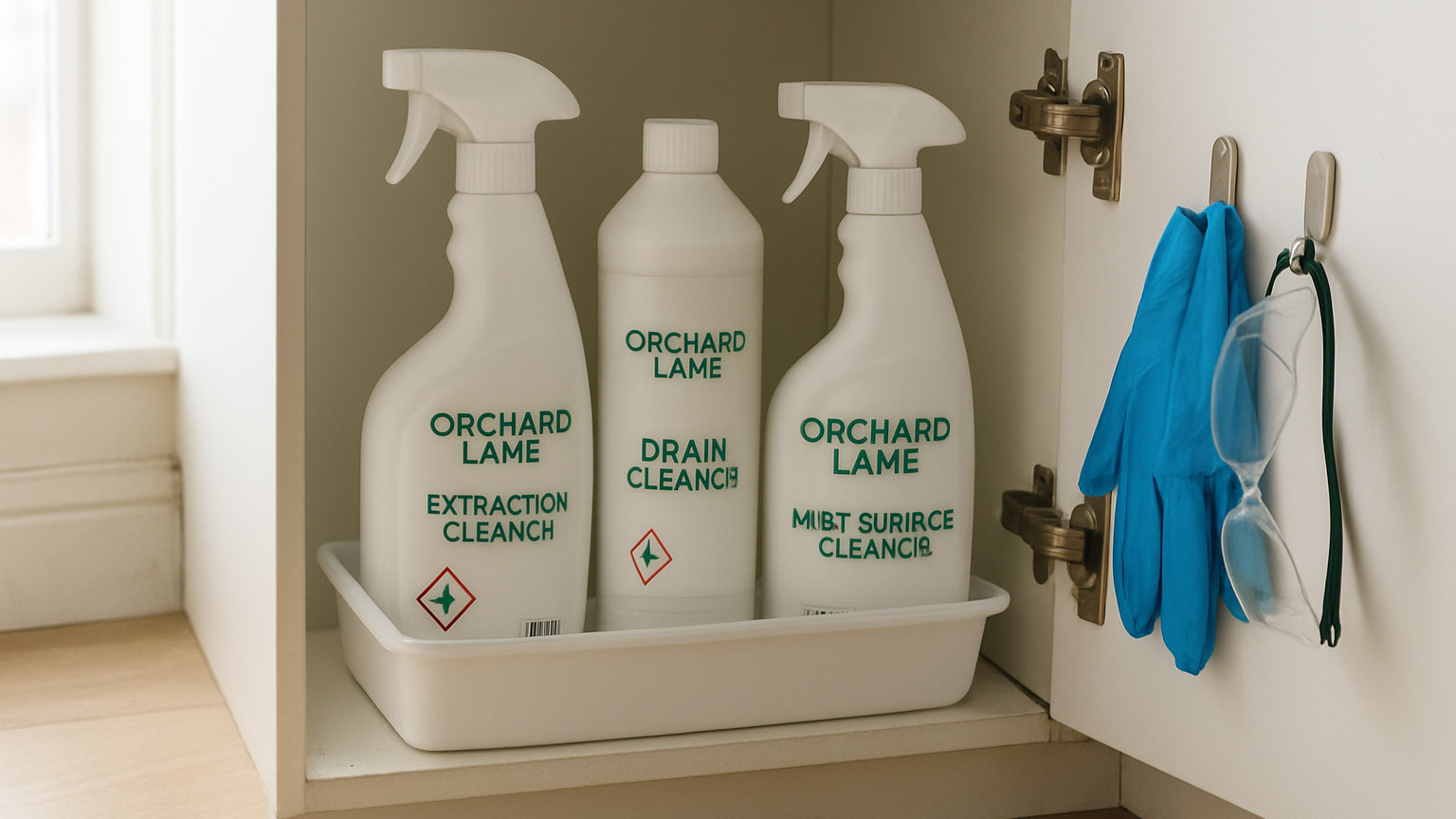
Oven cleaner or drain product spilled is more serious. Gloves and eye protection are essential, ventilation matters, and it will damage many surfaces.
Absorb with paper towel using tongs or thick gloves, rinse repeatedly with plenty of water, and keep everyone away until thoroughly cleared. If a large quantity has spilled, leave the area and seek advice rather than tackling it.
What about a spill on skin or clothing?
Remove contaminated clothing immediately, taking care not to pull it over the face. Rinse the skin with plenty of running water for at least ten minutes, longer for anything corrosive.
Seek medical advice for any burn, blistering or persistent irritation.
What about a spill on carpet?
Blot rather than rub, working from the outside in. Rinse by blotting with clean water repeatedly, and expect discolouration from bleach or anything strongly coloured.
Do not apply another cleaning product until the original has been flushed out thoroughly.
How do you dispose of the materials?
Absorbent material soaked with a household cleaner can generally go in a sealed bag in general waste. Anything soaked with a corrosive product, a solvent or a large quantity of concentrate should go to a household waste recycling centre.
Double bag it, seal it, and keep it away from other waste until disposed of.
When should you not deal with it yourself?
A large quantity of anything corrosive, any spill producing fumes that make you cough, any spill of something you cannot identify, or any spill in a confined space with poor ventilation.
Leave the area, close the door, ventilate from outside if possible, and seek advice.
How do you prevent them?
Store bottles upright, on a shelf with a lip, not stacked. Keep caps closed properly. Do not overfill decanted bottles. And keep heavy containers low within the locked area rather than above head height.
What about a spill inside the cupboard?
Take everything out before cleaning it, since a spill at the back of a cupboard is where products most easily come into contact with one another. Check the base of every container for residue, wipe them down, and let the cupboard dry fully before putting anything back.