Chemical splashes to the eye are among the more serious domestic accidents involving cleaning products, and the outcome depends heavily on how quickly and how thoroughly the eye is rinsed. Most people stop rinsing far too early.
What should you do immediately?
- Go to a tap or shower straight away, without pausing to find the label.
- Rinse the eye with plenty of cool or lukewarm running water.
- Hold the eyelid open gently, which is uncomfortable and essential.
- Angle the head so water runs away from the unaffected eye.
- Keep rinsing for at least fifteen to twenty minutes.
- Remove contact lenses if you can do so easily, without delaying the rinsing.
- Seek medical advice, urgently for anything corrosive.
Why does the duration matter so much?
Because the chemical continues to damage tissue while it is present, and diluting it takes time. A thirty second rinse feels substantial and removes far less than a fifteen minute one.
This is the single most important point. Set a timer if you can, since the time passes slowly when your eye is stinging.
How do you rinse effectively?
Under a gently running tap, in a shower with the water at low pressure, or by pouring from a clean jug repeatedly. A specialised eyewash is useful and plain water is entirely acceptable and always available.
Do not use a strong jet, which causes further damage. A steady gentle flow is what is wanted.
Why are alkalis worse than acids?
Because alkaline substances penetrate deeper into the tissue of the eye, continuing to cause damage after the surface contact. Acids tend to cause a surface reaction that limits further penetration.
That makes oven cleaners, drain products, dishwasher detergent and strong degreasers more dangerous to eyes than descalers, and it means rinsing for longer matters even more.
When should you seek urgent help?
For any corrosive product. For persistent pain, blurred vision, light sensitivity or visible damage to the eye. Where the eye remains red or watering after thorough rinsing. Or where you are unsure what the product was.
Go to an emergency department or an urgent eye care service, and continue rinsing on the way if you can. Call 999 if there is severe pain or significant vision loss.
What should you take with you?
The product container, so the ingredients are known. This changes the treatment, particularly for alkaline substances.
What should you not do?
Do not rub the eye, which spreads the chemical and causes mechanical damage. Do not use anything other than water or sterile eyewash to rinse. Do not apply drops or ointment unless a medical professional advises it. Do not stop rinsing because it feels better.
What about contact lenses?
Remove them if it can be done quickly, since a lens traps the chemical against the eye. If removal is difficult, start rinsing first and remove the lens once flushing has begun.
Do not delay rinsing to deal with a lens.
How does this happen?
Usually from spraying upwards, into an extractor hood, a shower ceiling or the underside of a shelf. Also from pouring, decanting, and from a capsule bursting in the hand.
Spraying onto a cloth rather than upwards prevents most of it.
What prevents it?
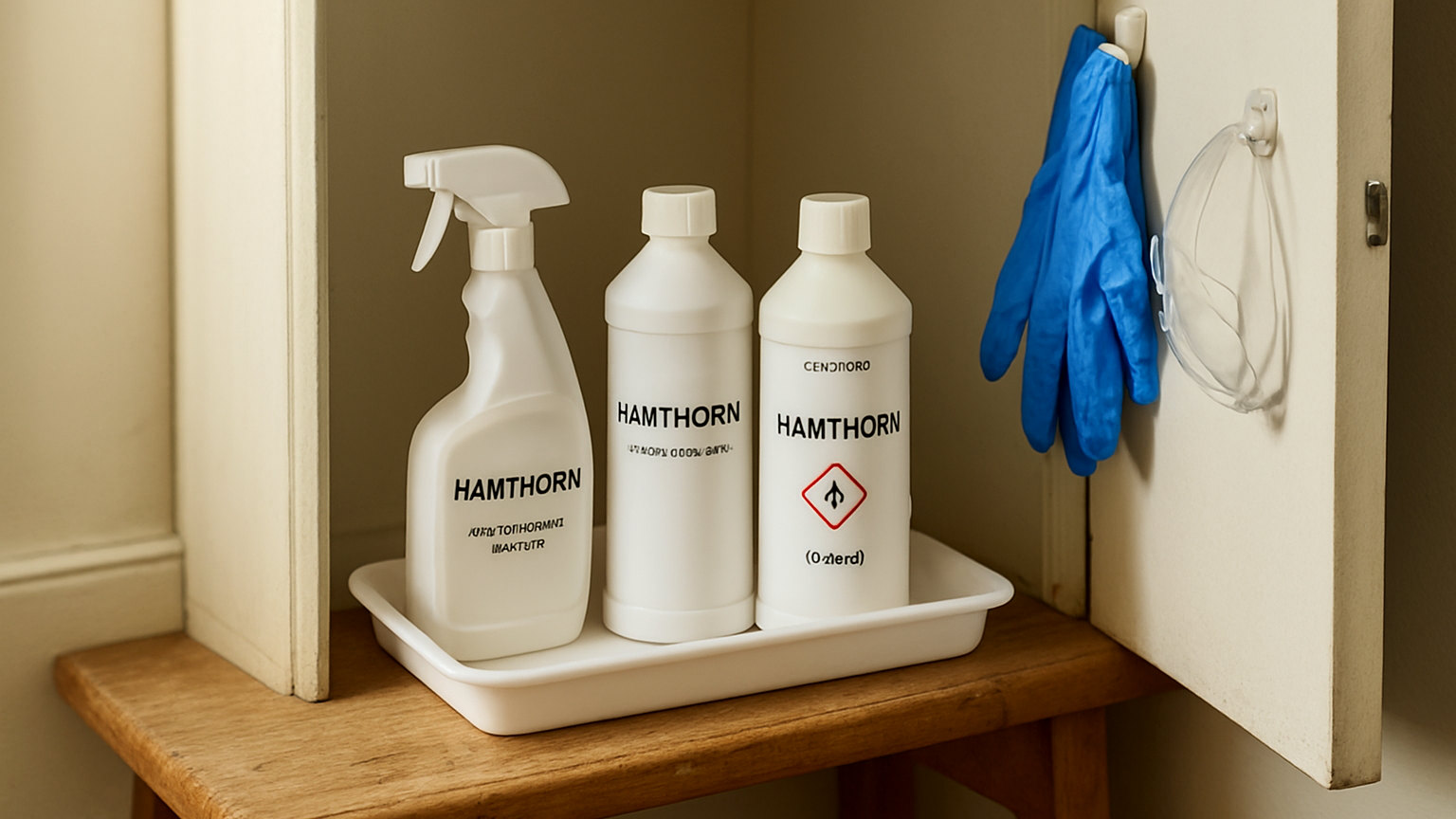
Safety glasses for any corrosive product, anything applied above head height, and any decanting or pouring. They cost very little and are the only genuine protection.
Keep them with the cleaning products rather than in a drawer elsewhere, since equipment that is not to hand does not get used.
What about a splash of something mild?
Rinse it thoroughly regardless. Even a diluted surface spray stings considerably and can cause a corneal abrasion if rubbed. Fifteen minutes of rinsing costs nothing and is the same response whatever the product, since you rarely know the strength at the moment it happens.
How long should symptoms take to settle?
Mild stinging from a dilute product usually eases within an hour of thorough rinsing. Anything persisting beyond that, or any change in vision, warrants medical assessment the same day rather than waiting to see whether it improves overnight.