Pets encounter cleaning products differently from people. They walk across treated floors and then groom their paws, they lie on cleaned surfaces, and they are much closer to the ground where heavier vapours settle. That changes which products matter.
Why are cats more vulnerable?
Cats lack some of the liver enzymes that process certain compounds, which means substances a dog tolerates can accumulate in a cat. They also groom obsessively, so anything on their paws or coat is ingested.
Both factors make floor cleaners more significant than anything used on a worktop.
Which products are the main concern?
- Phenol based disinfectants, including many pine and coal tar products. The classic sign is a white liquid that turns milky in water. Particularly toxic to cats.
- Benzalkonium chloride, found in some disinfectants and mould sprays, which causes mouth ulceration in cats.
- Essential oils, especially tea tree, citrus, pine, eucalyptus and peppermint.
- Bleach, which many cats are oddly attracted to.
- Caustic products such as oven and drain cleaners.
- Antifreeze, which is not a cleaner and is worth mentioning as extremely toxic and sweet tasting.
What should you use on floors instead?
Hot water with a small amount of washing up liquid covers most everyday floor cleaning and is about as low risk as it gets. Rinse afterwards so nothing is left on the surface.
Where a disinfectant is genuinely needed, choose one described as pet safe, follow the dilution exactly, and keep animals off the floor until it is completely dry.
Does dry mean safe?
Largely, for most products. The risk is highest while a floor is wet, since that is when paws pick it up. Keeping pets out of a room until the floor has dried removes most of the exposure.
Phenol based products are the exception, since residue remains a concern, and they are best avoided in a house with cats altogether.
What about birds?
Birds have extremely sensitive respiratory systems and are affected by airborne compounds at levels that do not trouble people. Aerosols, strongly fragranced products, diffusers and overheated non-stick pans are all hazards.
Clean in a different room from a bird, ventilate thoroughly, and avoid aerosols entirely in a house with one.
What about small pets?
Rabbits, guinea pigs, hamsters and reptiles in enclosures are in a confined space with limited airflow. Move them out of the room before cleaning, and clean their enclosures with plain hot water or a product sold specifically for the purpose, rinsed thoroughly.
What about pet accidents?
Enzyme cleaners are the correct product and are generally low risk once dry. Avoid ammonia based cleaners, since ammonia smells like urine to a dog or cat and encourages them to mark the same spot again.
What are the signs of a problem?
Drooling, pawing at the mouth, vomiting, loss of appetite, lethargy, difficulty breathing, unsteadiness, or burns and redness around the mouth or paws.
Chemical burns from licking a corrosive product often show as ulceration in the mouth rather than externally.
What should you do?
Contact a vet immediately. Do not try to make the animal sick, which can cause further damage with corrosive substances.
If something is on the coat or paws, prevent further grooming, and wash the area with plenty of water and a little mild soap if the product is not corrosive. Take the container to the vet so the contents are known.
How should products be stored?
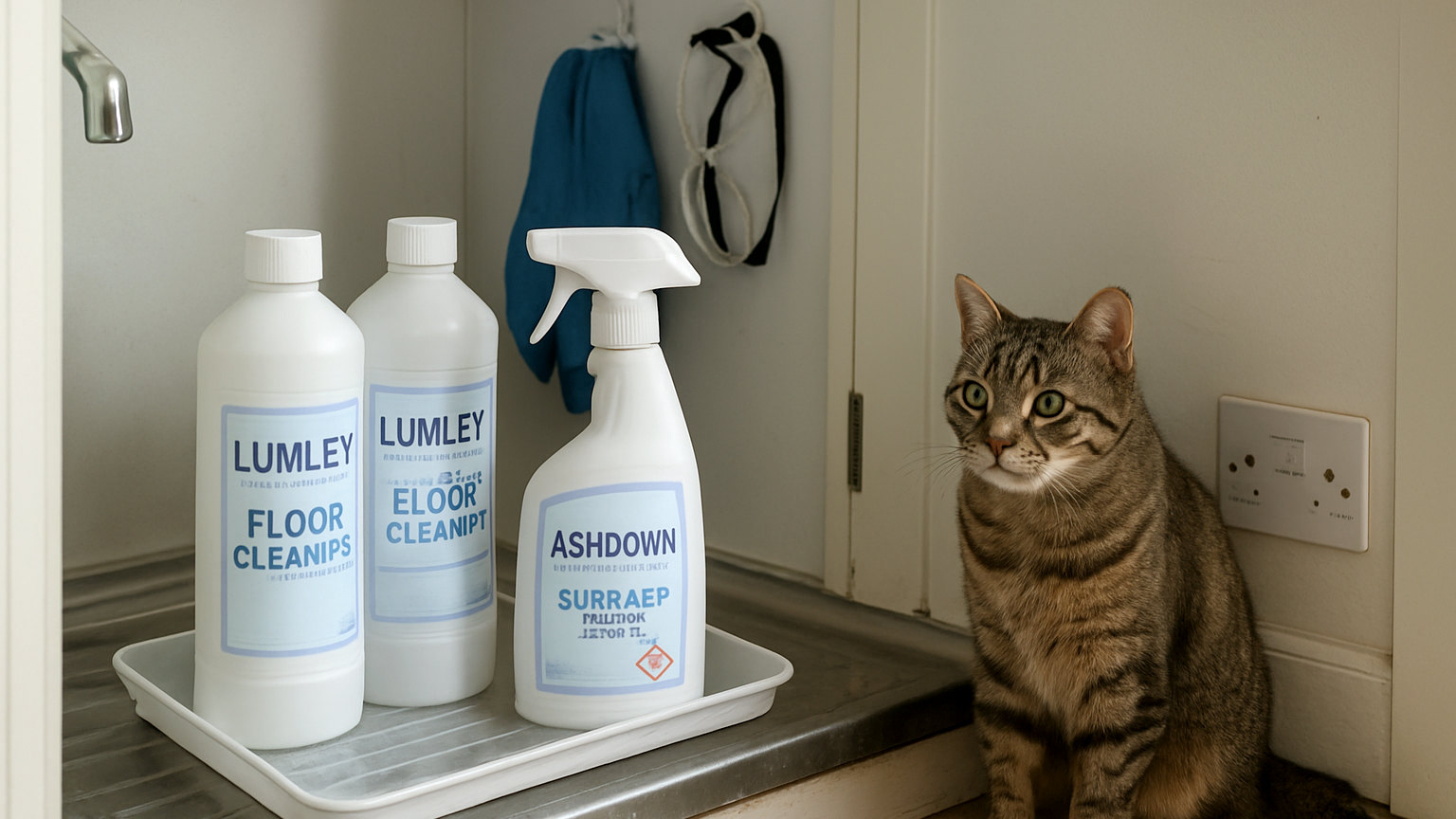
The same as for children: high, closed, in original labelled containers. Dogs in particular will chew a plastic bottle, and a punctured container of something corrosive is a serious situation.
What is the practical approach?
Keep animals out of the room while cleaning and until surfaces are dry, use plain hot water and detergent for floors, avoid phenol based products and essential oils in a house with cats, and never use aerosols near a bird.
How do you check a product is suitable?
Read the ingredients rather than the front of the bottle, since pet safe is not a regulated term. Look for phenol, benzalkonium chloride and named essential oils. Where the label gives no ingredient information, the manufacturer's safety data sheet usually will, and a vet can advise on anything uncertain.