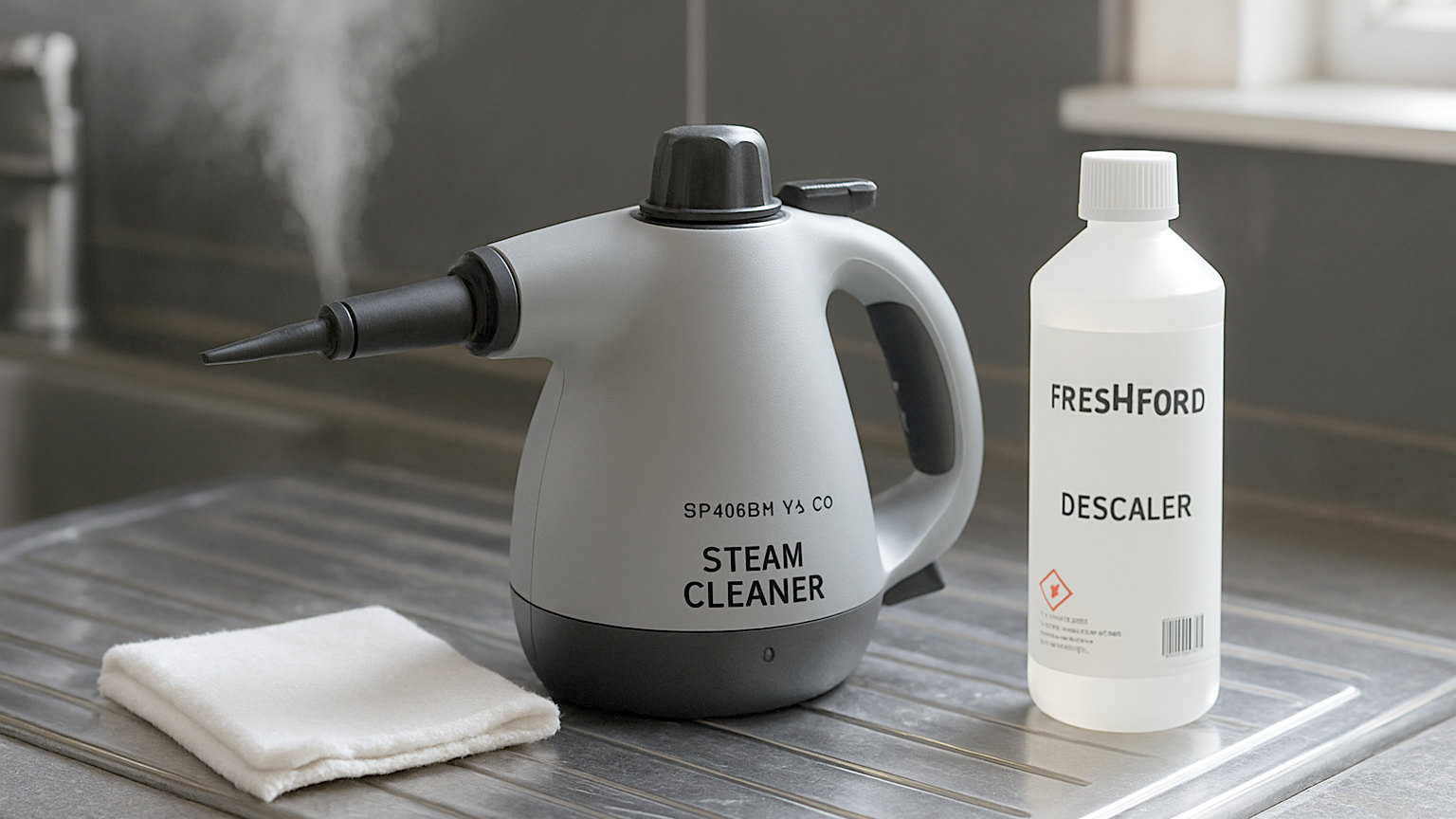
Steam works well on upholstery for refreshing fabric, lifting light soil and killing surface organisms. The complication is the same one that applies to any wet cleaning of furniture: moisture goes into the foam beneath and cannot be wrung out, so the drying decides whether the result is good or a problem.
What should you check first?
The cleaning code on the label, usually under a cushion or on the frame.
- W – water based cleaning is acceptable, so steam is usually fine.
- WS – either water or solvent, so steam is usually fine.
- S – solvent only. Steam will leave water marks.
- X – vacuum and brush only. No steam.
With no label, treat it as S and test in a hidden area.
What is the method?
- Vacuum thoroughly first with an upholstery tool and a crevice tool.
- Test on a hidden area and let it dry fully before judging.
- Fit the upholstery tool with a clean cloth cover, which is important.
- Work in small sections with the tool moving continuously.
- Do not hold it in one place, which soaks the fabric.
- Change the cloth cover as it picks up dirt.
- Dry the area quickly with a fan and good ventilation.
Why does the cloth cover matter?
Because it moderates the moisture reaching the fabric and because it picks up the dirt the steam loosens. Without it, the steam goes straight into the upholstery and the loosened soil stays there.
The cover is doing the same job as the cloth in every other steam application: removing what the heat has released.
Why does drying matter so much?
Because foam holds moisture long after the surface feels dry, and damp foam in a warm room develops a smell and eventually mould. That is a considerably worse problem than the dirt.
Open windows, run a fan across the piece, and leave cushions standing on edge so air circulates around them. Allow several hours before putting covers back.
Which fabrics should be avoided?
Silk, velvet, and anything with a pile that water marks. Leather and suede, which dry out and crack. Anything antique. Fabrics with a visible watermark pattern, which the moisture disturbs. And anything S coded.
Velvet in particular can be permanently crushed by direct steam pressure.
Does it remove stains?
Not reliably, and it can make some worse. Heat sets protein stains such as blood, milk and pet accidents permanently, so anything of that kind must be treated cold with an enzyme cleaner before any steam is used.
Steam is for refreshing and for general soil rather than for spot stain removal.
What about mattresses?
Steam reduces surface organisms and introduces moisture into something that is very difficult to dry. Keep the tool moving, use minimal steam, and allow a full day of drying with a fan and open windows before remaking the bed.
Memory foam is particularly intolerant of moisture, and vacuuming with a bicarbonate treatment is the safer approach there.
What about curtains?
One of the better uses. Steaming curtains in place refreshes them, drops creases and kills surface organisms, with very little moisture retained because they hang freely and dry quickly.
Work from top to bottom and keep the tool slightly away from the fabric.
What about car interiors?
Effective on seats, mats and trim, particularly in seams and around fittings. The difficulty is the same: a car is a sealed box that dries slowly. Steam sparingly, leave the doors open, and run the fan.
What is the realistic expectation?
Refreshed fabric, reduced odour, lifted surface soil and fewer organisms. Not a deep clean, which needs extraction equipment that removes the water it puts in.
How often should it be done?
Twice a year for a sofa in regular use is plenty, alongside weekly vacuuming which does far more of the work. Doing it more often adds moisture repeatedly without much benefit. Vacuum thoroughly every week and steam occasionally rather than the other way round.