Curtains are one of the largest textile surfaces in a bedroom and among the least often cleaned. They collect dust, skin cells, smoke and moisture, and they release it back into the room every time they are drawn. The good news is that most of the benefit comes from vacuuming them in place, which takes five minutes and can be done monthly.
How often do they need doing?
Vacuum monthly, wash or clean properly once or twice a year. Bedroom curtains in a room with a smoker, a pet or a damp problem need more; curtains in a rarely used guest room need less. Blinds should be dusted monthly and washed down two or three times a year.
How do you vacuum curtains properly?
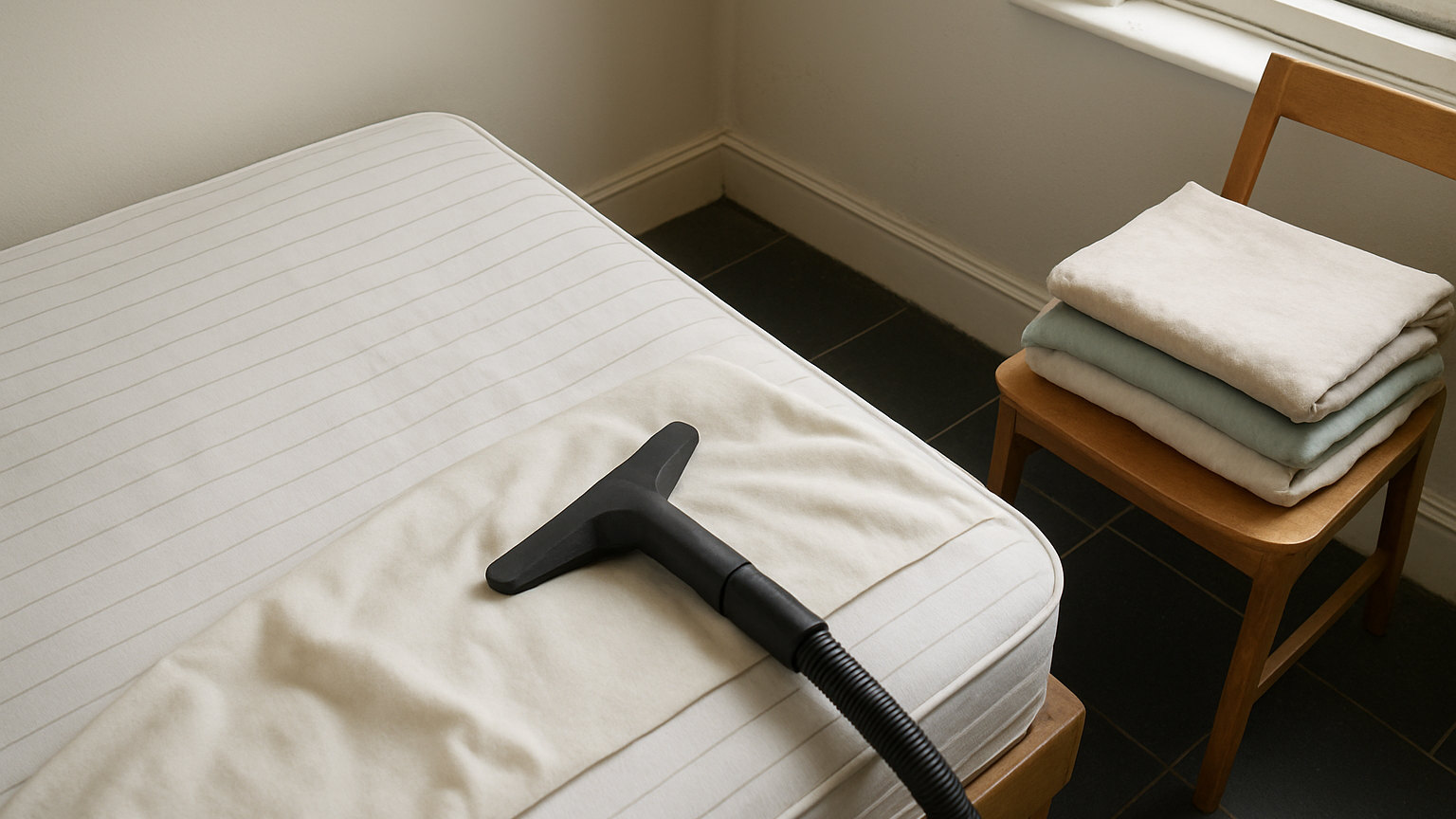
Use an upholstery attachment on reduced suction, and work from the top down in overlapping vertical strokes, including the back of the fabric and the lining. Pay particular attention to the top few inches near the heading tape, which collects the most, and to the hem, where dust settles.
If the suction pulls the fabric in, put a piece of muslin or a clean stocking over the nozzle. Shaking curtains out simply relocates the dust into the room you are about to vacuum.
Can bedroom curtains be machine washed?
It depends entirely on the fabric and the lining, and the label is the authority. Unlined cotton and polyester curtains usually wash at 30 or 40 degrees on a gentle cycle. Lined curtains are riskier, because the face fabric and the lining often shrink at different rates and the result is a pucker that cannot be ironed out.
Interlined, blackout, silk, velvet and heavily structured curtains should be dry cleaned. So should anything with a pinch pleat heading sewn into a fixed shape.
What is the safe procedure for washing them?
- Take the hooks out and note the heading tape arrangement, or photograph it.
- Shake and vacuum them first, so you are not washing a large quantity of loose dust.
- Wash cool on a gentle cycle with a reduced detergent dose, one curtain at a time if they are heavy.
- Use a low spin. A high spin creases lined curtains badly.
- Hang them damp, either back on the rail or on a line, and let the weight pull the creases out.
- Iron on the reverse while still slightly damp if needed.
Expect some shrinkage on cotton and linen. If the curtains only just reach the floor now, they may not afterwards.
How do you clean each type of blind?
- Venetian blinds – close the slats and wipe one side with a damp microfibre cloth, then reverse and do the other. A slat cleaning tool speeds this up considerably.
- Roller blinds – vacuum with an upholstery tool, then sponge with warm soapy water while the blind is fully extended, and leave it down until dry.
- Vertical blinds – vacuum each vane; most fabric vanes can be unhooked and soaked in a bath of warm soapy water, then hung back up wet to dry straight.
- Wooden blinds – dry dusting only, or a barely damp cloth. Water causes warping.
- Blackout and honeycomb blinds – vacuum and spot clean only, since the coating and the cell structure are easily damaged.
What about mould on a blind?
Mould on a bedroom blind means condensation on the window, which is a ventilation issue rather than a cleaning one. Treat the blind with a dilute fungicidal wash if the fabric allows, and dry it fully. Then deal with the cause: ventilate the room each morning, wipe condensation off the glass and sill rather than letting it sit, and raise the blind during the day so the window can dry.
What about the rail and the sill?
Wipe the curtain pole or track and the brackets while the curtains are down, and clean the window sill and reveal at the same time. These are the surfaces the curtains rub against, and cleaning the fabric while leaving the rail dusty means it is back on the curtains within a week.