Pets change how often floors need cleaning rather than how they should be cleaned, with one important exception. Urine is a chemical problem rather than a dirt problem, and ordinary detergent removes the visible mark while leaving behind the compounds that produce the smell and that draw the animal back to the same spot.
How much more often do floors need doing?
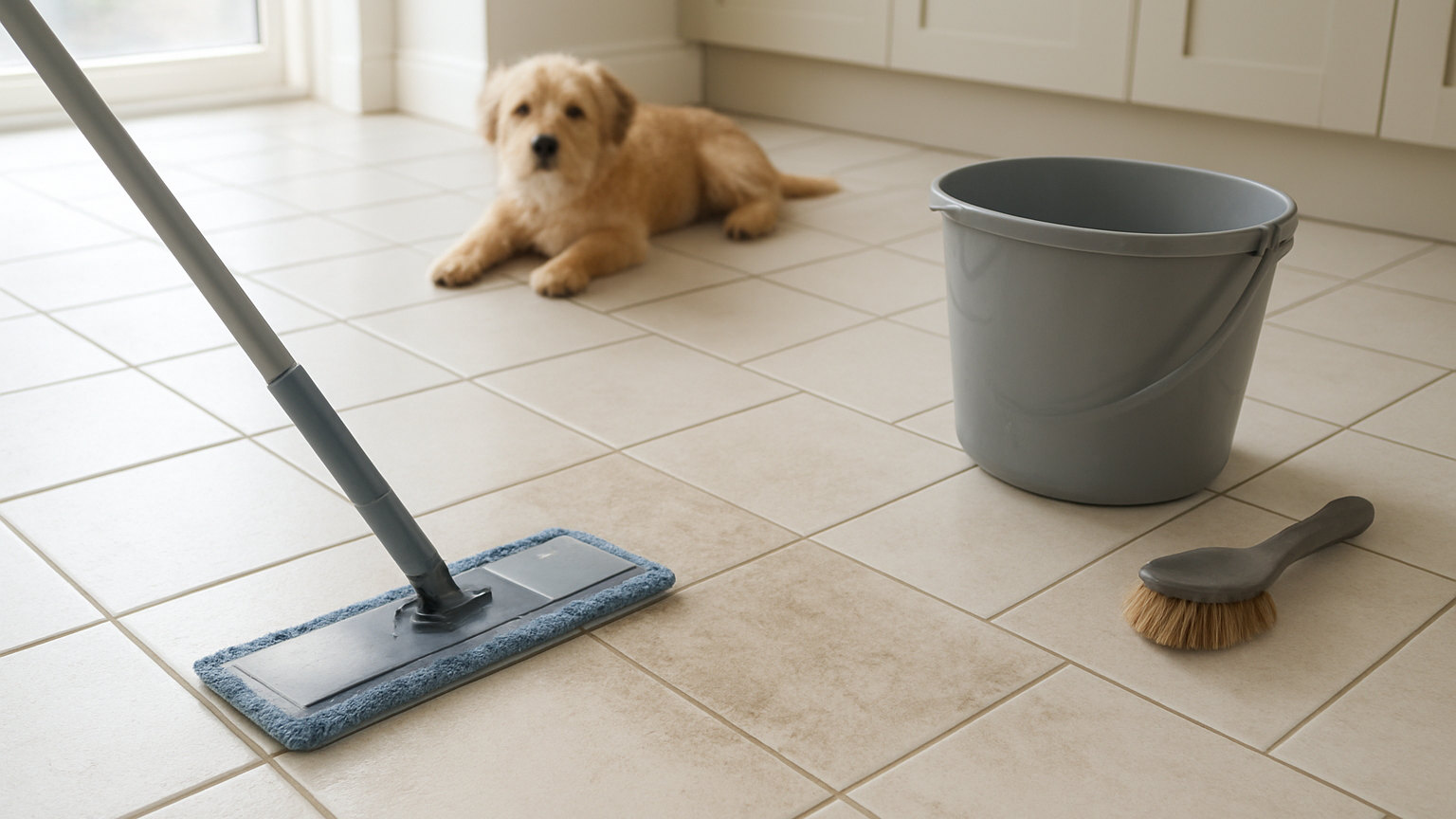
Roughly double. Vacuum daily in the rooms the animal uses, and mop hard floors weekly or more. Hair accumulates faster than most people expect, particularly during a seasonal moult, and it binds with dust into drifts along skirting and under furniture.
The area around a feeding station needs its own attention, since dropped food, splashed water and the residue from wet food all collect there.
What is the best way to deal with hair?
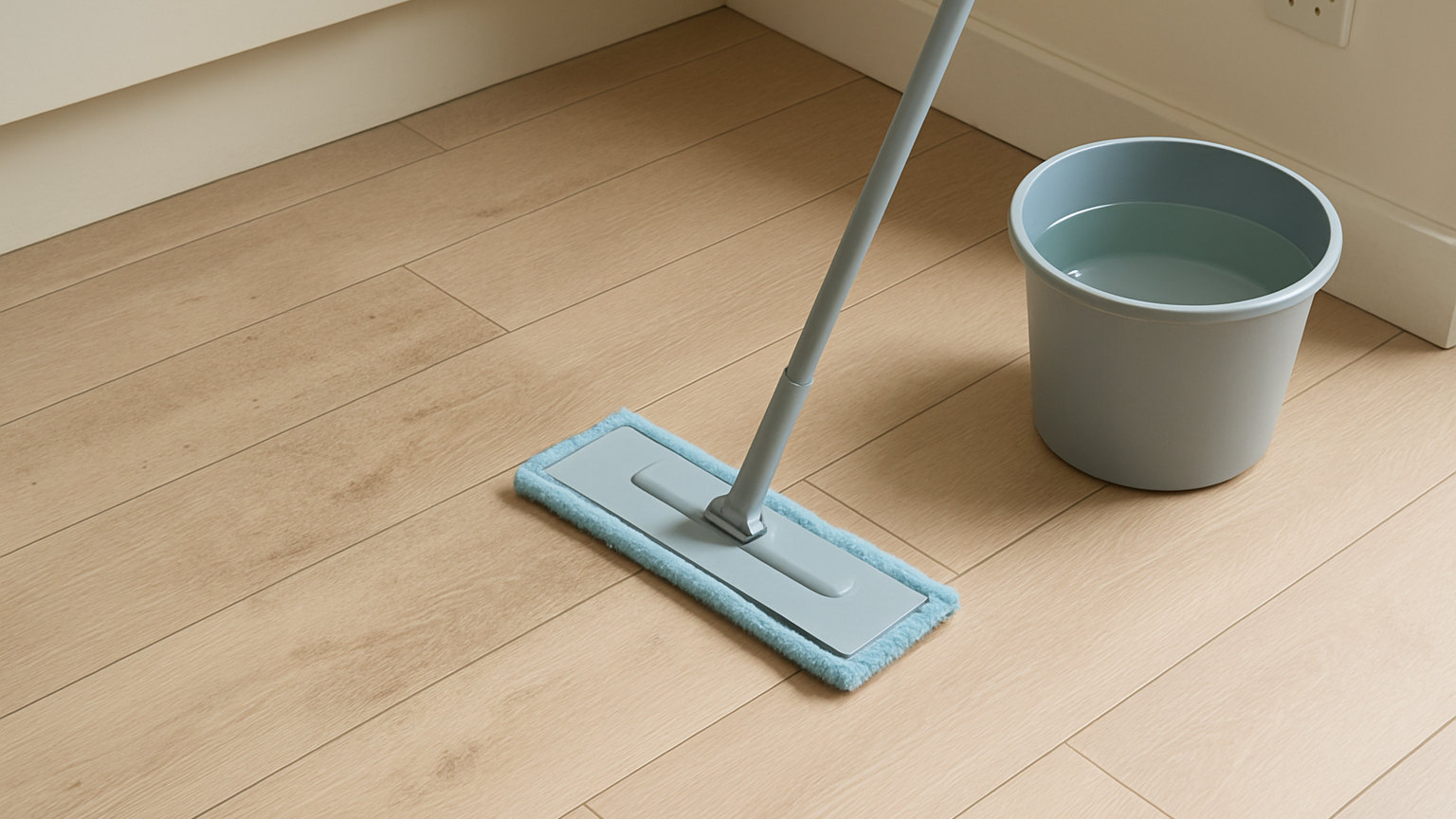
On hard floors, a dry microfibre flat mop or an electrostatic sweeper gathers hair far better than a vacuum, because hair is light enough to be pushed around by the airflow. On carpet, a vacuum with a rotating brush bar is essential, since suction alone does not release hair woven into the pile.
A rubber broom is an inexpensive and remarkably effective tool on both surfaces, dragging hair into rows that can be picked up.
Clean the vacuum more often than the manual suggests. Hair wraps around the brush bar, chokes filters and blocks the airway, and a machine in that state performs poorly on everything.
Why do accidents need an enzyme cleaner?
Because urine contains uric acid crystals that are not water soluble. Detergent and disinfectant remove the liquid and the visible mark, but the crystals remain bonded to the surface and continue to release odour, particularly in humid weather. Animals can detect the residue long after people can, which is why the same spot gets used again.
Enzyme cleaners contain biological agents that break those compounds down. They need to be applied generously enough to reach everywhere the urine reached, left wet for the time on the label rather than wiped off, and allowed to dry naturally.
What is the method for an accident on carpet?
- Blot up as much liquid as possible with paper towel, pressing hard and repeatedly.
- Apply the enzyme cleaner generously, using more than feels necessary, since urine spreads outwards and into the underlay.
- Leave it for the full contact time, covered with a damp cloth if it might dry out too quickly.
- Blot again and allow to air dry.
- Repeat if any smell remains once dry.
Do not use a steam cleaner on a urine stain before treating it. Heat sets the proteins and can make the odour permanent.
What about hard floors?
The same principle applies, and the risk is different. On laminate and wood, urine left to sit will penetrate the joints between boards and reach the core, where it causes both swelling and a smell that cannot be reached from above. Speed matters more here than anywhere else.
Clean promptly, use an enzyme cleaner, and dry thoroughly. A recurring accident spot on a wood floor may eventually need boards replacing.
How do you handle muddy paws?
Intercept at the door. A towel by the entrance, a mat long enough for several steps, and a habit of wiping paws before the animal gets past it prevent far more work than they cost. Let dried mud dry completely before dealing with it, exactly as with mud on any carpet.
What about claw scratches?
They are a real issue on lacquered wood and laminate, and show as a pattern of fine parallel marks concentrated near doors, windows and favourite spots. Keeping claws trimmed helps considerably and is worth doing for the animal anyway. Rugs or runners along the main routes take the wear instead of the floor, and an oiled finish rather than a lacquered one is far easier to repair in patches if you are choosing a new floor with a dog in the house.