Vinyl, luxury vinyl tile and sheet lino are the most tolerant hard floors in a domestic setting. They are water resistant, they handle regular washing, and they cope with the kind of traffic that would wear out a lacquered wood floor. The problem they actually develop is the opposite of damage: a dull, slightly tacky film built up from years of cleaning product.
What does routine cleaning involve?
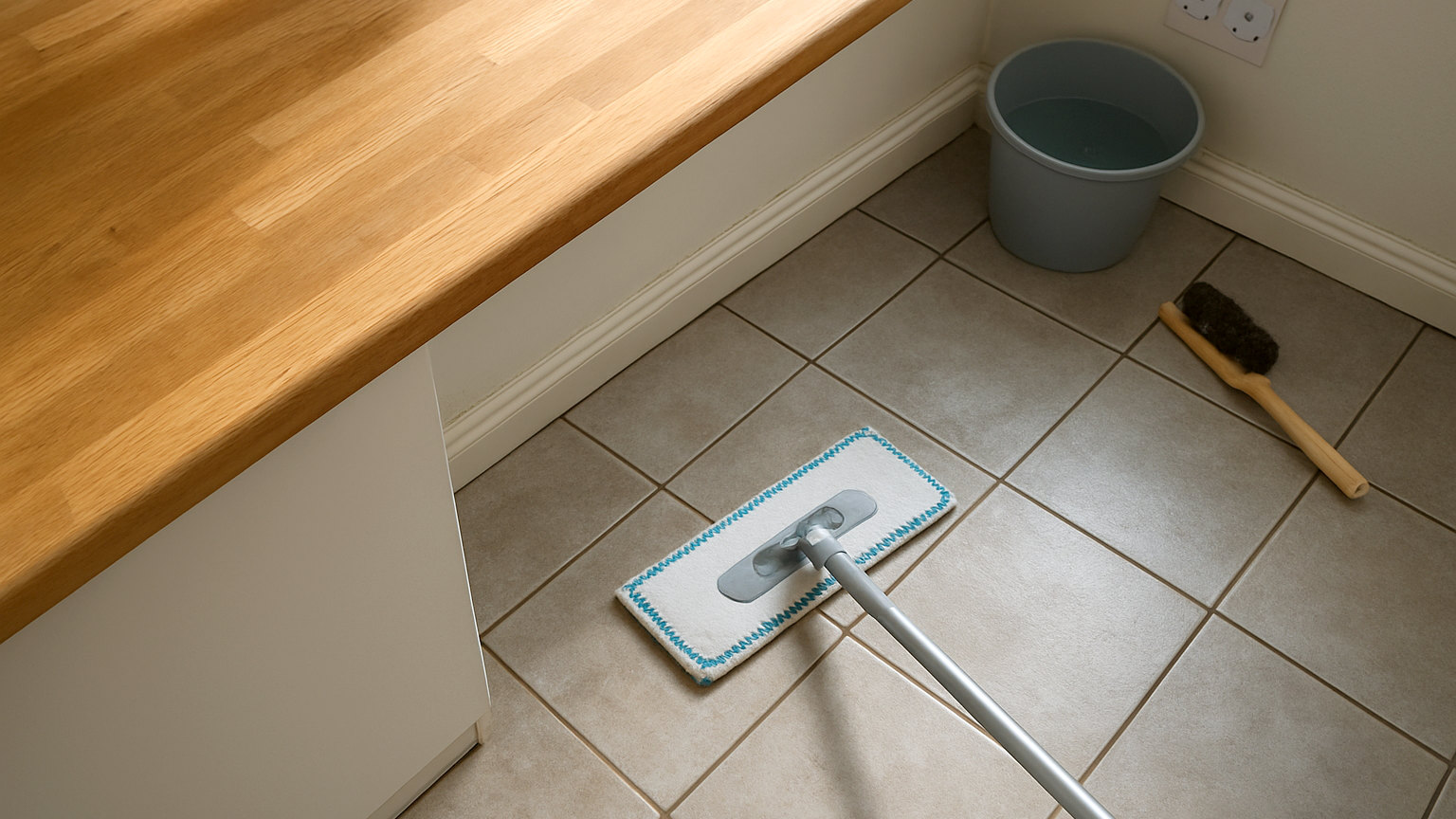
Vacuum or sweep two or three times a week, more in a kitchen or hallway. Damp mop weekly with a small dose of a neutral floor cleaner or simply hot water. Wipe spills as they happen, which on vinyl is easy because nothing soaks in.
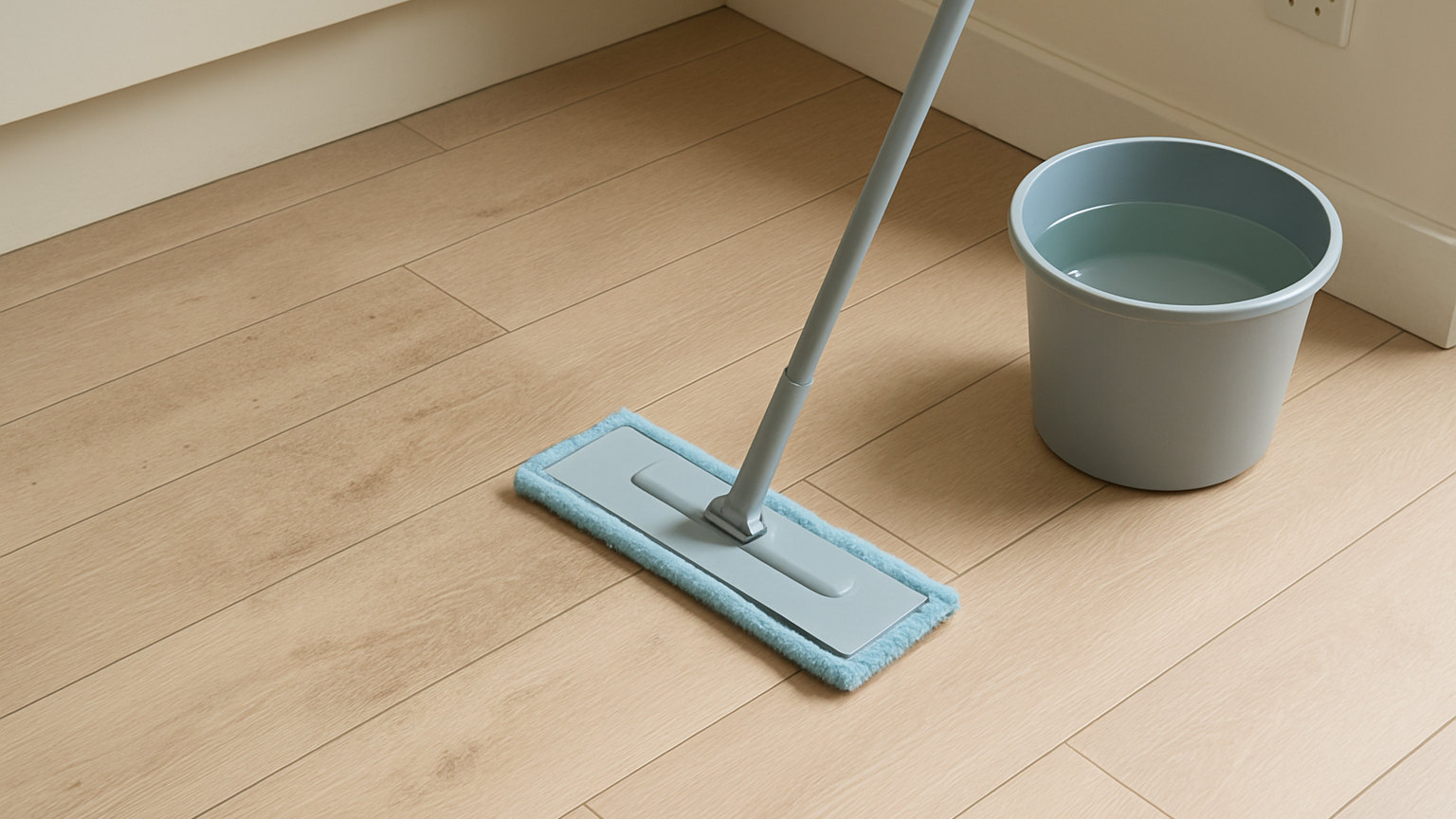
Any mop works, though a flat microfibre mop applies less water and leaves less behind.
Why does vinyl go dull?
Because residue accumulates. Floor cleaners, and especially products promising a shine, leave a polymer layer behind. Used at the right dilution this is imperceptible. Used generously, week after week, it builds into a film that scatters light, feels slightly tacky underfoot and holds dirt.
People usually respond by cleaning more often with more product, which accelerates the problem. The correct response is to strip it back.
How do you strip the build up?
- Vacuum thoroughly.
- Mop with plain hot water, changing the water as soon as it clouds.
- Repeat two or three times. The water coming off will be visibly dirty even on a floor that was mopped last week.
- For stubborn film, add a splash of white vinegar to the water on one pass, then rinse with plain water afterwards.
- Dry with a towel or a clean microfibre pad.
Afterwards, use a smaller dose of product, or none at all for routine cleans.
What removes scuff marks?
Black rubber scuffs from shoe soles usually come off with a clean pencil eraser or a dry cloth and firm pressure. A tennis ball on a broom handle works on a large area and is a genuinely effective trick. A melamine sponge used damp deals with the rest, though it should be used lightly since it is mildly abrasive.
Avoid scouring pads and abrasive creams. LVT has a transparent wear layer on top of the printed design, and once that is scratched the floor looks permanently dull in that area.
What should you avoid using?
- Solvent based cleaners, white spirit and acetone, which soften and can dissolve vinyl.
- Bleach in any concentration, which discolours and embrittles the surface.
- Wax and oil based polishes, which have nothing to bond to and create a slippery film.
- Very hot water, which can soften the adhesive under sheet vinyl at the seams.
- Rubber backed mats, which react with the plasticisers in vinyl and cause permanent yellow staining.
The rubber backing issue surprises people. A mat left in one place for months will often leave a discoloured outline that cannot be cleaned out.
Are steam mops safe on vinyl?
Sometimes, and manufacturers disagree. Heat can soften the adhesive under sheet vinyl and at the edges of LVT planks, and can cause lifting at seams. Some LVT manufacturers permit occasional steam cleaning on a low setting; others void the warranty. Check the specific product before using one, and if the answer is unclear, do not.
What about dents and indentations?
Vinyl is softer than tile and takes indentations from heavy furniture and from small hard castors. Wide, soft floor protectors spread the load and prevent most of it. A shallow indentation sometimes recovers over days once the weight is removed; a deep one is usually permanent.
Check the load rating before putting anything very heavy, such as a large aquarium or a piano, onto a vinyl floor.
Does LVT need anything the others do not?
Only attention to the joints. Click fitted LVT has seams that are water resistant rather than waterproof, so standing water left for hours can find its way underneath to the subfloor. Glued LVT has no such gap. Either way, a damp mop rather than a wet one is the sensible default, which is the same advice as for every other hard floor.