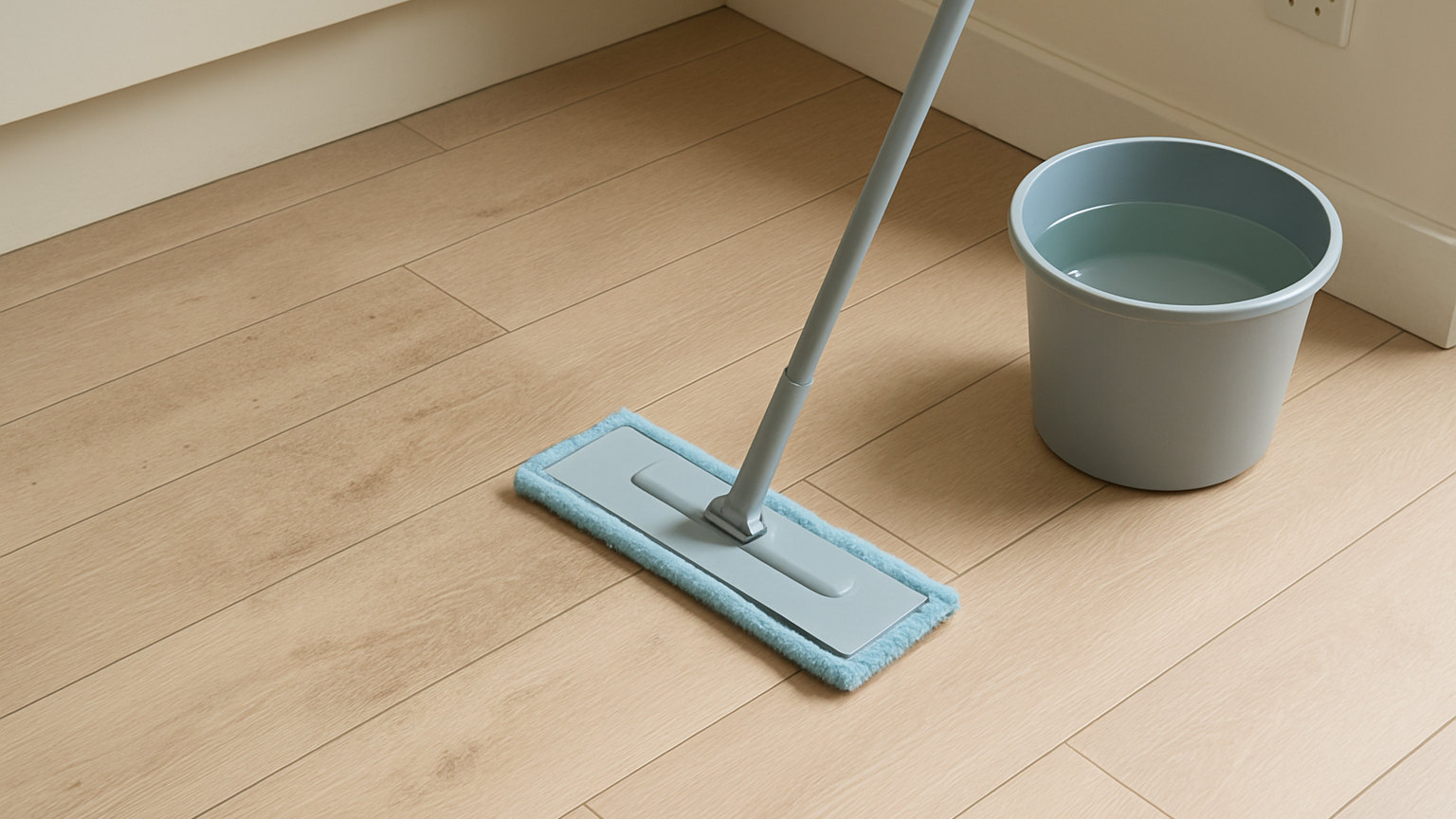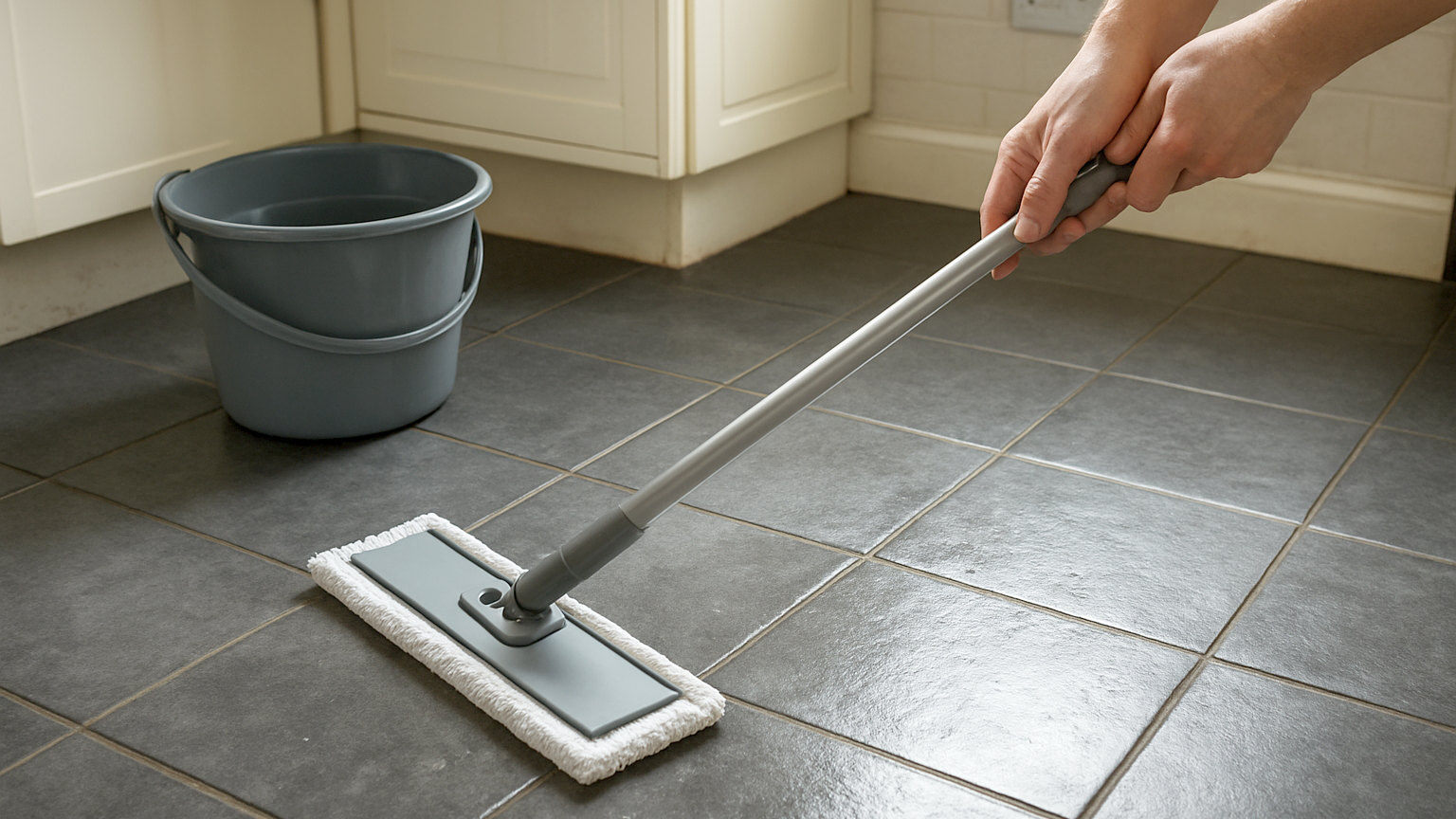
Streaks on a freshly mopped floor are almost never dirt that was missed. They are residue that has dried on the surface, and the three things that produce them are too much cleaning product, water that had stopped being clean, and a floor that dried too slowly. All three are fixed by doing less rather than more.
What causes the residue?
Cleaning products are designed to be left on the floor at the correct dilution, where they dry to nothing visible. At two or three times that concentration they dry to a film. That film is slightly tacky, it catches light at an angle as a streak, and it attracts dirt, so each subsequent mop adds another layer and the problem compounds.
Products marketed as leaving a shine are the worst offenders, because the shine is a polymer deposit that builds up with repeated use.
How does dirty water cause streaks?
After a few square metres, mop water is a dilute suspension of everything you have removed. Spreading it over the rest of the floor deposits a thin grey film that dries unevenly, following the pattern of the mop strokes.
Change the water as soon as it loses its clarity, which in a kitchen is often after a single room. Using a second bucket of plain water to rinse the mop before reloading keeps the cleaning solution clean for far longer.
Does drying time matter?
A great deal. A floor that dries within a minute or two dries evenly. A floor that has had too much water on it dries in patches, and dissolved residue and minerals concentrate at the edges of each drying patch, which is what produces the cloudy outlines.
Use less water, open a window, and keep traffic off until it is dry.
How do you strip an existing build up?
- Vacuum the floor thoroughly first.
- Mop with plain hot water and nothing else, changing the water frequently.
- Repeat two or three times. The water will be surprisingly dirty each time.
- On vinyl, laminate or tile, add a small splash of white vinegar to one of the rinse passes to help cut the film. Never on natural stone or unsealed wood.
- Dry the floor with a towel or a dry microfibre pad.
- Go back to using the correct dose of product, or to plain water, from that point on.
Could it be the water itself?
In a hard water area, yes. Dissolved calcium and magnesium are left behind as the water evaporates, and on a dark floor they show as a dull haze. Drying the floor rather than letting it air dry solves it, and so does a final pass with water containing a small amount of vinegar on floors that tolerate it.
Is the mop the problem?
Often. A microfibre pad washed with fabric conditioner is coated in exactly the sort of film that smears, and no amount of technique compensates. Wash pads hot, with detergent only, and replace them when they stop gripping.
A string mop that has been put away damp, or a sponge head that has degraded, will also leave marks and sometimes a smell.
What about streaks that only appear on dark floors?
Dark and high gloss floors show everything, including perfectly ordinary drying patterns that would be invisible on a mid tone floor. The approach that works is minimal product, minimal water and a dry buff at the end with a clean microfibre pad, which is the same finishing step used on glass.
It is worth accepting that a dark gloss floor will always need more care than a matt one, and choosing the cleaning routine accordingly rather than fighting it with stronger products.
How do you tell residue from a damaged finish?
Wipe a small test area with a cloth and plain hot water, pressing firmly, then dry it and look at it in raking light. If that patch comes up clearer than the surrounding floor, the problem is residue and the stripping method will work. If it looks identical, the finish itself has worn or dulled, and no amount of cleaning will change it.