The evening reset is the single habit that stops a kitchen ever needing rescuing. It is not a clean in any real sense – it is putting the room back to a known state before you leave it, and in most households it takes between eight and twelve minutes.
Why does it make such a difference?
Because almost every unpleasant kitchen job is a job that was easy an hour after cooking and hard a week later. Fat wipes off a warm hob with a cloth and needs soaking once it has cooled and hardened. A sink rinsed straight after washing up needs nothing; the same sink left with food residue overnight develops a smell. Ten minutes each evening removes most of what would otherwise accumulate into the weekly clean.
There is a second effect that matters just as much. Walking into a clear kitchen in the morning changes how the room gets used all day, and a kitchen that starts the day clear tends to stay that way.
What order should it run in?
- Clear. Everything that does not live on the worktop goes away. Post, packaging, bags, school things.
- Deal with the food. Leftovers into containers and into the fridge, packets closed and put back.
- Load or wash. Dishwasher loaded and started if it is close to full, or the washing up done and left to drain.
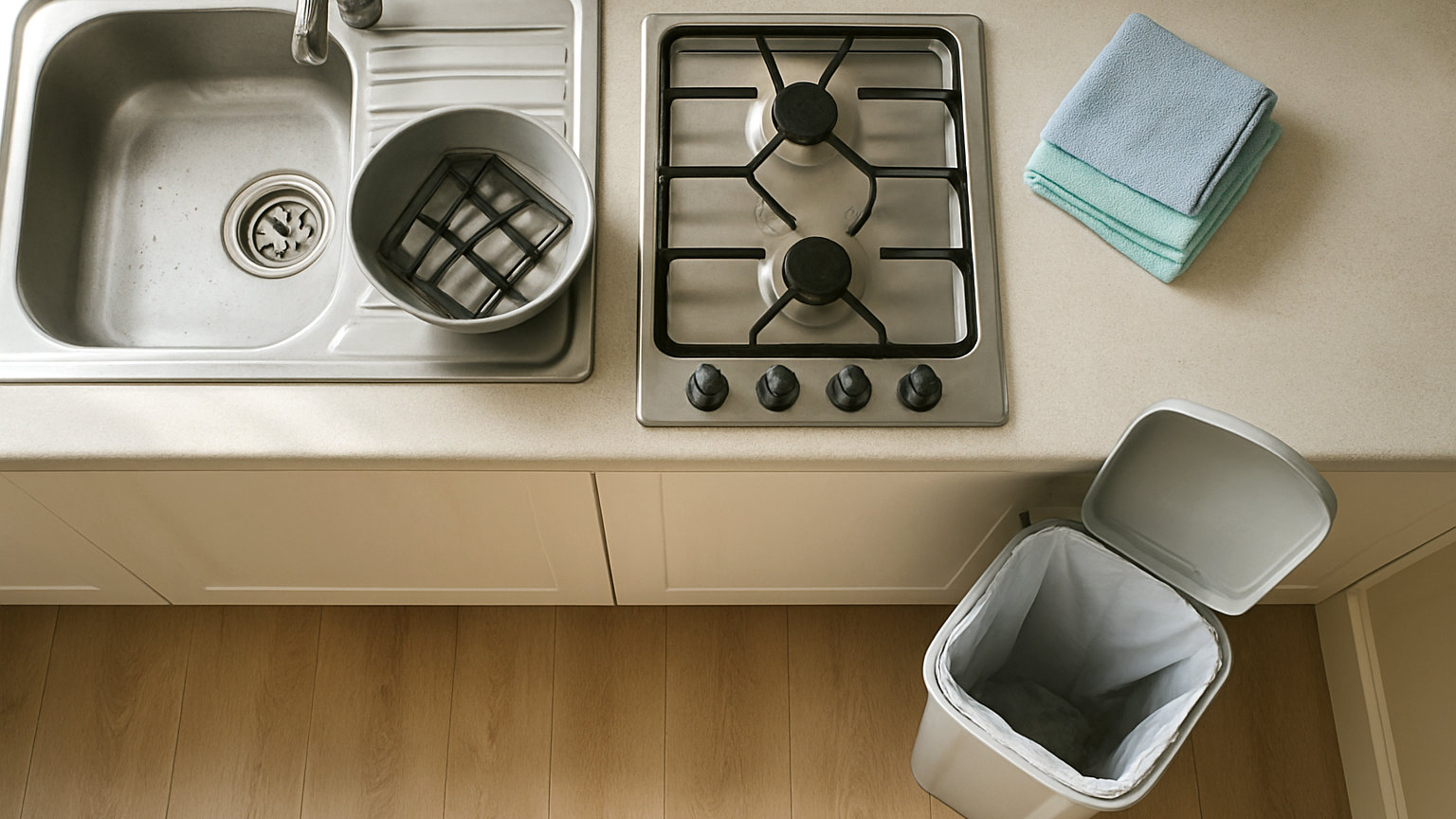
- Wipe the hob. While it is warm rather than hot, using hot soapy water.
- Wipe the worktops. Towards the sink, in one pass along each run.
- Sort the sink. Drain, wipe round, rinse, and hang the cloth up to dry.
- Check the bin. Out if it holds anything wet or smelly, re-lined if it is emptied.
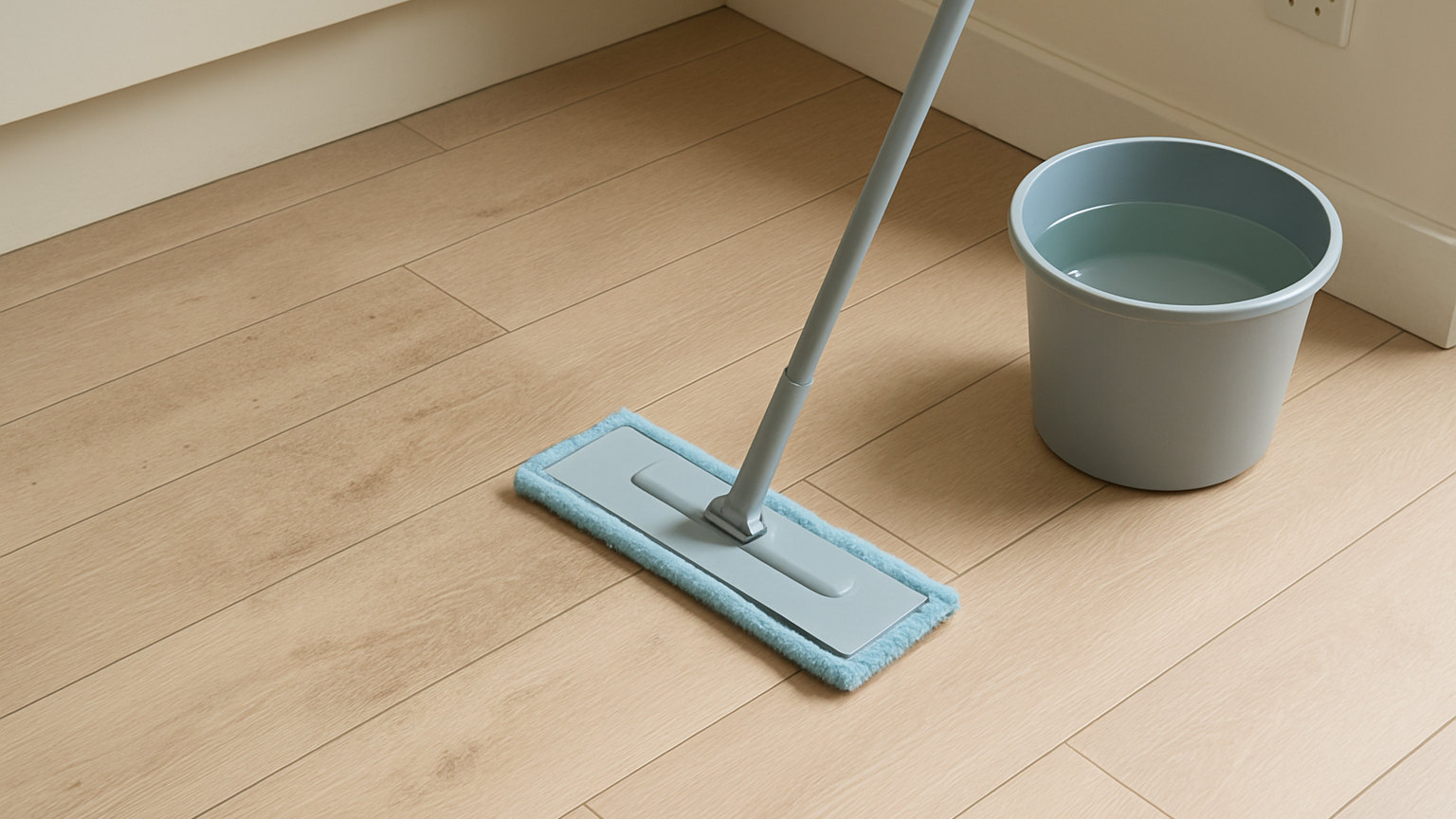
- A quick sweep if there is anything obvious on the floor.
What should not be in the reset?
Anything that takes real time or thought. Cleaning inside the fridge, mopping, sorting a cupboard, descaling the kettle, cleaning the oven: none of these belong in an evening routine, and adding them is what makes people give up on it. The reset works precisely because it is short, predictable and finishes at a fixed point.
If the reset regularly overruns, the usual reason is not enough storage rather than not enough time. A worktop that permanently holds seven appliances cannot be cleared in ten minutes.
Who should do it?
In a shared household, whoever did not cook. It divides the work sensibly, it takes about as long as cooking takes to clear up after, and it avoids the situation where one person does both and quietly resents it. In a household of one, doing it while the kettle boils for a last cup of tea is the version most people stick with.
How do you make the habit stick?
Attach it to something that already happens every day rather than relying on intention. The end of the evening meal, the moment the dishwasher goes on, or the point where you switch the kitchen light off all work as triggers. Setting a timer for ten minutes helps for the first fortnight, mostly because it demonstrates how short the job actually is.
Keeping the tools within reach matters too. A cloth, a spray or a bottle of washing up liquid, and a bin liner should all be no more than one step from the sink.
What does the reset look like on a bad night?
Shortened, not abandoned. If there are three minutes rather than ten, do the food, the hob and the sink, and leave the rest. Those three cover everything that gets meaningfully worse overnight. Skipping the reset entirely is fine occasionally; what causes trouble is skipping it for a week, because then the weekly clean becomes a deep clean and the deep clean gets postponed.
How does it change the weekly clean?
Substantially. In a kitchen that gets reset every evening, the weekly clean is mostly cupboard fronts, appliance doors, the floor and a proper go at the sink and bin, and it takes half an hour rather than an hour and a half. Nothing has baked on, nothing smells, and no single job feels daunting.
That is the real return on ten minutes a day: not a spotless kitchen, but the disappearance of the jobs everybody hates.