The dirtiest places in a kitchen are rarely the ones that look dirty, and hardly ever the ones that get cleaned most often. Bacteria need moisture, warmth and food, so they collect wherever those three things meet – which is usually somewhere damp and out of sight rather than on the worktop everybody wipes twice a day.
Which places hold the most bacteria?
- The dishcloth or sponge. Permanently damp, full of food particles, and used to spread whatever it holds over every surface in the room.
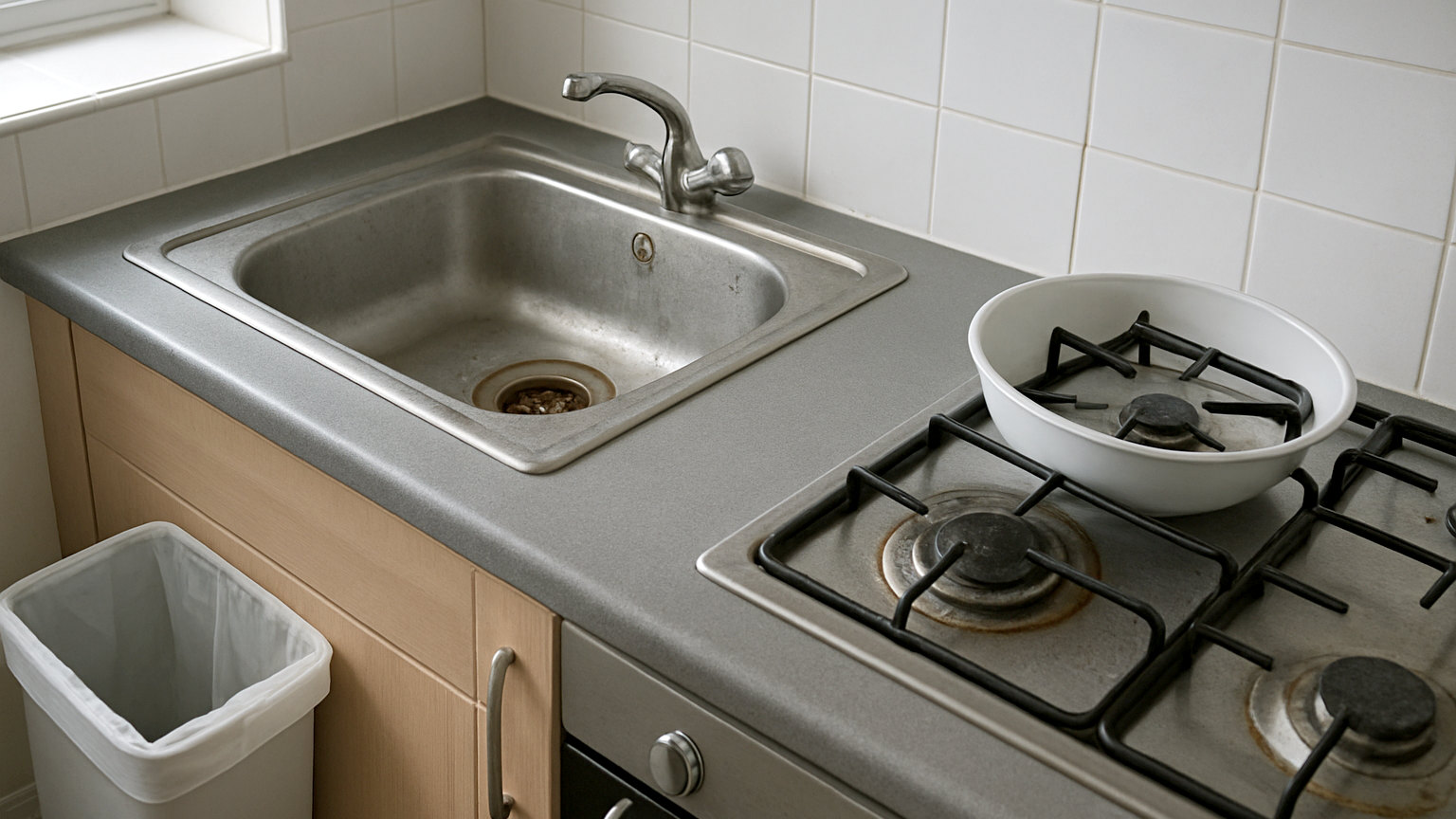
- The sink, and especially the plughole and overflow. Wet, warm and continuously fed with organic matter.
- Chopping boards, particularly ones with deep knife scoring that traps residue.
- The fridge salad drawer, where soil from vegetables and juices from packaging collect.
- Handles and taps, which are touched with hands that have just handled raw food.
- Reusable shopping bags that have carried leaking meat packaging and are never washed.
- The rubber seal on the fridge door, where crumbs and condensation sit together.
Bins are unpleasant but not usually top of the list, because they are lined, closed and not touched by food. The cloth used to wipe the bin and then the worktop is the real problem.
Why does cross contamination matter more than general dirt?
Because the risk in a domestic kitchen comes from moving bacteria from raw food to something that will be eaten without further cooking. Cooking kills what is on a chicken. Nothing kills what has been transferred from that chicken to the salad bowl by way of a chopping board, a tap handle or a hand.
This is why the useful habits are about sequence and separation rather than about intensity of cleaning: wash hands after handling raw meat and before touching anything else, keep raw meat on the bottom shelf of the fridge so it cannot drip onto anything, and use separate boards for raw meat and for ready to eat food.
Which surfaces need disinfecting and which just need washing?
Hot water and washing up liquid deal with the overwhelming majority of kitchen surfaces. Detergent removes bacteria physically, along with the food they live on, and for a worktop that has held shopping bags and dry goods that is entirely sufficient.
Disinfectant earns its place in specific situations: after raw meat, fish or eggs have touched a surface, after any contact with raw food juices, when someone in the house has been ill, and on the handles and taps touched during those tasks. Applied to a surface that has not been cleaned first, it does very little, because organic matter deactivates most disinfectants on contact.
How long does disinfectant need to be left on?
Longer than most people leave it. Every product has a contact time on the label, usually between thirty seconds and five minutes, and wiping it off immediately means it has not done its job. Clean the surface with detergent, apply the disinfectant, leave it for the stated time, then wipe or let it dry.
What about chopping boards?
Wash them in very hot soapy water immediately after use, scrubbing along the knife marks rather than across them, and dry them standing on edge so air can circulate. Wooden boards should not soak or go in the dishwasher; plastic ones can. Replace any board once the surface is deeply grooved, because those grooves cannot be cleaned reliably.
Does antibacterial spray on everything help?
Not as much as its prominence suggests, and it encourages a habit that is actively unhelpful: spraying a surface and wiping it straight away with the same cloth used everywhere else. The three changes that make a real difference are a fresh cloth every day, hot soapy water used generously, and handwashing at the right moments. Everything else is a refinement.
What should be washed more often than it usually is?
Tea towels, oven gloves, the fridge door seal, reusable bags, the sink overflow, and the handles of the fridge and oven. None of these appear on a typical cleaning list, and all of them are touched daily by hands that have just been handling food.