Most leather sofas need far less than people do to them. Regular dusting, an occasional wipe with a barely damp cloth and keeping them out of direct sunlight covers almost everything. The damage seen on leather furniture is more often caused by cleaning products and conditioners than by ordinary use.
What type of leather do you have?
This matters more than any product choice.
- Pigmented or protected leather has a coloured surface coating and is what most family sofas are made from. It is durable, water resistant and the easiest to clean.
- Semi-aniline has a light coating, feels softer and marks more readily.
- Aniline is dyed but uncoated. It feels beautiful, develops a patina and absorbs everything, including water.
- Nubuck and suede have a brushed surface and must never be cleaned with water.
A simple test: put a drop of water on a hidden area. If it beads and sits, the leather is coated. If it soaks in and darkens the surface, it is aniline or nubuck and needs specialist care.
What is the routine clean?
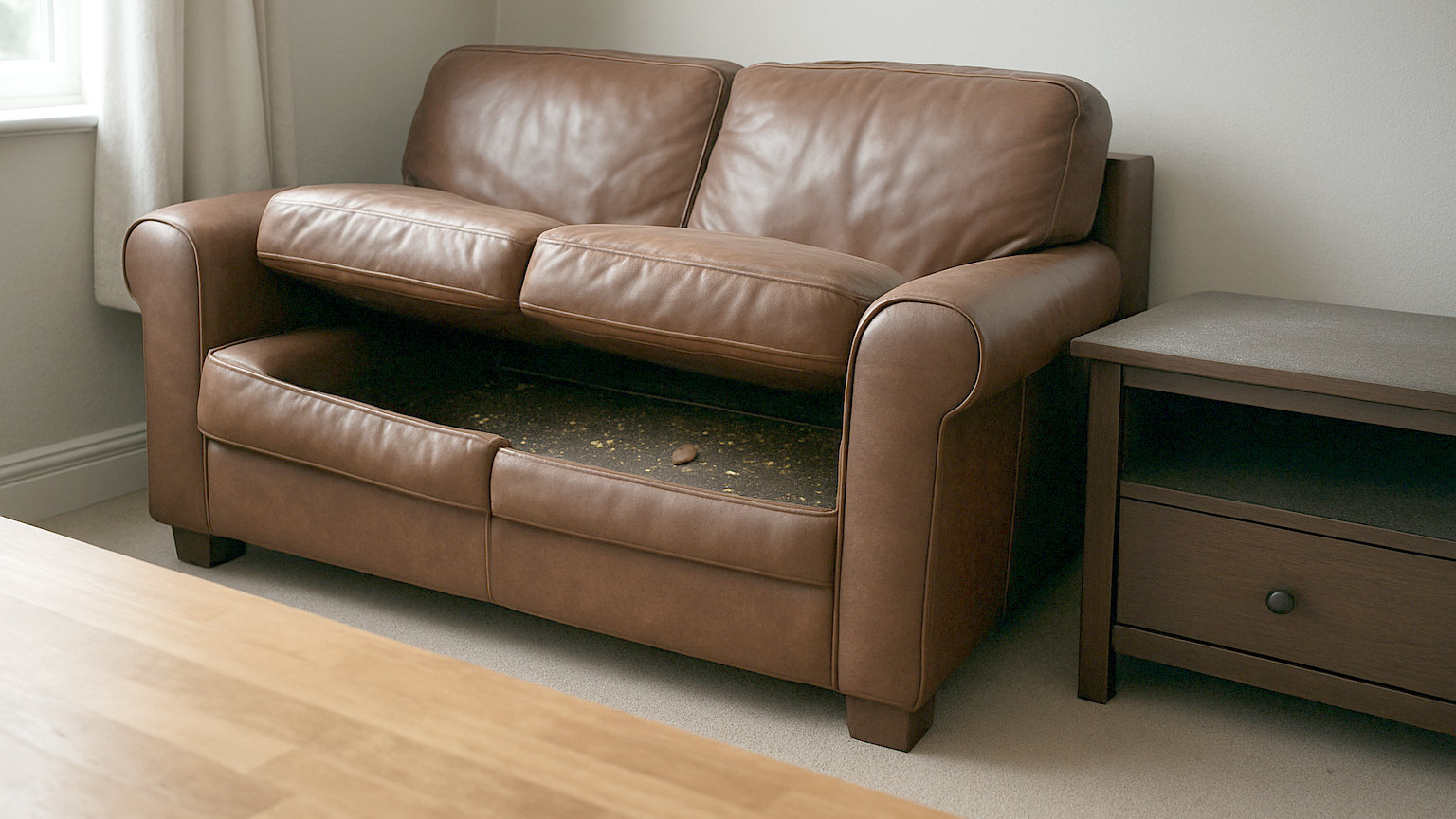
Dust weekly with a dry microfibre cloth, and vacuum the seams and the gaps beside the cushions with a soft brush attachment rather than a hard nozzle, which can scuff the surface. Every month or two, wipe a coated leather sofa with a cloth wrung out in warm water, then dry immediately with a second cloth.
That is all most leather sofas require. Adding a mild soap is acceptable on pigmented leather but rarely necessary, and a dedicated leather cleaner is worth keeping for marks rather than for routine use. The seams and the creases where the seat meets the back collect the most, so it is worth going over those with the cloth even when the flat panels look clean.
What damages leather?
A specific and fairly short list.
- Direct sunlight and radiators, which dry the leather and fade it unevenly. This is the main cause of cracking, not lack of conditioner.
- Household cleaning sprays, wipes and anything with alcohol or solvent, which strip the finish.
- Furniture polish and olive oil, which leave a sticky film that attracts dirt and can go rancid.
- Excess water, particularly on uncoated leather.
- Abrasive cloths and scrubbing, which wear the pigment at the contact points.
Does leather need conditioning?
Less often than the products suggest, and on some leathers not at all. A coated pigmented sofa has a finish between you and the leather, so a conditioner mostly sits on top of that coating. A light application once or twice a year is harmless and can improve the feel, but monthly conditioning simply builds residue.
Aniline and semi-aniline leather benefits more, since the hide is exposed. Use a product made for the specific leather type and apply a small amount on a cloth rather than pouring it on.
How do you deal with spills and marks?
Blot liquid immediately with a dry cloth. On coated leather, most spills wipe away with a damp cloth if caught quickly. Grease is the exception: blot it, sprinkle cornflour or talc over the mark, leave it for several hours to draw the oil out, then brush it off gently.
Ink is difficult and often permanent. Leather specific ink removers exist but can lift the pigment, so test them somewhere hidden. For anything valuable, a leather repair specialist is a better first call than an experiment.
Can cracked or worn leather be repaired?
Surface wear on pigmented leather can be recoloured, and small cracks can be filled and refinished by a specialist. It is skilled work and the results are far better than any home kit on a large area. Deep cracking where the hide itself has dried out is not reversible.
What prevents most problems?
Position rather than product. Keep the sofa out of direct sun and at least a foot from a radiator, deal with spills as they happen, and resist the urge to treat it with anything unless there is a reason. Leather that is simply used and dusted tends to age better than leather that is regularly worked on.