Pet hair is difficult because it does not sit on fabric, it works into it. Each hair has a slight barb and a static charge that grips the fibres, which is why a vacuum passes straight over a layer of it and why a rubber glove dragged across the same spot pulls out a handful. The solution is friction rather than suction.
What actually works on upholstery?
- A damp rubber glove. Wet the palm, wipe firmly in one direction, and the hair rolls into clumps you can pick up. Cheap, and more effective than most dedicated tools.
- A rubber pet hair brush or squeegee, which works on the same principle over a larger area.
- A pumice stone made for fabric, dragged lightly across carpet or upholstery, which lifts embedded hair very effectively.
- A lint roller, which is best for a final pass rather than the bulk of the job.
- A vacuum with a motorised upholstery tool, where the rotating brush agitates the fibres rather than relying on airflow alone.
Work in one direction rather than back and forth, which just redistributes the hair.
Why does a normal vacuum struggle?
Because suction lifts loose material, and pet hair is not loose. It is woven into the pile and held there by the barbs on each hair. Without a rotating brush bar to agitate the fibres and release it, the airflow simply passes over the top of the layer. This is also why a cylinder vacuum with a plain upholstery nozzle performs badly on a hairy sofa while an upright with a powered head clears the same area in seconds.
What is the best method for carpets?
Vacuum first with the brush bar on, going over the area in two directions rather than one. Then treat the worst spots with a rubber brush or a pumice stone, working in short strokes to gather hair into lines you can pick up, and vacuum again.
For a large area, a rubber broom is worth owning. Dragged across carpet it gathers hair into rows in a way no vacuum matches, and it costs very little.
Does anything make the hair release more easily?
Reducing static helps. A very light mist of water, or water with a tiny amount of fabric conditioner, sprayed over the area before brushing makes the hair let go more readily. Use the smallest amount that works, let it dry afterwards, and avoid it entirely on upholstery coded S or X.
In a dry house, static builds more, which is why pet hair seems worse in winter.
What about cushions, throws and blankets?
Put them in the tumble dryer on a no-heat or air cycle for ten minutes before washing. The tumbling releases the hair and the filter catches it, which stops the hair going into the washing machine and ending up redistributed across everything else in the load.
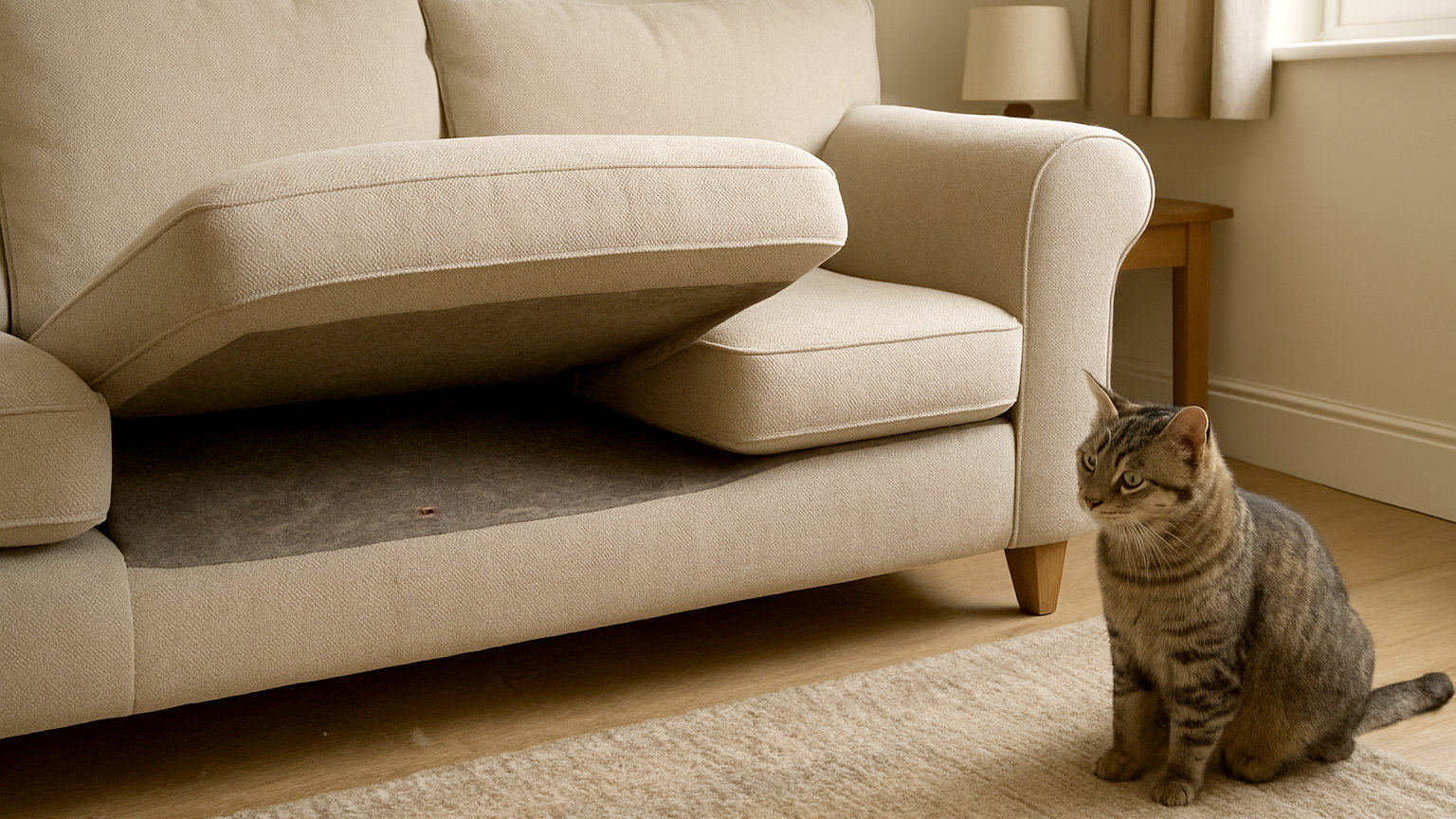
A throw over the spot your pet uses most is the single most practical measure. It takes all the hair, it goes in the wash, and it saves the upholstery underneath.
How do you reduce how much ends up on the furniture?
Brushing the animal regularly, outdoors where possible, removes hair before it is shed indoors. Most dogs and cats benefit from a few minutes several times a week, and moulting breeds need more during a seasonal coat change. A good deshedding tool removes far more undercoat than an ordinary brush.
Beyond that, diet, general health and coat condition all affect shedding, so a sudden increase is worth mentioning to a vet rather than treating purely as a cleaning problem.
What about hair in the washing machine?
It clogs the filter and ends up on the next load. Shake or tumble items before washing, run a rinse cycle with the drum empty occasionally, and clean the machine filter more often than the manual suggests if you regularly wash pet bedding. Washing pet items separately from clothes is worth the extra cycle.