Outside glass needs cleaning three or four times a year in most houses, and inside glass rather less often, perhaps two or three times. The parts that genuinely need more attention are the ones that never get it: the frames, the drainage slots, the seals and the hinges, all of which affect how long the window lasts rather than how it looks.
What determines the right frequency outside?
Position and exposure, more than anything else. A house on a busy road accumulates traffic film considerably faster than one on a quiet lane. Coastal properties get salt spray, which is both visible and corrosive to fittings. A window under a tree collects sap, pollen and bird droppings. A north facing elevation stays damp and grows algae along the beading.
Rain does not clean windows; it carries dust down the glass and leaves it in streaks as it dries, which is why windows often look worse after a shower than before one.
How often do the inside surfaces need doing?
Two or three times a year is enough for most rooms. Kitchens are the exception, where airborne cooking grease builds a film on the glass that attracts dust, and four times a year is more realistic. Bathrooms need the glass wiped more often because of condensation, though that is a quick job rather than a proper clean.
Rooms with candles, an open fire or a wood burner will also need the inside of the glass doing more often, since soot settles on every cool surface.
What should be done more often than the glass?
- Drainage slots in the bottom of the frame – clear them twice a year. Blocked slots let water sit in the frame, which causes leaks and rot.
- Seals and gaskets – wipe annually and check for splits or hardening.
- Hinges, stays and locks – clean and lubricate once a year, which prevents the seizing that eventually stops a window closing properly.
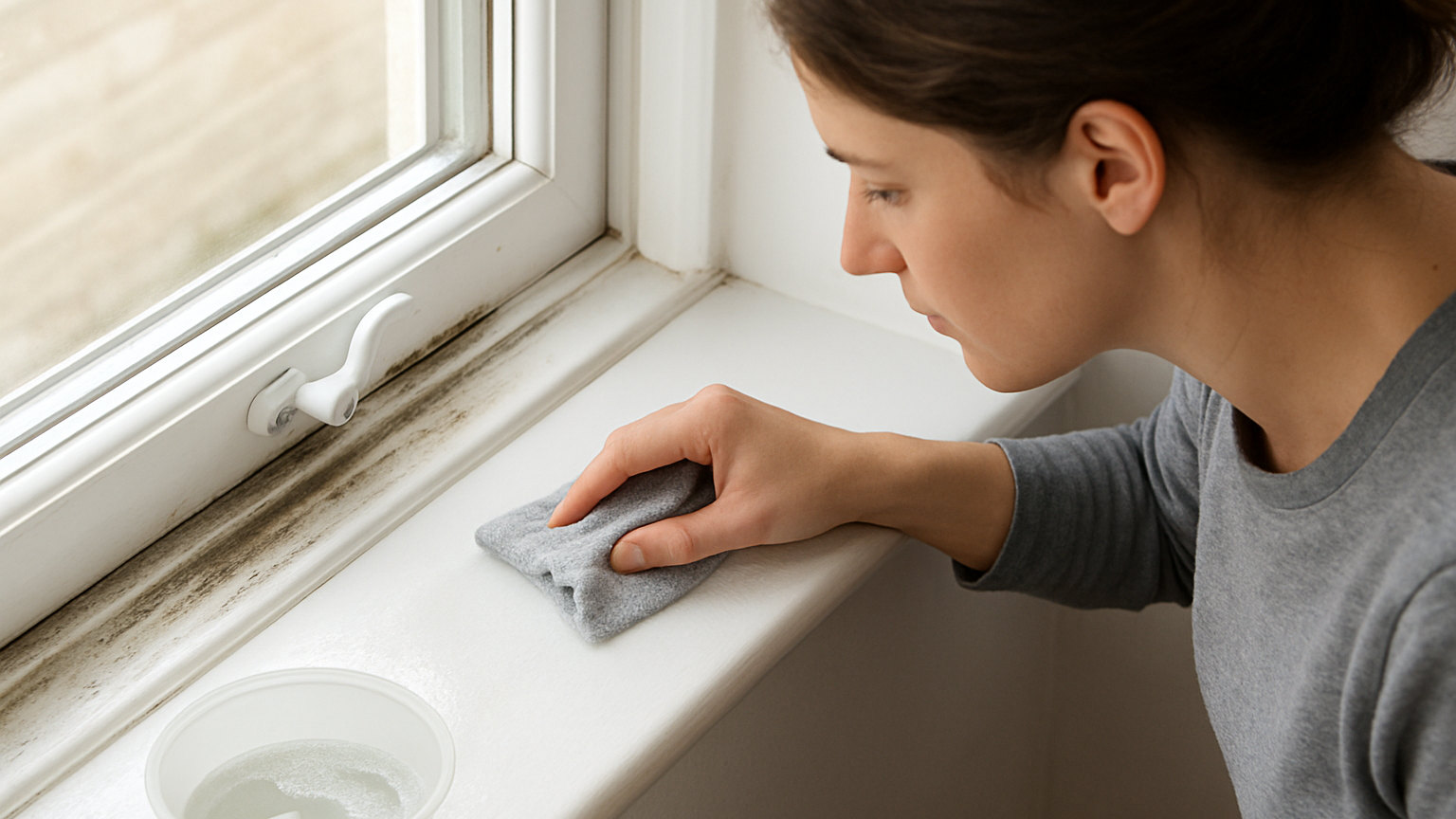
- Sills – inside monthly, outside a few times a year, since they collect the most of anything around a window.
- Window tracks on sliding doors – every few months, because grit in a track wears the rollers.
Is there a best time of year?
Late spring and early autumn are the two most useful points. Spring clears the winter accumulation of salt, grime and algae. Autumn removes pollen and summer dust and gets the seals and hinges checked before the weather turns.
Avoid cleaning glass in strong direct sunlight at any time of year. The cleaning solution dries before it can be removed and leaves streaks that then need doing again. An overcast day, or working on the shaded side of the house, gives a far better result.
Does the type of window change anything?
Modern uPVC and aluminium units mainly need the frames and drainage looking after. Timber windows need the paint or stain inspected annually, particularly along the bottom rail, where failure begins. Sash windows need the tracks and cords checked and the meeting rail cleaned. Leaded and stained glass needs a gentler approach and less frequent attention.
Is it worth paying someone?
For anything above ground floor level, generally yes. Professional window cleaners now use water fed pole systems that reach three storeys from the ground, which removes the ladder from the equation entirely. The cost is modest against the risk, and falls from ladders remain one of the most common causes of serious domestic injury.
Ground floor windows are straightforward to do yourself, and doing those while paying for the upper floors is a reasonable compromise in most houses.
What happens if they are left?
The glass itself is rarely damaged by neglect, though hard water and mortar splashes can etch it permanently if left for years. The real cost is in the frames and fittings: blocked drainage causing leaks, seized hinges, perished seals and rot in timber. Those are the failures that cost money, and all of them are prevented by a few minutes of attention once a year.